

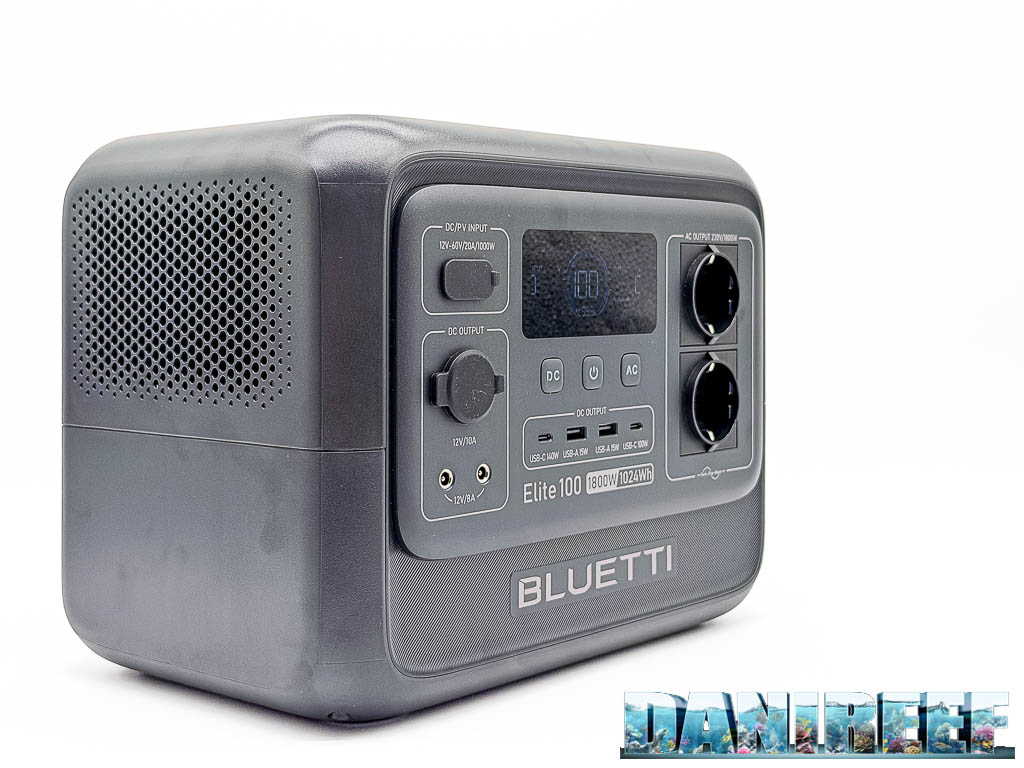
A blackout lasting a few hours can be a serious problem for an aquarium. But what happens when the backup battery becomes large enough that we no longer have to decide only what to save, but rather what we can simply leave running as usual?

Background
A few months ago, we published our first test on DaniReef of a Bluetti Elite 30 V2 used as an uninterruptible power supply for an aquarium. That test showed us that a power station with a capacity of just 288 Wh was already capable of keeping our marine aquarium running for more than eleven hours by powering only the return pump, or for 6 hours and 39 minutes with the return pump, circulation pump and protein skimmer running.
That test generated a great deal of interest and raised an inevitable question: what happens when we move to a much larger power station?
To find out, Bluetti sent us the new Elite 100 V2, a power station with an impressive 1024 Wh capacity, more than three times that of the Elite 30 V2. This time, however, we decided to take a completely different approach. We no longer want to understand only how to save an aquarium during a blackout, but to find out whether a battery of this capacity can keep virtually the entire system running for many hours.
Of course, before moving on to the practical tests, we will take a look at the new Elite 100 V2 in terms of build quality, technical features, the app and installation under the aquarium, before moving on to our real-world tests.
📌 What you’ll find in this article
- Our video about the Bluetti Elite 100 V2
- Bluetti Elite 100 V2
- 1024 Wh: how much energy actually reaches the aquarium?
- Installation under the aquarium
- The Bluetti app
- How to set up the Bluetti as a UPS
- First test: return pump only
- First test results: 36 hours and 13 minutes
- Second test: aquarium almost fully operational
- Second test result: 8 hours and 21 minutes
- Calculate your aquarium’s backup runtime
- Conclusions
Our video about the Bluetti Elite 100 V2
In the video accompanying this article, you can see our hands-on test of the Bluetti Elite 100 V2 used as a backup power system for an aquarium. We discuss the product itself, how it should be used, the app, the best settings for using it as a backup system and, most importantly, our real-world aquarium tests.
It’s an important video because it deals with an issue that is often overlooked as long as everything is working properly. Then a blackout happens, and at that point we realise that the real problem isn’t “how beautiful the aquarium is”, but how long it can stay alive without power. And the answer is simple: not long enough, especially when the aquarium is heavily stocked with fish or corals.
Bluetti Elite 100 V2: plenty of energy in a still compact package
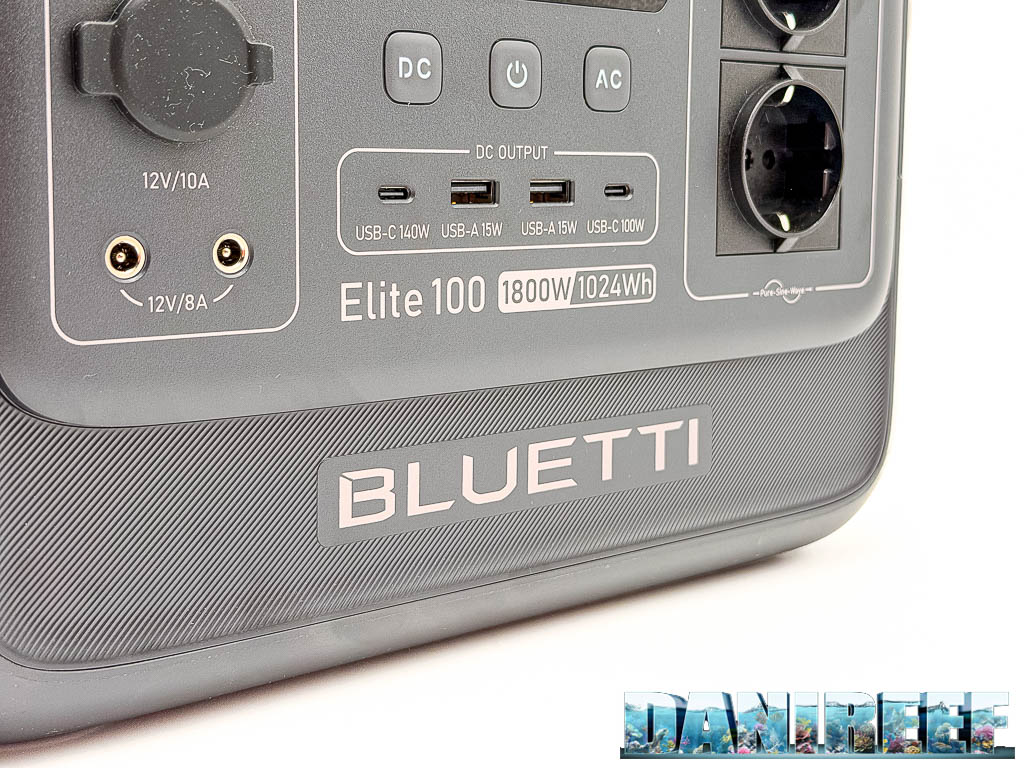
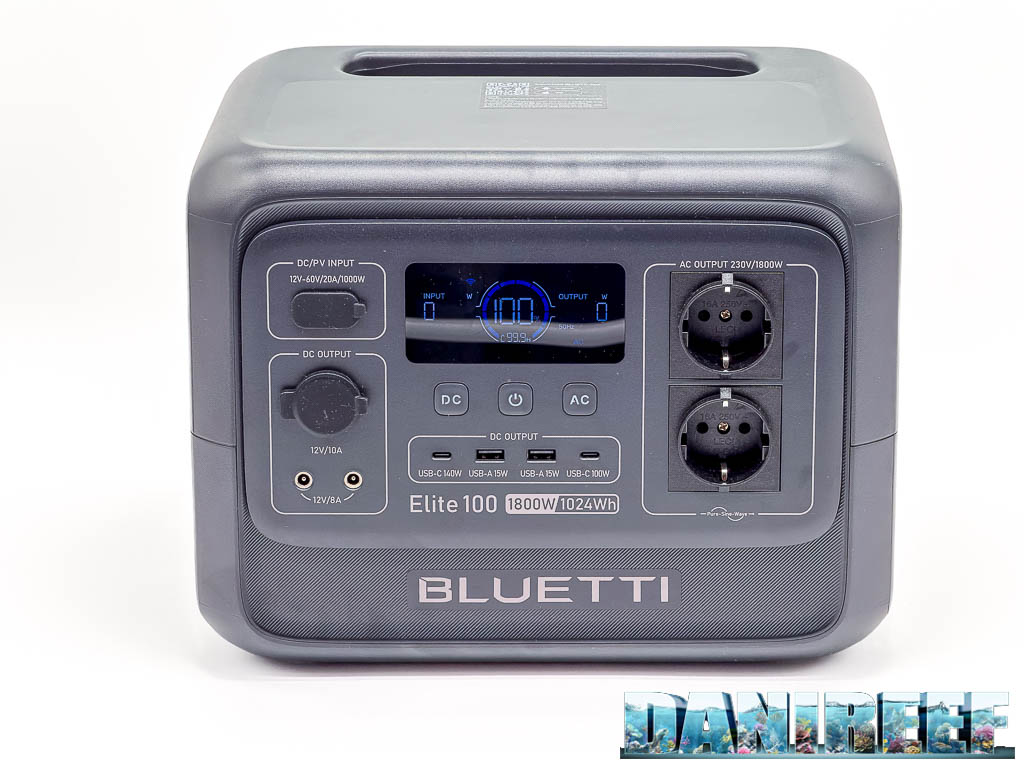
The Bluetti Elite 100 V2 represents a major step up from the Elite 30 V2 we previously tested on DaniReef. Battery capacity rises to 1024 Wh, allowing us to deal with completely different scenarios compared with a compact power station.
Despite belonging to a higher category, the Elite 100 V2 remains compact enough for domestic use. It can easily fit inside many aquarium cabinets, making permanent installation possible as a backup system ready to take over automatically in the event of a blackout.
But be careful: if you want to install it inside the aquarium cabinet, you need to ensure adequate ventilation and, above all, position it in an area completely protected from splashes, leaks and any possible contact with water. A power station should never be installed close to the sump or anywhere it could come into contact with water.
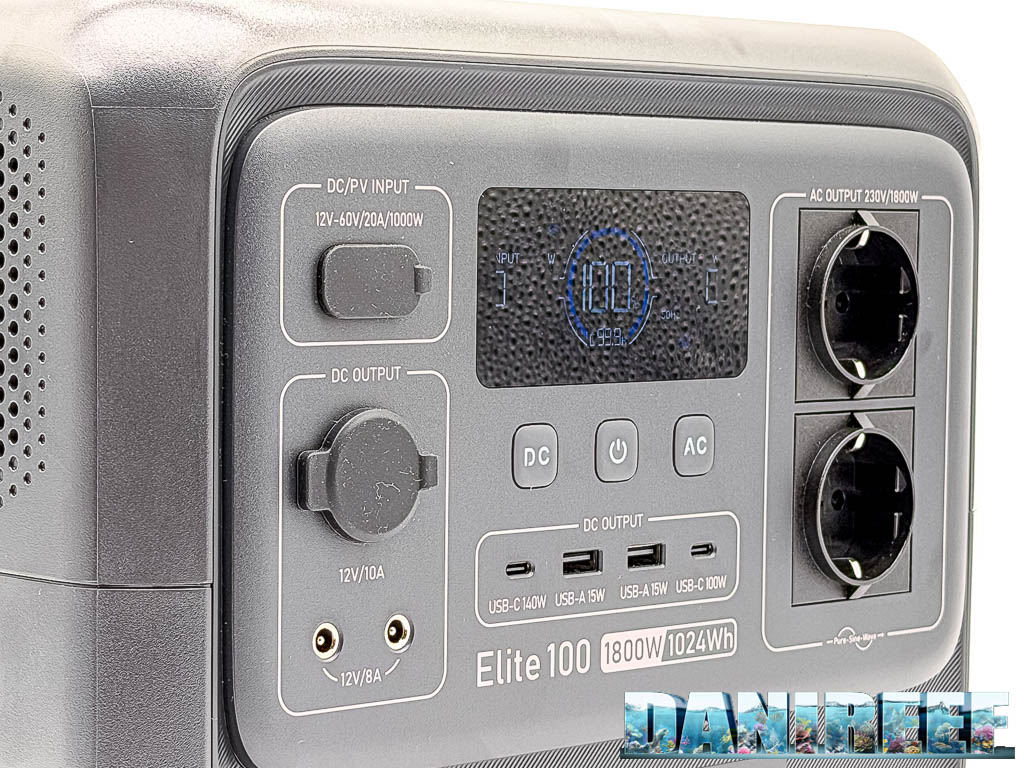
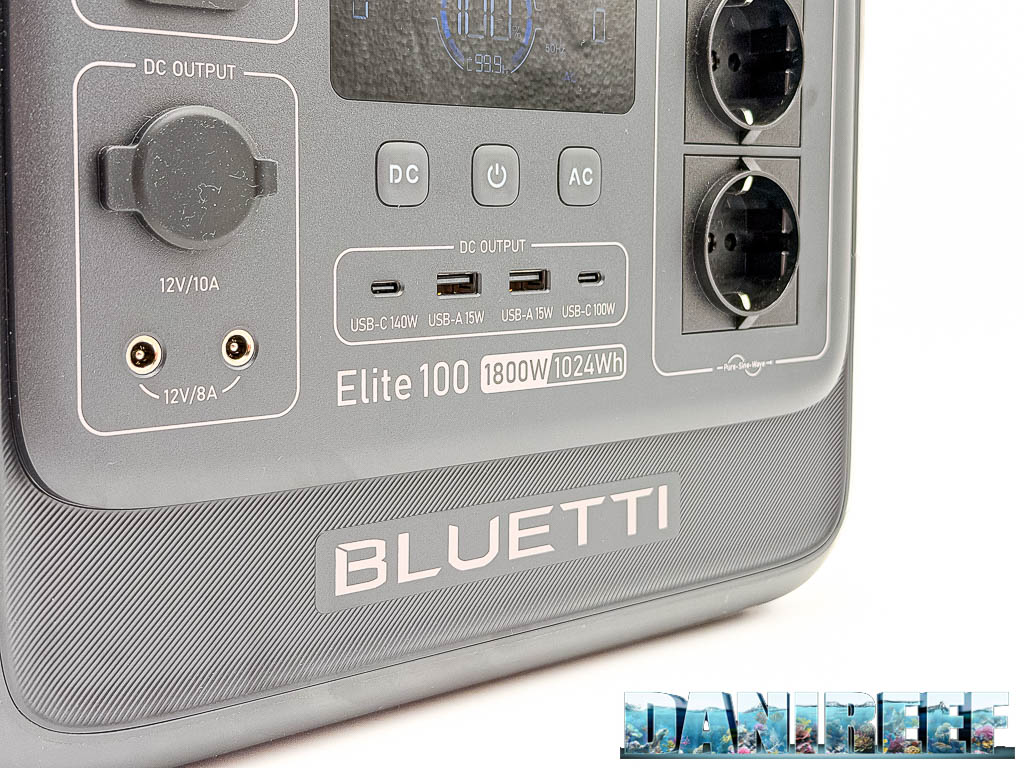
As is now the case across the new Bluetti generation, this model also uses LiFePO4 batteries, a technology that has become one of the benchmarks in the industry thanks to its long lifespan, high chemical stability and safety during charging and discharging.
The internal electronics are managed by a sophisticated Battery Management System (BMS), which continuously monitors temperature, voltage, current and cell status, protecting the battery against overloads, deep discharge, overheating and short circuits.
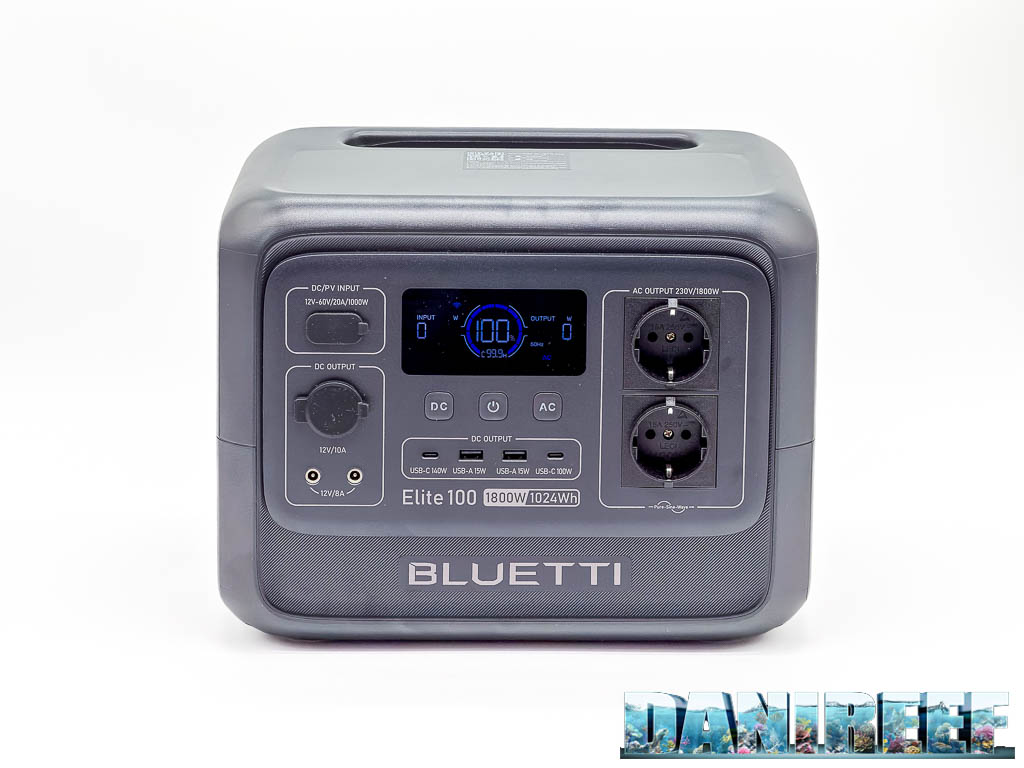
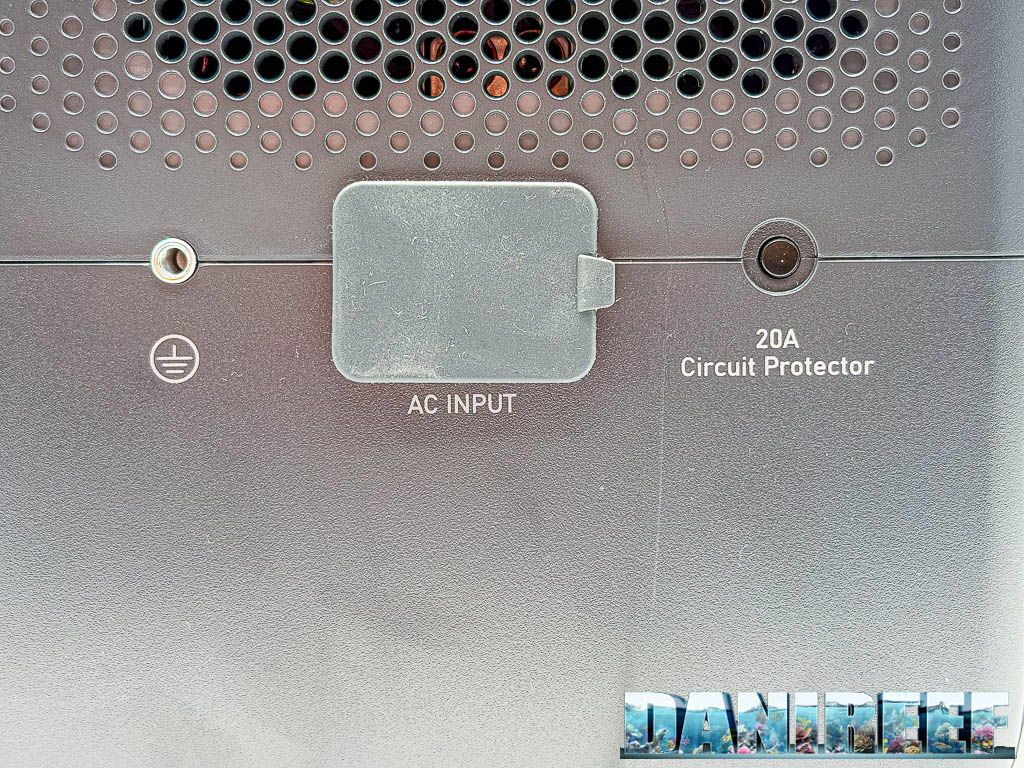
On the front we also find two Schuko AC outlets, compared with the single outlet on the Elite 30 V2, as well as USB-A and USB-C connections. For our aquarium application, of course, the two 230 V outputs are particularly interesting.
1024 Wh: but how much energy actually reaches the aquarium?
Before analysing the results of our tests, it is important to clarify one concept. The Bluetti Elite 100 V2 has a nominal capacity of 1024 Wh, but this does not mean that we can simply divide 1024 by the power consumption of the connected equipment to determine the actual runtime.
When we use the 230 V outlets, the inverter comes into operation and has to convert the battery’s direct current into the alternating current used by our equipment. This conversion inevitably involves losses, to which we must add the power consumption of the power station’s own electronics.
And this is where things become interesting. The impact of these internal power requirements is not always the same: with a very small load, such as a small pump drawing around ten watts, the power station’s own consumption can represent a significant proportion of the total energy used. As the load increases, however, the percentage represented by internal consumption decreases.
A 1024 Wh battery connected to a 10-watt load does not automatically guarantee 102 hours of runtime. With an AC power station, inverter efficiency, internal electronics and the characteristics of the load must also be taken into account. This is why at DaniReef we always prefer to complement theoretical calculations with real-world tests.
After testing the Elite 30 V2, we realised that a relatively small battery was already enough to keep an aquarium alive for many hours, provided that only the truly essential equipment was powered.
With the Elite 100 V2, the reasoning changes completely. Thanks to a capacity of more than 1000 Wh, we are no longer forced to think exclusively in terms of aquarium survival. Instead, it becomes possible to consider powering many more devices simultaneously, moving much closer to genuine continuity of operation.
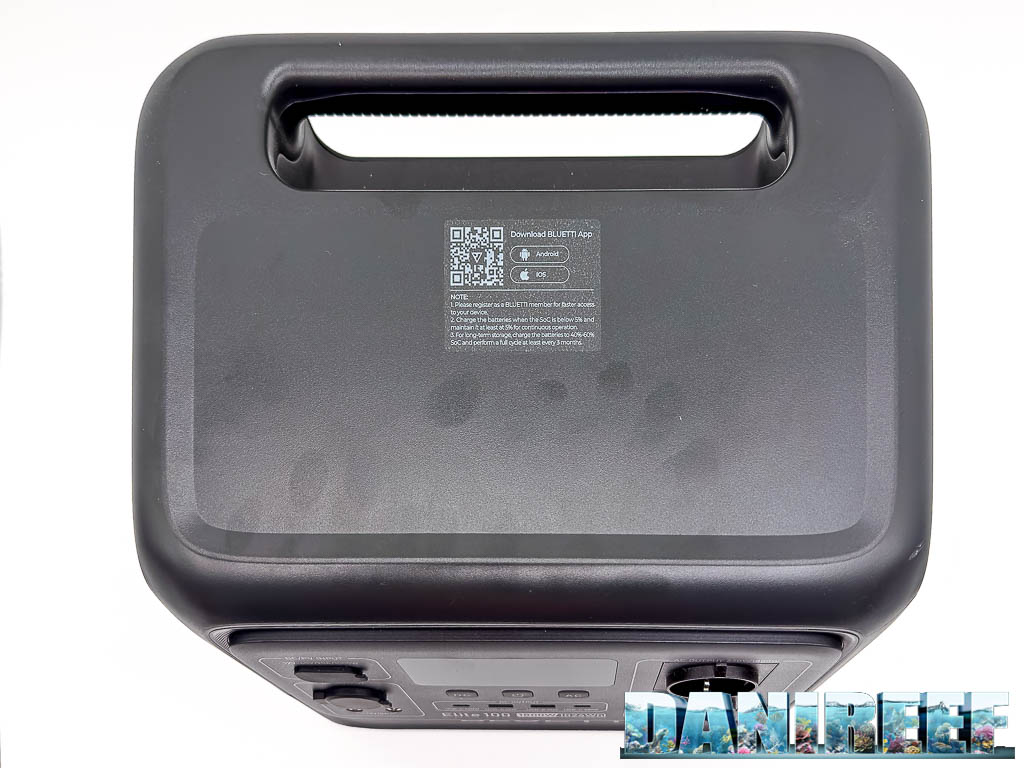
Of course, everything depends on the power consumption of your own system, but having more than one kilowatt-hour of energy available makes it possible to face even long-lasting blackouts with far greater peace of mind.
Installation under the aquarium
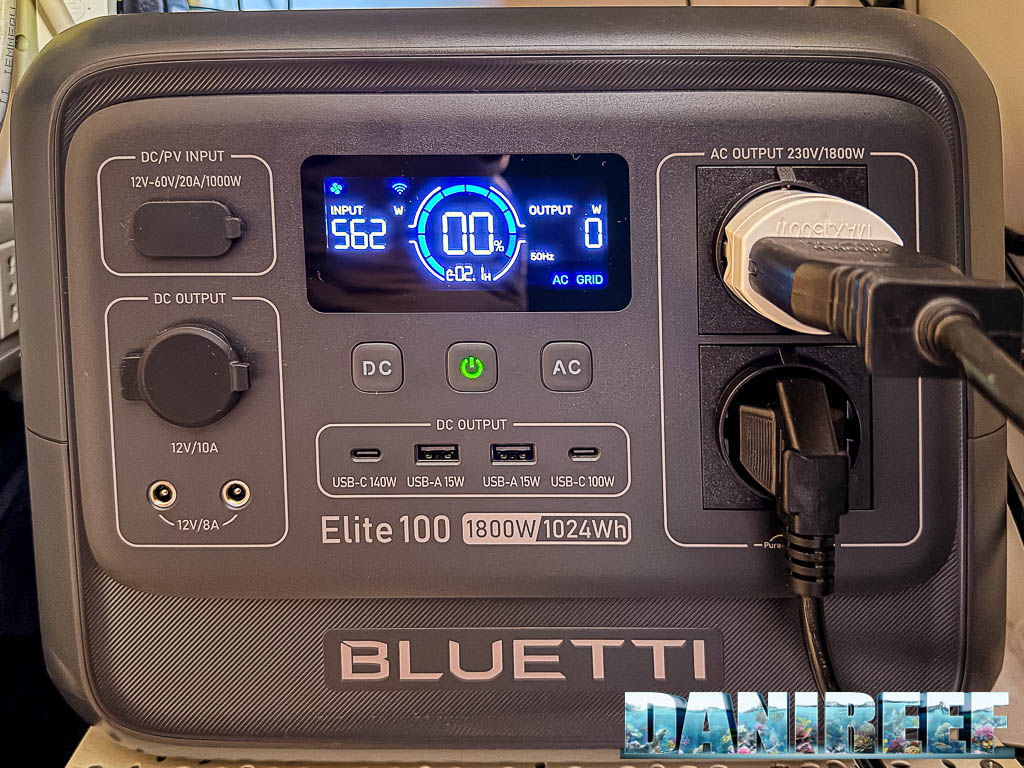
Once again, we decided to use the Bluetti exactly as a normal aquarist would. No dedicated test bench and no artificial setup: the Elite 100 V2 was installed directly under the cabinet of my marine aquarium, ready to automatically replace mains power in the event of a power outage.
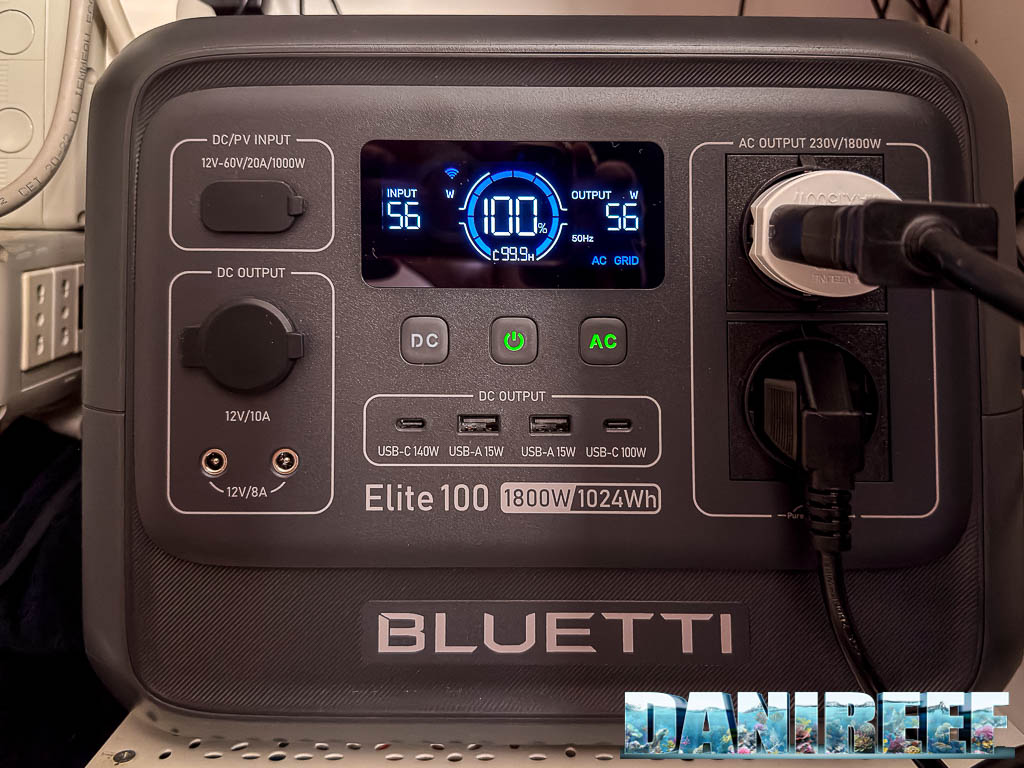
Its dimensions are still perfectly manageable and, despite the significantly greater capacity, installation presents no particular difficulties. Once connected and configured, the power station can remain permanently in operation as a true backup system.
The Bluetti app
The Bluetti app follows the same philosophy already seen with the Elite 30 V2, allowing us to monitor battery status, power consumption, remaining runtime and system configuration in real time.
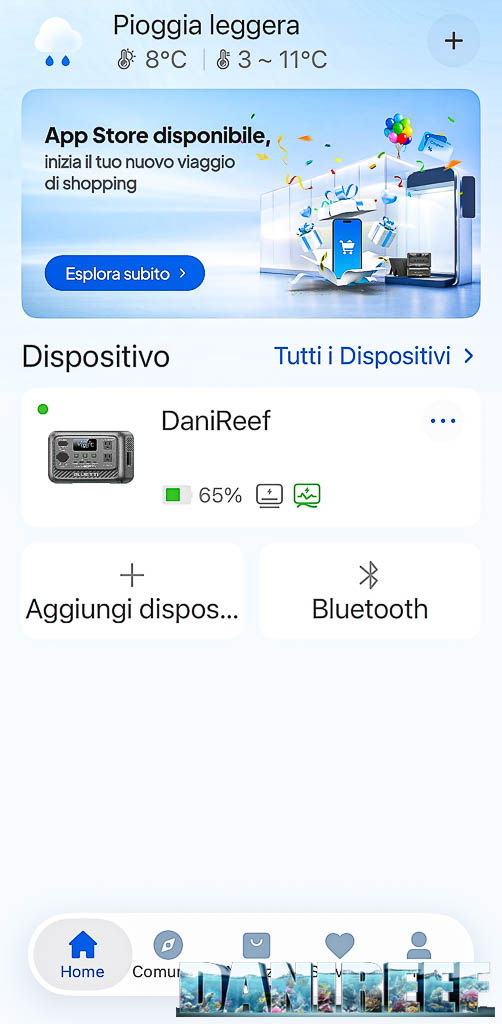
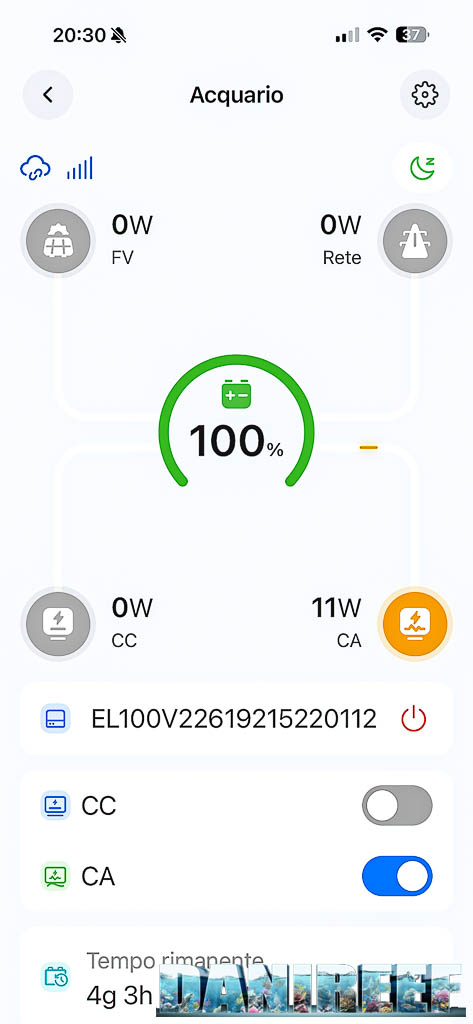
We will not go through every single function again, as these were already analysed in detail in our review of the Elite 30 V2, which we refer you to. Instead, we will focus on how the new Elite 100 V2 behaved during our practical tests.
Don’t forget the router
When we think about protecting an aquarium during a blackout, our attention naturally goes to pumps, the protein skimmer and the other devices that are essential to the tank. There is, however, one piece of equipment that many people tend to forget: the home router.
Keeping the router powered can be extremely useful, especially if the aquarium is managed or monitored through connected devices, controllers, smart plugs, webcams or home automation systems. Without a connection, we may not receive notifications, may be unable to check the system remotely and may not become aware of potential problems in time.
The power consumption of a typical home router is generally quite low and, with a 1024 Wh power station such as the Bluetti Elite 100 V2, its impact on overall runtime is relatively modest. For this reason, whenever possible, I recommend connecting it to the same backup system as the aquarium.
Of course, it is important to remember that keeping the router powered does not automatically guarantee an Internet connection: during a blackout, external equipment belonging to the Internet service provider may also lose power. In most local power outages, however, keeping the router and home network operational can make a major difference.
If you use remote monitoring systems, cameras or smart plugs, connect the router to the Bluetti as well. It uses little power, but it may allow you to continue monitoring and managing the aquarium even when you are away from home.
There is also another advantage: as long as the Internet connection remains available, the Bluetti app can continue to report the status of the power station even during the blackout, allowing us to check the load, remaining battery percentage and estimated runtime, as well as receive the notifications provided by the system. In practice, the power station is not only an energy backup system, but also becomes an important tool for remotely monitoring the emergency.
How to set up the Bluetti properly as a UPS
To use the Bluetti Elite 100 V2 as an uninterruptible power supply for an aquarium, simply connecting it is not enough. It needs to be configured according to the role we want it to perform. The correct approach is to leave it ready to take over as the power source if mains power fails, supplying only the loads that are truly essential.
First of all, I recommend leaving only the AC output switched on. We also need to make a few changes in the app settings:
- Operating mode: Standard UPS;
- Save main switch status: Enabled.
Then enter the advanced settings, select “Save main switch status” and choose On. Please note: a password is required to access this menu, and we are not authorised to publish it in the article. You can, however, find it in our video by clicking here, or request it directly from Bluetti customer support.
In other words, the ideal configuration is not the most generic one, but the most stable for our particular scenario: output ready, essential loads connected, settings checked and power consumption monitored. It may seem like a minor detail, but this is exactly what turns a technological device into a true aquarium backup system.
First test: return pump only
We decided to start with exactly the same test we carried out on the Elite 30 V2. Powering only the return pump is, in fact, the most interesting scenario from an aquarist’s point of view, because it maximises runtime while maintaining water circulation between the display tank and sump and ensuring effective oxygenation throughout the system. If this had been a freshwater aquarium, of course, we would have focused primarily on the filter.
Using the same system as in the previous test also allows us to directly compare the results obtained with the two power stations and understand how much difference the greater capacity of the Elite 100 V2 actually makes when used as an aquarium UPS.
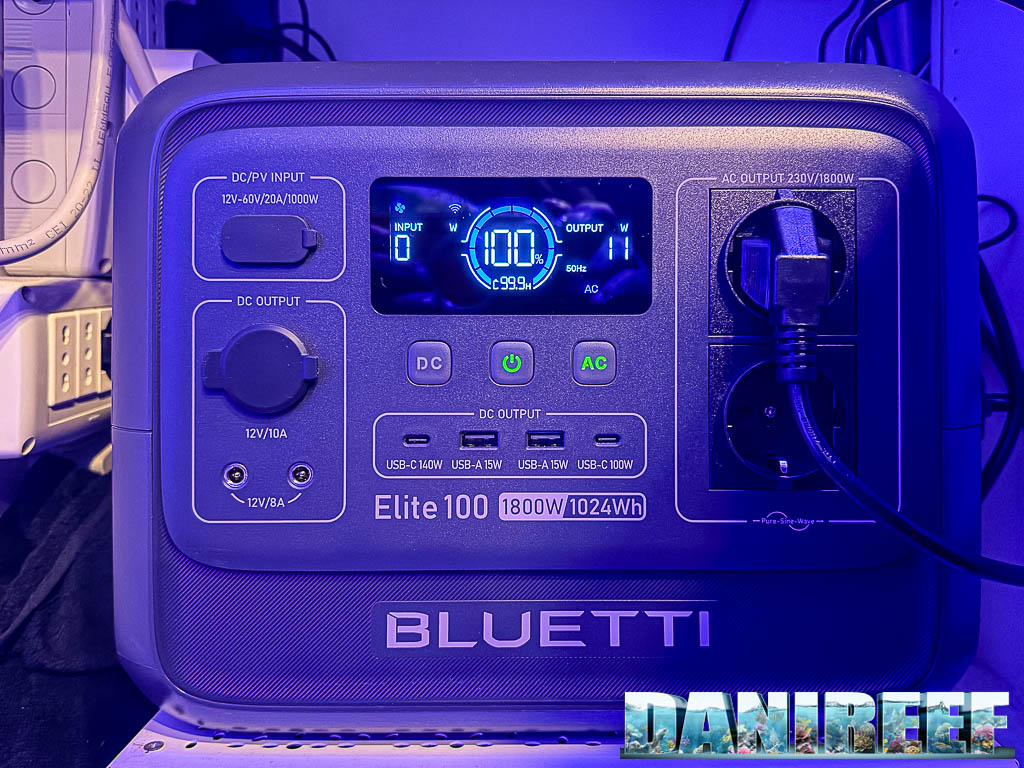
For this first test, we kept exactly the same configuration used in our review of the Bluetti Elite 30 V2. The only device connected was my Octo VarioS 2, set to a flow rate of around 650 litres per hour, with an average power consumption of just 13 watts.
Once again, we chose this configuration because, in my opinion, it represents the best possible compromise during a blackout. By powering only the return pump, we keep water circulating between the display tank and sump, maintain effective gas exchange, prevent stagnant areas and keep much of the biological filtration active, while at the same time achieving the maximum possible runtime.
The great thing about this test is that we are using the same aquarium and the same pump as in our previous review, under conditions that are as comparable as possible. This allows us to directly compare the results of the two power stations, while taking into account the inevitable variables of a real-world test.
One of the things I was most curious about was how the Elite 100 V2 would behave with very low loads. The Elite 30 V2, in fact, was unable to correctly display a load of just 13 watts, despite continuing to power it perfectly until the battery was completely depleted.
This new unit uses completely different electronics, so it will be interesting to see whether its monitoring is more accurate or whether its behaviour remains essentially similar.
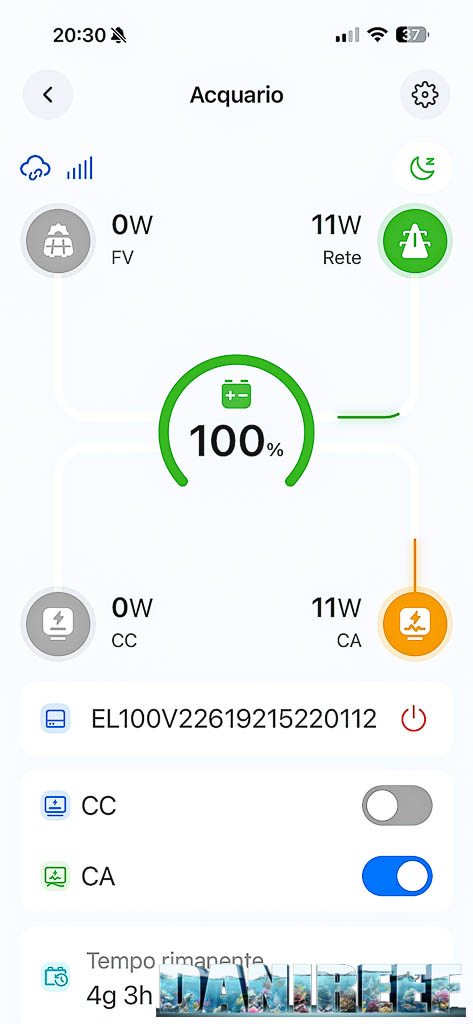
As always, we left the Bluetti running without any external intervention, simply recording the battery status, power consumption and remaining runtime shown on the display and in the app at regular intervals.
First test results
The results were extremely interesting and gave us a much better understanding of how a power station of this capacity behaves when used with an extremely small load.
The Bluetti Elite 100 V2 was able to power the return pump alone for 36 hours and 13 minutes, more than three times the runtime we had already achieved with the Elite 30 V2.
This means that, at least on my approximately 200-litre aquarium, a battery with a capacity of more than 1000 Wh makes it possible to cope with even very long blackouts without particular concern, while keeping what I consider truly essential for the survival of the entire system running.
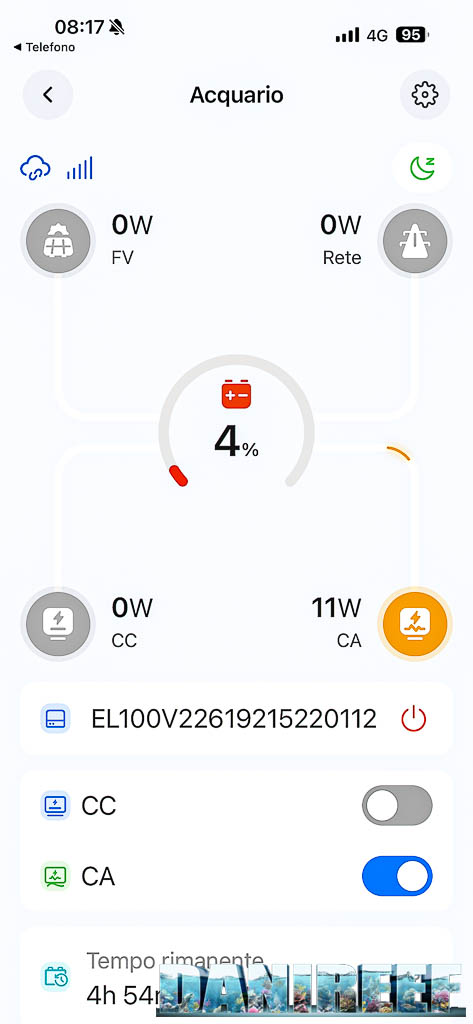
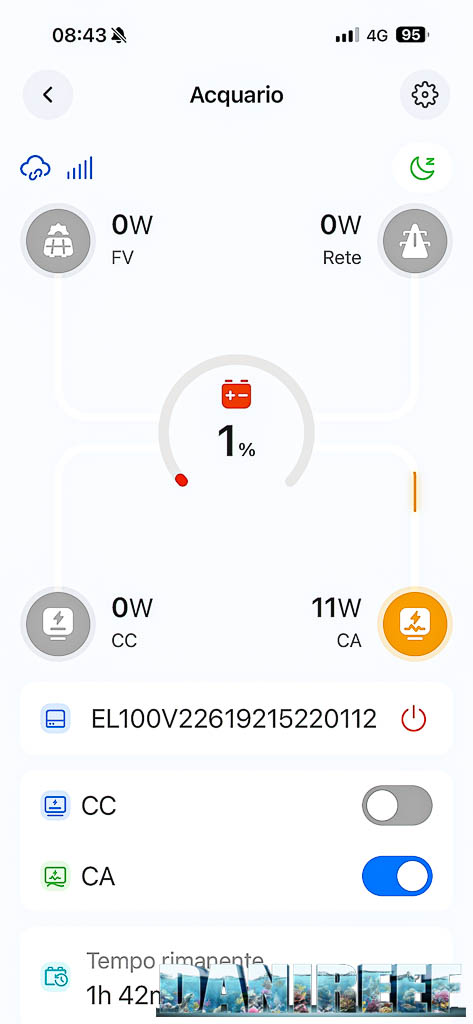
Of course, the absolute figure will always depend on the power consumption of the pump being used. A more powerful return pump will reduce runtime proportionally, while particularly efficient pumps may achieve even better results. What remains clear, however, is how dramatically a capacity of this level changes the picture: we are no longer dealing with a simple emergency solution, but with a system capable of keeping the aquarium going for more than an entire day.
During the test, I realised something interesting. With more than 1000 Wh of capacity, the way you approach a blackout changes completely. With the Elite 30 V2, the question was: “what can I switch off to increase runtime?”. With the Elite 100 V2, the question becomes: “what can I afford to leave running?”. It’s a completely different perspective and, especially for anyone with a large aquarium or one heavily stocked with livestock, it can make a real difference.
36 hours and 13 minutes: what does this result really tell us?
This result deserves a little more consideration. Our return pump draws an average of around 11-13 watts, and the Bluetti was able to power it for 36 hours and 13 minutes. If we simply multiplied 13 watts by the duration of the test, we would get approximately 471 Wh, a figure that appears to be a long way from the battery’s nominal 1024 Wh capacity.
However, this figure should not be interpreted as meaning that half of the battery’s capacity was lost. We are using the AC inverter of a power station with a capacity of more than 1000 Wh to power an extremely small load. Under these conditions, the power consumption of the electronics and inverter themselves accounts for a much larger percentage of the total energy used compared with the energy actually required by the pump.
There is also another variable to consider: the pump’s power consumption did not necessarily remain fixed at 13 watts during every moment of the more than 36-hour test. This is precisely why we prefer to consider the measured runtime as the truly meaningful figure, rather than deriving a percentage efficiency for the power station from this test, which would inevitably be misleading.
With our aquarium and our return pump, the Elite 100 V2 provided 36 hours and 13 minutes of actual runtime. This is the figure we should use as the reference when comparing this test with the Elite 30 V2.
Second test: the aquarium continues to run almost normally
And now we come to the test I was most looking forward to. With the Elite 30 V2, our goal was to maximise runtime by sacrificing everything that was not strictly essential. This time, we decided to completely reverse that approach.
We therefore connected the main equipment that would normally be running: the Octo VarioS 2 return pump, Octo Pulse Wave 2 circulation pumps, Nyos Quantum 120 protein skimmer, and the GNC BluRay X LED light. Our home router, on the other hand, was powered separately so that we could maintain remote monitoring of the aquarium throughout the test.
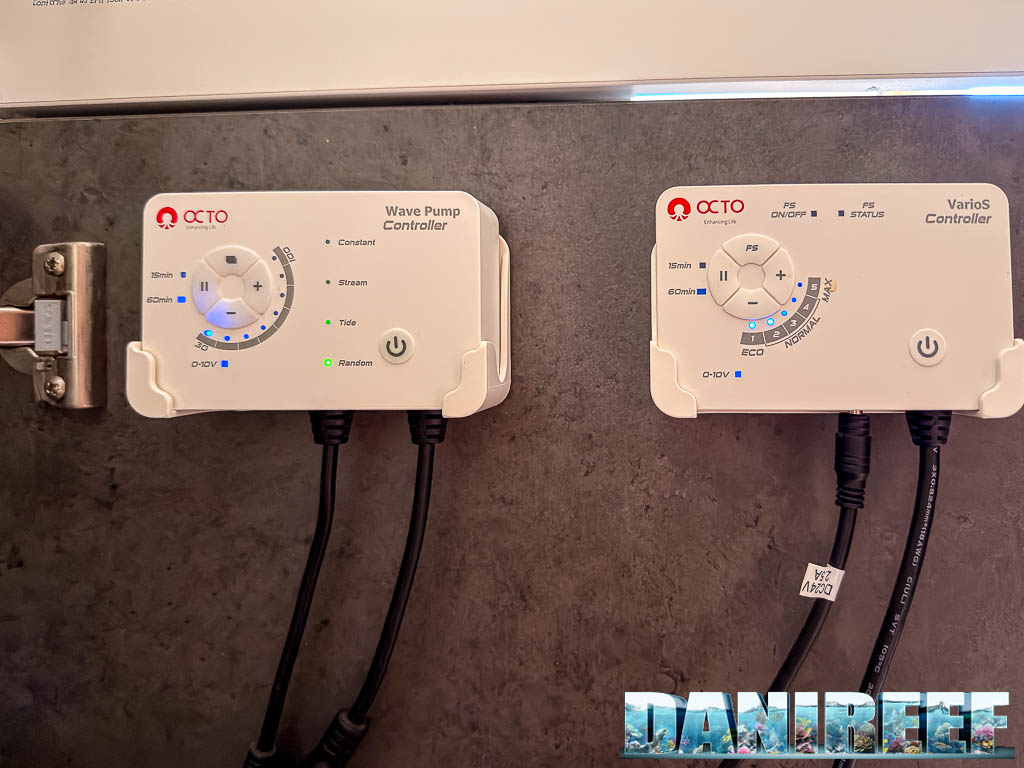
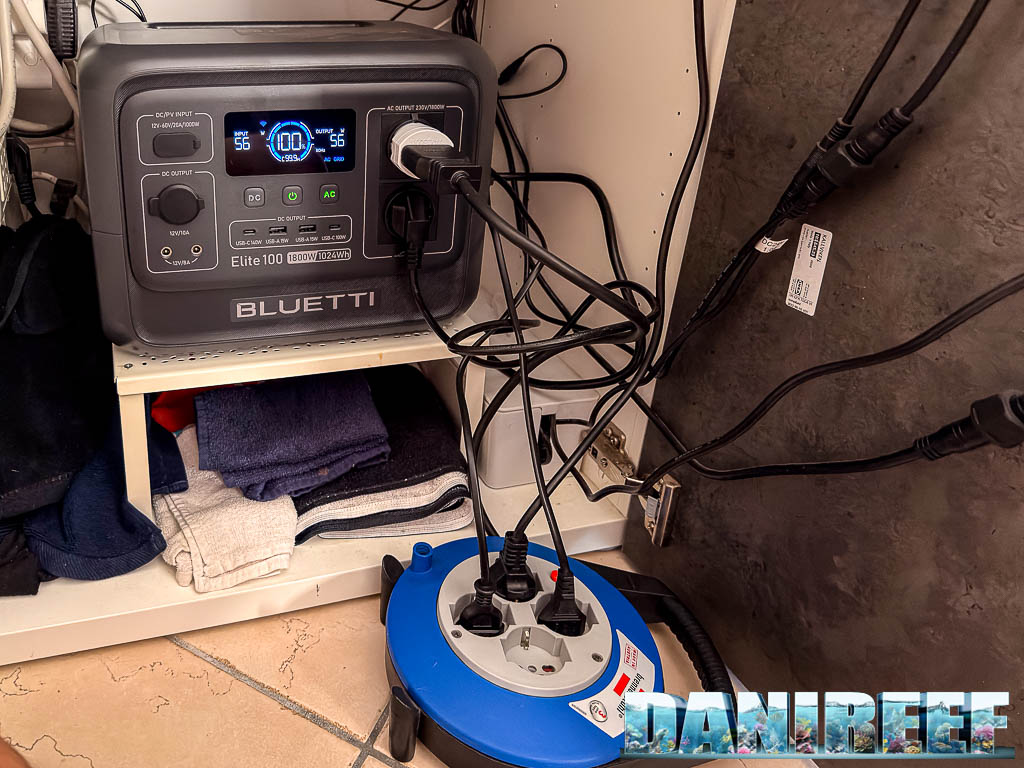
The goal was no longer simply to “save” the aquarium, but to find out whether a battery of this capacity could actually allow the system to continue operating almost as if the blackout had never happened.
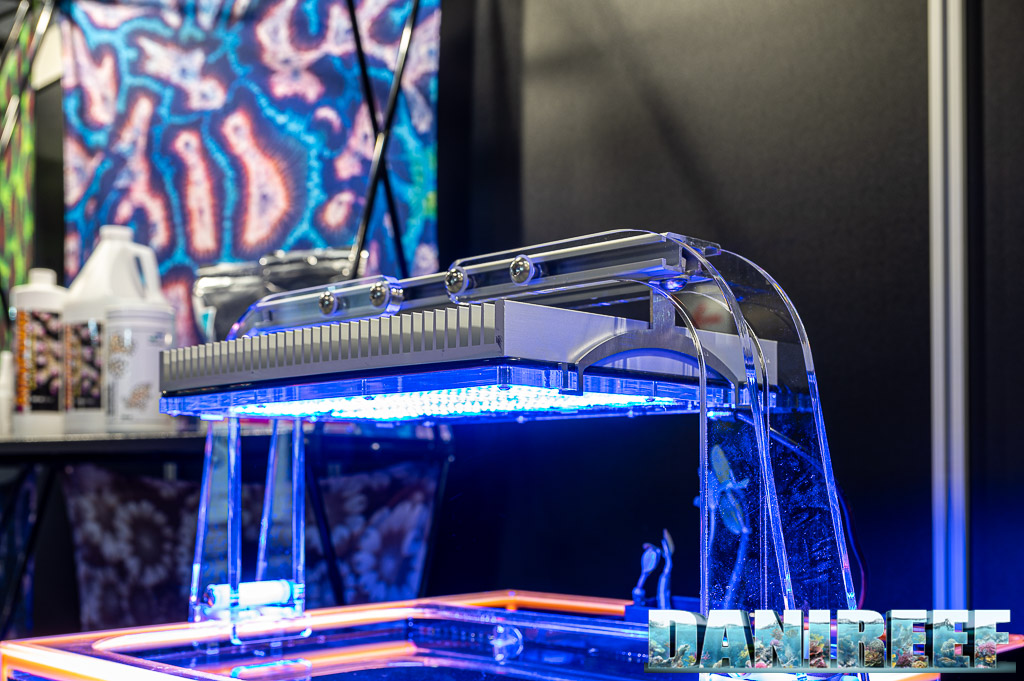
During the period of maximum power consumption, with the light running together with the other equipment, the Bluetti display showed a total load of around 140-150 watts.
We deliberately excluded the chiller from the test, and we would have done the same with the heater in winter. These are high-power devices that, in an emergency, would significantly reduce the available runtime. Our priority was instead to keep the equipment required for circulation, oxygenation and normal aquarium operation running.
The result
The result of the test was extremely interesting. Even with all the main equipment running, the Elite 100 V2 managed to provide 8 hours and 21 minutes of backup power, demonstrating how a power station in this category can represent a genuine backup solution for many home aquariums.
There is also an important detail to consider. We deliberately started the test at around 9:30 in the morning, shortly before the aquarium light was scheduled to switch on at 10:00. The Elite 100 V2 therefore had to deal with one of the most demanding scenarios possible, powering practically the entire daily lighting cycle, including the period at maximum output. A blackout beginning in the afternoon or, especially, during the night would therefore have resulted in significantly longer runtime.
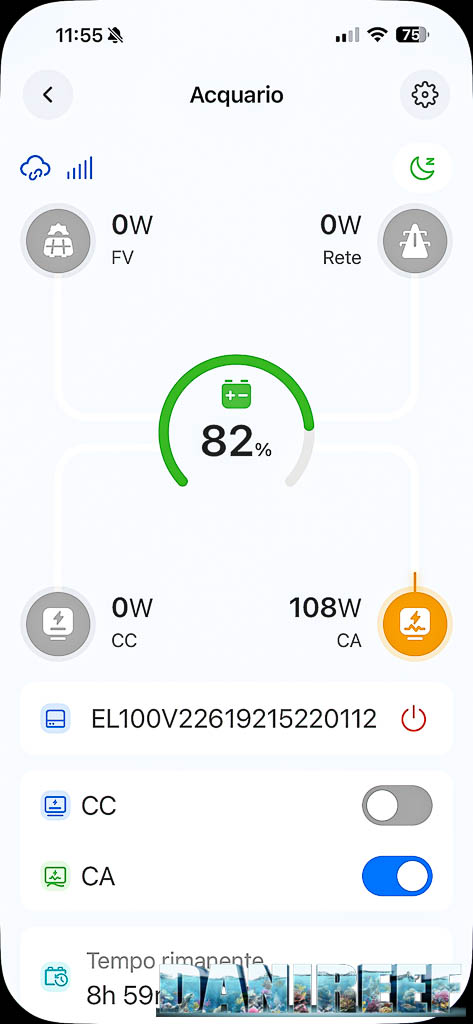
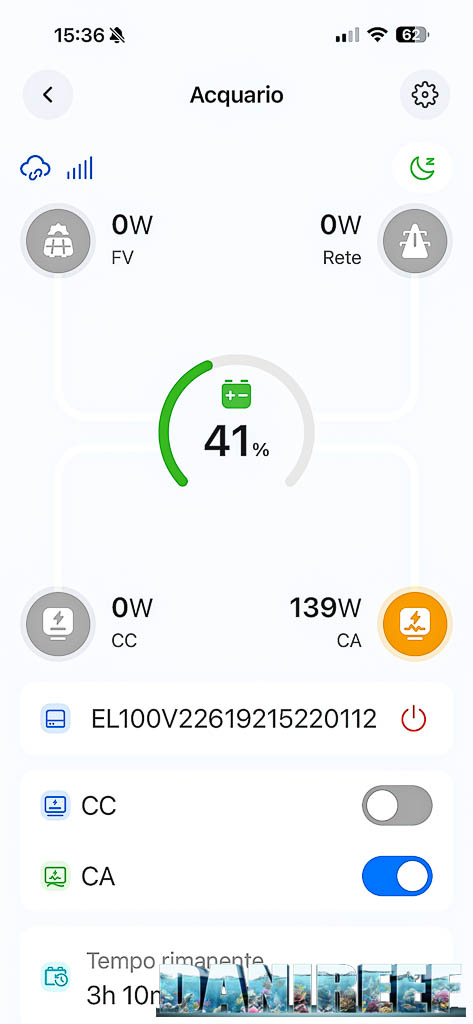
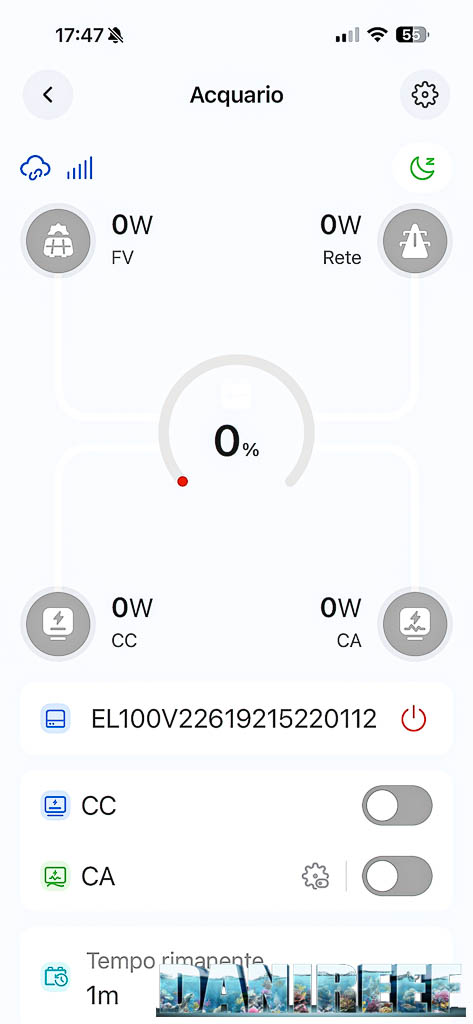
Of course, every system has different power requirements, but the message that emerges from this test is very clear: increasing battery capacity does not simply increase runtime, it completely changes the way we can deal with a power outage.
Two completely different strategies
The two tests clearly demonstrate how dramatically the same power station can behave differently simply by deciding which pieces of equipment we want to keep powered.
| Configuration | Power consumption | Actual runtime | Goal |
|---|---|---|---|
| Return pump only | approx. 11-13 W | 36 h 13 min | Maximum runtime |
| Almost complete aquarium | variable, up to approx. 140-150 W | 8 h 21 min | Maximum continuity |
And this is probably the most interesting result of the entire test. There is no single runtime figure for the Bluetti Elite 100 V2. By choosing what to power, we decide whether to prioritise maximum runtime or continuity of aquarium operation.
but how long we want it to last.
Watts, VA and runtime: why the numbers don’t always add up
During our tests of the Bluetti Elite 100 V2, we also compared the readings shown on the display and in the app with those measured by our external instruments. As we had already observed during our test of the Elite 30 V2, the values do not always match perfectly.
There is also another factor that can make the comparison between the power consumption indicated by the Bluetti, the values measured by our instruments and the theoretically calculated runtime less straightforward: Watts and Volt-Amperes are not necessarily the same thing.
With many electronic loads, such as pumps, switching power supplies and LED lights, voltage and current do not behave as they would with a simple resistive load. The relationship between real power and apparent power is expressed by the power factor, which can be affected by both phase shift and the waveform of the current drawn by the device.
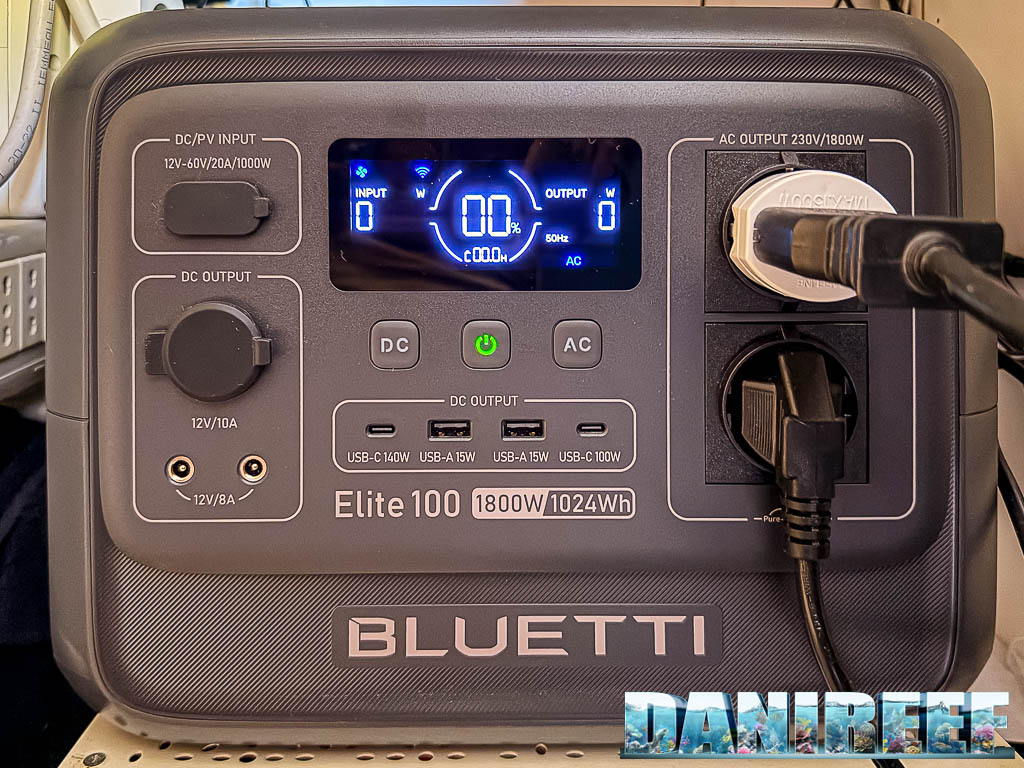
For this reason, two different measuring devices can show slightly different values without either of them necessarily measuring incorrectly.
We discussed this in much greater detail during our test of the Elite 30 V2, where we specifically analysed the differences between Watts, VA and power factor. In this review, what interests us most is the practical consequence: we should not expect the simple ratio between nominal battery capacity and the Watts shown on the display to correspond exactly to the actual runtime.
And this is also why we run our tests until the power station shuts down: in the end, for an aquarist, knowing how many actual hours of backup power will be available during a blackout is far more important than any theoretical calculation.
Calculate your aquarium’s backup runtime
Our tests obviously apply to the power consumption of our own system. To estimate the runtime you could achieve with your aquarium, you can use our calculator by entering the capacity of the power station and the power consumption of the equipment you intend to keep running.
Remember, however, that the result remains a theoretical estimate: inverter efficiency, internal power consumption and the characteristics of the connected loads can significantly affect the actual runtime.
A small discount with the DANIREEF code
If you are also thinking about equipping your aquarium with a serious backup system, Bluetti is offering DaniReef readers a small advantage.
By using our dedicated link and entering the code DANIREEF during checkout, you can get a 5% discount on the purchase of the Bluetti Elite 100 V2.
Of course, this is not the reason to buy a power station. The real value of a product like this is the peace of mind it can provide when a blackout threatens an aquarium built over years of work and passion.
Important: to receive the discount, you need to access the product through our link and enter the code DANIREEF during checkout.
My thoughts after several days of use
After using the Bluetti Elite 100 V2 for several days, I can say that the experience is very different from the one I had with the Elite 30 V2.
The unit retains the same ease of use, build quality and straightforward management through the app, but the available capacity completely changes the way I think about it. I no longer consider it simply an emergency backup, but rather a genuine energy reserve ready to step in whenever needed.
This obviously applies to the aquarium, but also to many other uses around the home, from working remotely to camping, photography or other situations where having a reliable source of power can make a real difference.
What would I actually connect during a blackout?
After these tests, I think the best way to use a power station of this capacity is not necessarily to choose one configuration and keep it unchanged. On the contrary, we can change our strategy depending on how long the blackout lasts.
Short blackout: keep running almost normally
If the power outage lasts only a few hours, with an aquarium like ours we can afford to keep almost all the main equipment running. The 8 hours and 21 minutes we measured represent an enormous window of time for a typical domestic blackout.
The blackout continues: start saving energy
If the power has still not returned after several hours, we can change strategy. Lighting is one of the first things we can temporarily switch off, together with other non-essential devices, significantly extending the remaining runtime.
Extended emergency: maximum runtime
In the event of a particularly long blackout, we can switch to the most conservative configuration used in our first test: the return pump only, possibly together with the router if we want to maintain remote monitoring. On our aquarium, this configuration allowed us to exceed 36 hours of runtime.
Of course, every aquarium is different and the priority given to each device must be assessed according to the individual setup. The important point is that a battery of this capacity allows us to actively manage the available energy, rather than simply waiting for it to run out.
Which aquariums would I recommend it for?
If I had to give practical advice, I would see the Elite 100 V2 as particularly suitable for medium to large marine aquariums, or for tanks heavily stocked with fish and corals, where a blackout lasting a few hours could cause serious problems.
On an aquarium the size of ours, around 200 litres, the available capacity even makes it possible to consider keeping almost all the main equipment running, as demonstrated by the 8 hours and 21 minutes achieved in our test. On larger aquariums, for example around 400 litres, I would instead adopt a more conservative strategy: return pump, circulation pumps, protein skimmer and router, leaving out lighting, heater and chiller whenever the goal is to maximise runtime.
On smaller tanks, on the other hand, the main advantage would be runtime: by further reducing essential power consumption, a capacity of 1024 Wh could provide backup times that are difficult to achieve with more compact power stations.
Conclusions
Testing the Bluetti Elite 100 V2 confirmed something I had already begun to realise during the Elite 30 V2 test: modern power stations can represent one of the best solutions currently available for protecting an aquarium during a blackout.
The main difference is that, with a capacity of more than 1000 Wh, we are no longer forced to think only in terms of aquarium survival. It becomes possible to keep many more devices running and face even prolonged power outages with much greater peace of mind.
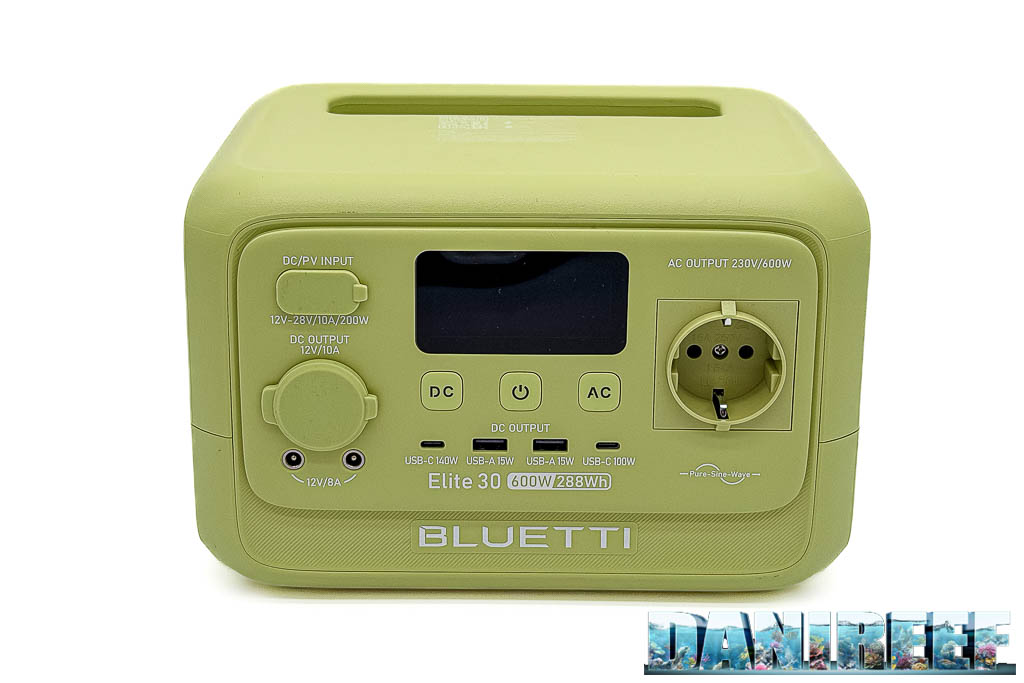
Personally, I will probably continue to use the Elite 30 V2 whenever I need an extremely compact and easily portable power station, while the Elite 100 V2 will have a permanent place under my aquarium as its main backup system.
Scopri di più da DaniReef - Portale dedicato a Acquario Marino e Dolce
Abbonati per ricevere gli ultimi articoli inviati alla tua e-mail.