

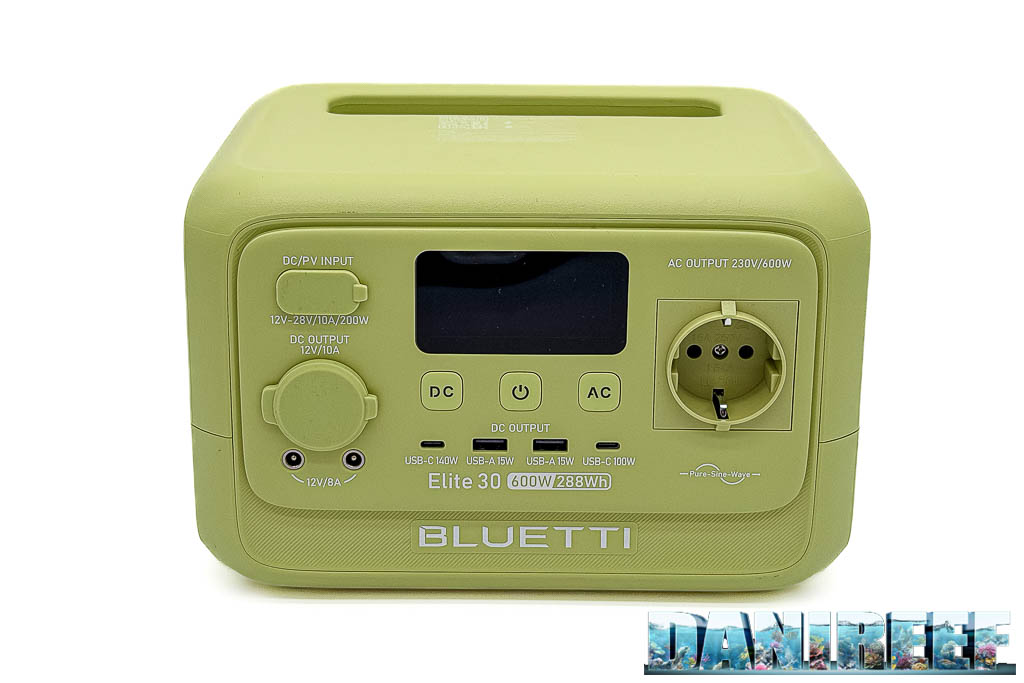
When we talk about electrical safety in a marine aquarium, almost everyone thinks about lights, pumps, heaters, controllers and automation. Very few people, however, really think about what happens when the power goes out. And that is a mistake, because a blackout lasting more than just a few minutes can turn a perfectly stable aquarium into a suddenly fragile system. This is exactly where a product like the Bluetti Elite 30 V2 starts to make sense: not as a technological gadget, but as a possible lifeline for the aquarium, whether freshwater or marine, whenever the power grid fails.

In this article, we analyze the Bluetti Elite 30 V2 from a very practical and aquarium-focused perspective. We will not simply present a portable 288 Wh power station, but we will try to understand whether, how and why it can become a truly useful backup solution for marine aquariums, what the differences are compared to a traditional UPS, why the return pump plays such a fundamental role, and how we can correctly estimate the runtime of our system.
Everything is accompanied by our dedicated video, where we show the product, the app, the main settings and the practical tests directly on my aquarium. We will measure the runtime of the system with our return pump, but not only that, in order to give you credible and useful numbers when choosing a UPS for your aquarium.
📌 What you will find in this article
- Our video on the Bluetti Elite 30 V2
- What is the Bluetti Elite 30 V2?
- Why a backup is essential in an aquarium
- Why the return pump alone is the absolute priority
- Bluetti and traditional UPS: the truly important differences
- The Bluetti Elite 30 V2 app
- How to set up the Bluetti properly to work as a UPS
- First test: return pump only
- Second test: return pump, wave pump and skimmer
- Real power, apparent power and why the numbers do not always seem to match
- Theoretical backup runtime calculation
- A small discount with dedicated link and DANIREEF code
- Conclusions
- Useful further reading on blackouts and UPS systems in aquariums
- FAQ: Bluetti, UPS and aquarium blackouts
Our video on the Bluetti Elite 30 V2
In the video that accompanies this article, you will find the practical test of the Bluetti Elite 30 V2 used as a continuity system for the aquarium. We talk about the product, the logic behind its use, the app, the best ways to make it work as a backup, and above all the real tests on the aquarium.
It is an important video because it tackles a topic that is often ignored as long as everything works properly. But then the blackout comes, and at that moment we realize that the real issue is not “how beautiful the tank is,” but how long it can stay alive without power. And the answer is simple: not long enough, especially if it is heavily stocked with fish or corals.
What is the Bluetti Elite 30 V2?
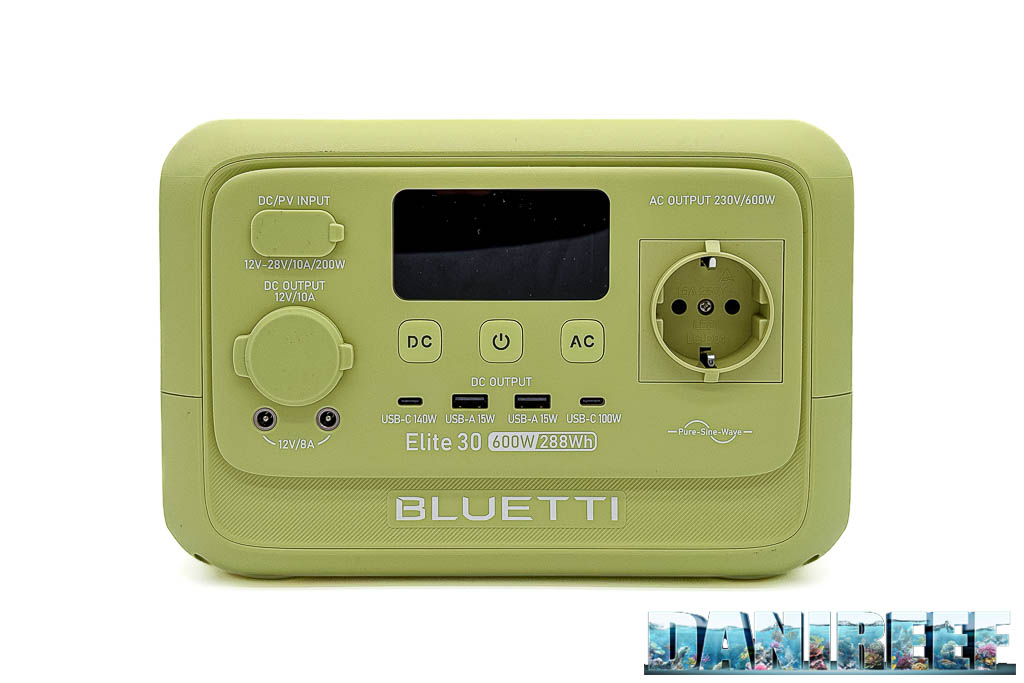
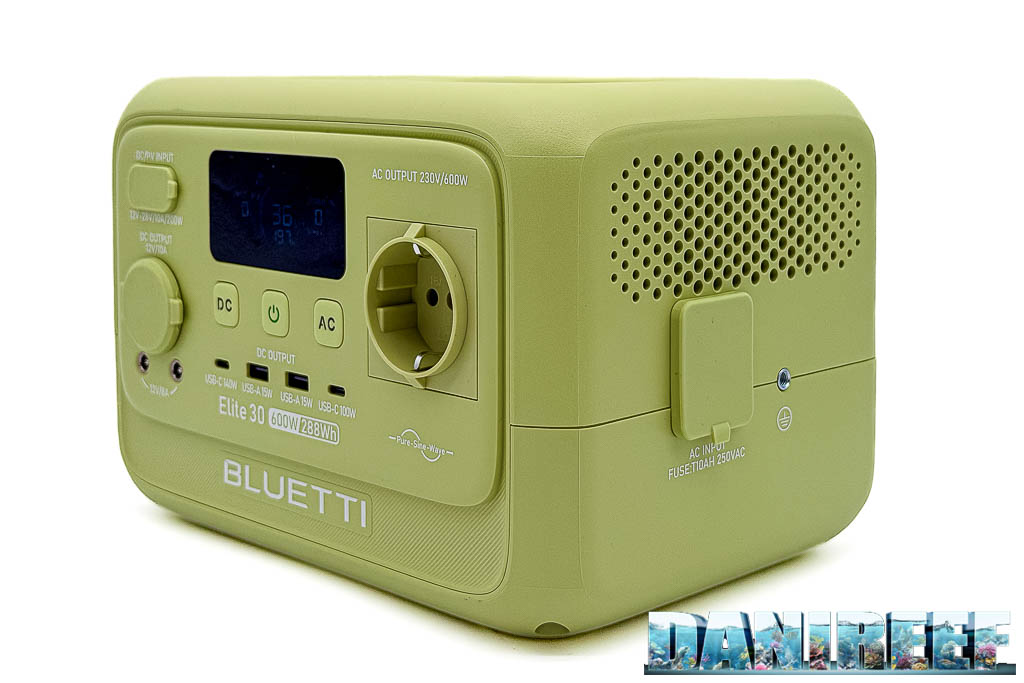
The Bluetti Elite 30 V2 is a compact power station with an integrated 288 Wh battery, designed to provide energy on the go, in emergencies or as support for small loads. In the aquarium world, however, the most interesting way to look at it is not so much camping or outdoor use, but the possibility of using it as an immediate backup system in case of a power outage.
Its compact size, ease of use and app-based management make it particularly interesting for anyone who wants to protect an aquarium without immediately entering the world of more complex, more expensive or bulkier systems. And above all, it offers an important advantage: unlike many traditional UPS systems, a device like this is designed to deliver energy for a significant amount of time, not just to allow a computer to shut down properly or to provide only a few minutes of autonomy.
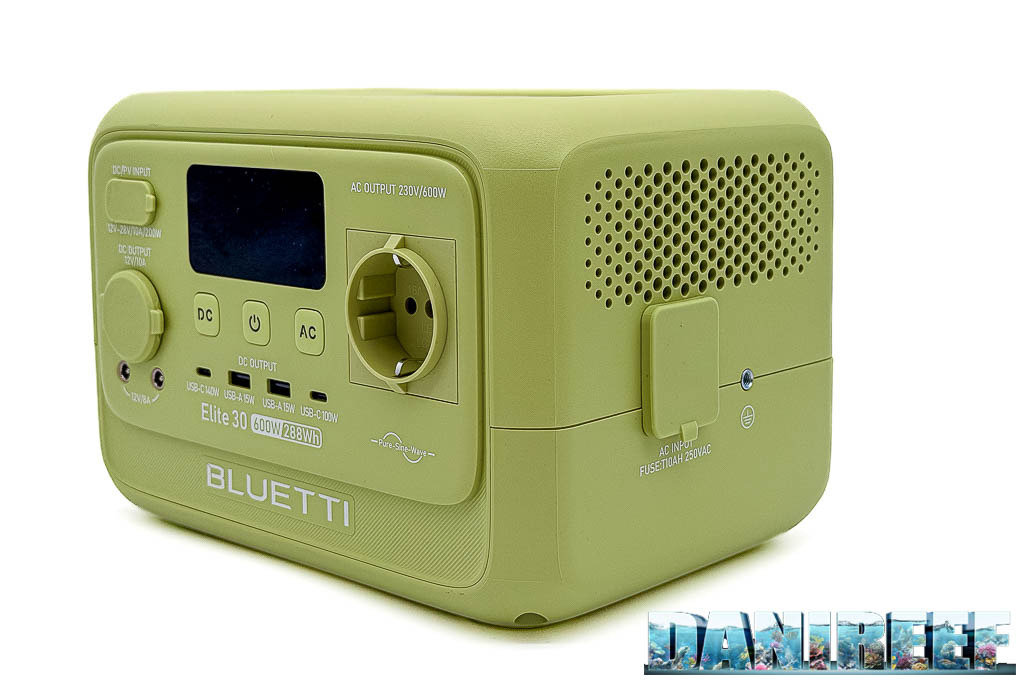
Another important aspect is safety. The Bluetti Elite 30 V2 uses LiFePO4 batteries, a chemistry known for its greater stability, combined with an integrated BMS (Battery Management System) that continuously monitors parameters such as voltage, current, temperature and cell charge status. In practice, the system protects the unit from overcharging, excessive discharge, overcurrent, short circuits and overheating, contributing both to safe operation and long-term battery life.
Finally, we must mention one essential feature: the price. At the time of writing, the Bluetti Elite 30 V2 is priced at 279 euros, before any discounts. This is an important figure, because it places this power station in an accessible range compared to many good-quality traditional backup solutions, especially if we consider not only the initial cost, but also the relationship between real runtime, ease of management, app monitoring and expected lifespan.
Why a backup is essential in an aquarium
A marine aquarium is a biological system that depends entirely on electricity. There is practically no vital function in the tank that is not, directly or indirectly, connected to a pump, a controller, a skimmer, a filter, a heater or some form of water movement. The point, however, is that during a blackout not everything has the same priority.
When the power goes out, the first real goal is not to keep the aquarium “running as usual,” but to preserve gas exchange, prevent a rapid drop in dissolved oxygen, keep the water column moving and prevent the system from collapsing from a respiratory point of view before thermal or chemical issues even become the main problem. This is why talking about backup in an aquarium means thinking in terms of biological priorities, not just technical convenience.
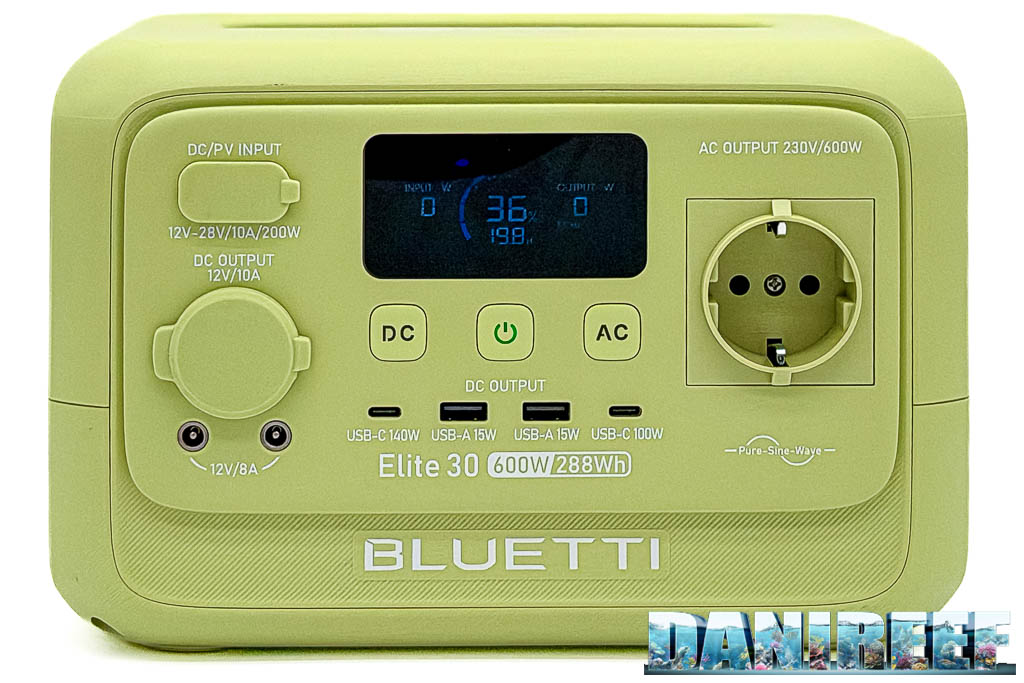
In many tanks, especially mature and heavily stocked ones, the real risk during the first hours of a blackout is not the light, not the controller, and not even the skimmer or the filter itself, but the fact that water stops circulating between the display tank and the sump, or within the aquarium, and that a fundamental part of the overall oxygenation of the system is interrupted. This is where a power station like the Bluetti Elite 30 V2 can radically change the scenario and help keep the aquarium alive.
In a heavily stocked aquarium, even a single hour of blackout can be enough to trigger a chain reaction capable of seriously compromising the health of the organisms inside.
Why the return pump alone is the absolute priority
From a strictly practical point of view, in a modern marine aquarium, the most sensible load to keep running in an emergency is always the return pump. The reason is simple: by powering only the return pump, water continues to circulate between the display tank and the sump, surface overflow remains active, gas exchange driven by the water falling into the sump is maintained, stagnation in parts of the system is avoided and, in most cases, the biological heart of the tank is preserved with limited energy consumption.
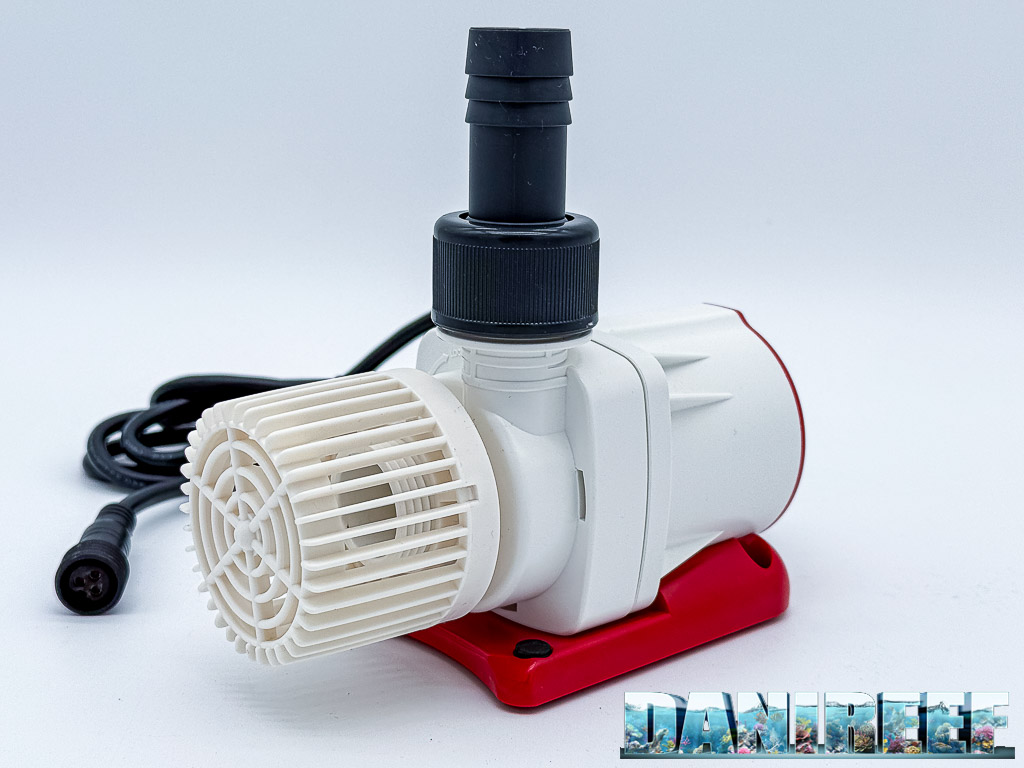
This is one of the most important points of the entire article. In an emergency, you do not necessarily need to power everything. You need to power what is enough to keep the system alive. And in my experience, if I have to choose only one device to keep running, the absolute priority goes to the return pump.
This does not mean that wave pumps and the skimmer are not useful. Quite the opposite. It means, however, that in the relationship between energy consumption and biological benefit, the return pump often represents the best possible compromise. It is the most rational choice to extract the maximum useful survival time from the battery.
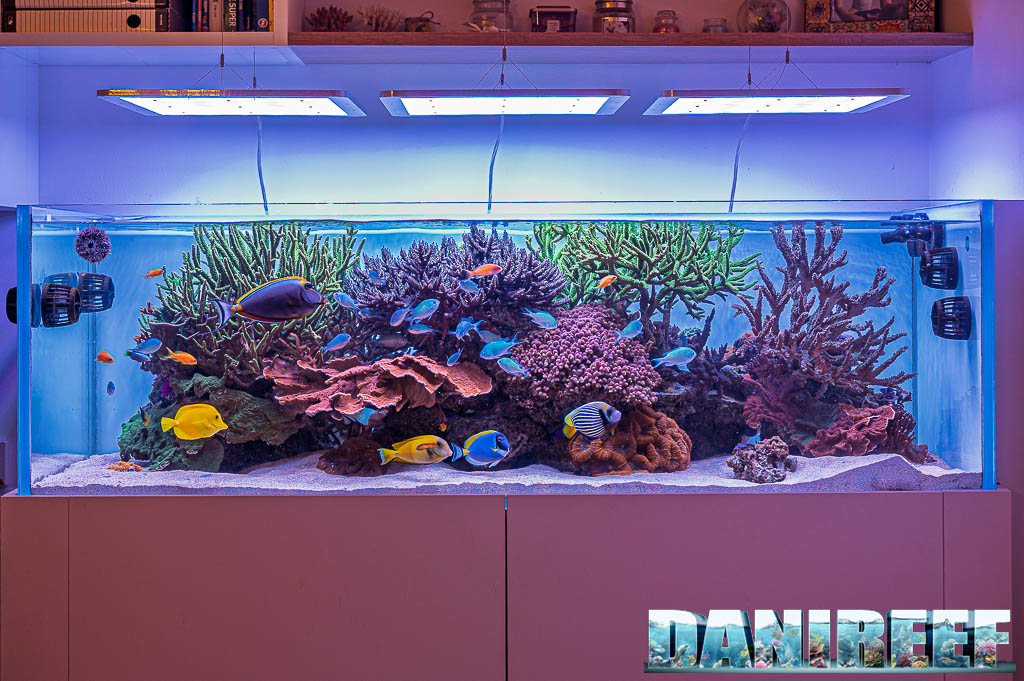
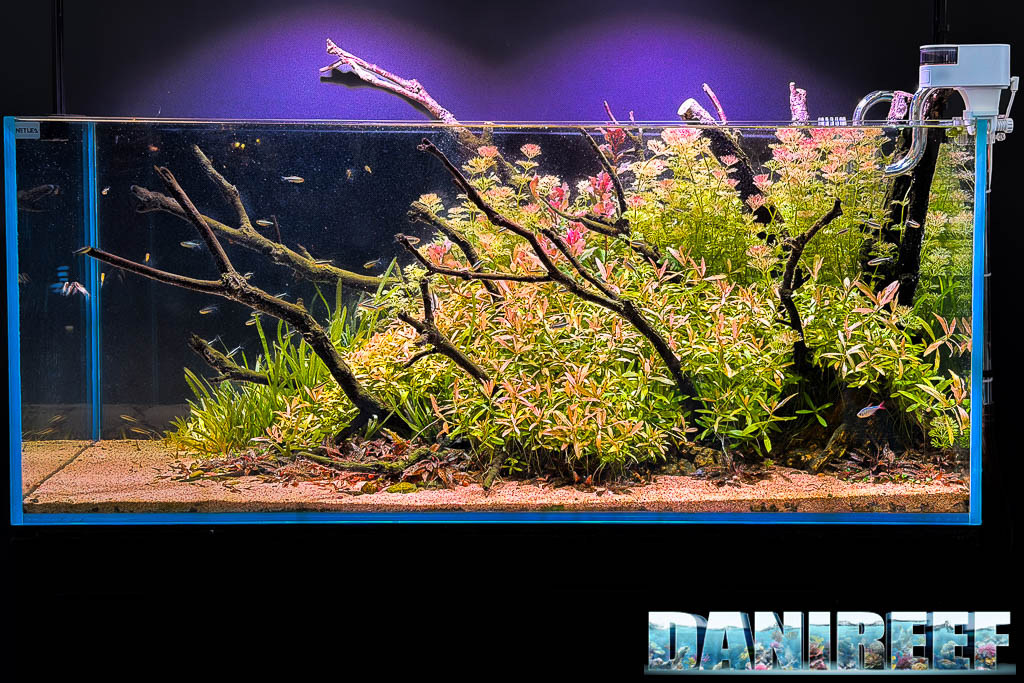
In a freshwater aquarium, or in a marine aquarium without a sump, the priority instead goes to wave pumps, especially if their flow is strategically aimed at the water surface, thereby increasing oxygenation.
Bluetti and traditional UPS: the truly important differences
At first glance, someone might object: why not simply use a traditional UPS? The question is fair, but the answer depends on the type of runtime we want to achieve and the type of load we want to power.
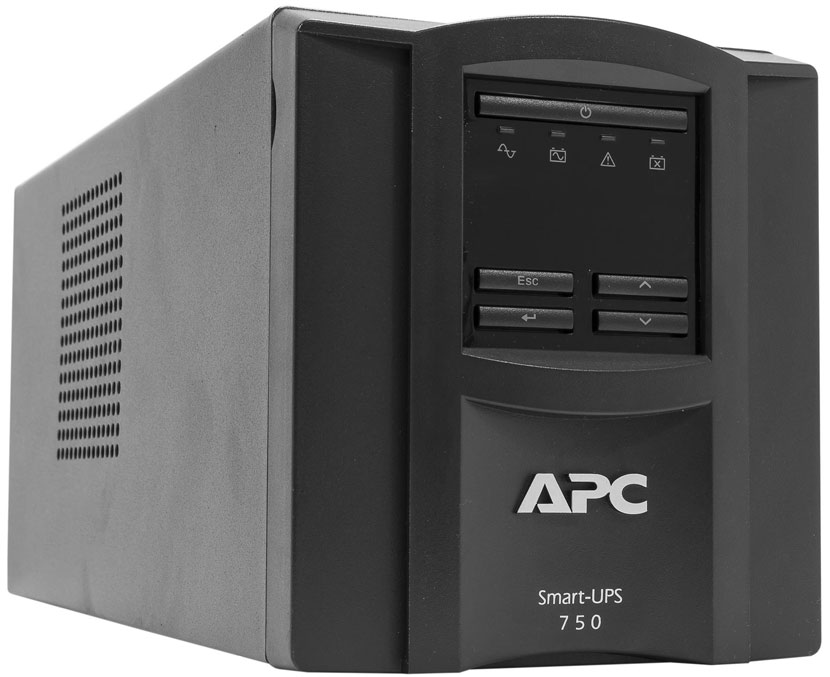
A traditional UPS is normally designed for IT use: computers, modems, NAS units and small network devices. Its purpose is often to provide instant continuity and autonomy for relatively short periods, in many cases just a few minutes, sometimes more, but almost never with the idea of sustaining a system like an aquarium for a long time. A power station like the Bluetti Elite 30 V2 follows a different logic: not just continuity, but also a much larger amount of available energy compared to many classic consumer UPS systems.
This does not mean that a UPS makes no sense. It means that a power station can represent a more flexible and, in certain contexts, more effective solution. It has a known battery capacity, can be monitored via app, allows more thoughtful energy assessments and can be used not only in case of blackout, but also as a mobile power source, as support for tests, measurements or other domestic and aquarium-related uses.
📌 Traditional UPS vs Bluetti: real differences in aquarium use
| Aspect | Traditional UPS | Bluetti / power station |
|---|---|---|
| Design logic | Immediate continuity for PCs, modems, NAS units and electronic devices | A real energy reserve, usable even for longer emergencies |
| Battery type | Often lead-acid batteries or less advanced solutions in consumer models | Modern lithium batteries, more suitable for planned energy use |
| Battery lifespan | Rarely more than two years with the same performance | Can exceed 10 years |
| Typical runtime | Generally much shorter at the same cost | Can reach much more interesting runtimes, especially with carefully selected loads |
| Ideal aquarium use | Minimal protection, especially useful for short blackouts | Real backup for the return pump or selected setups during actual blackouts |
| Monitoring | Often limited, almost non-existent | Display and app with clearer data on load, runtime and battery status |
| Runtime reliability | Battery runtime during discharge is difficult to predict and monitor | It is easy to know the runtime and monitor battery discharge |
| Correct approach | Protecting the system for a short period | Maximizing aquarium survival by powering only the truly essential loads |
In other words, the classic UPS protects continuity for a shorter period, its batteries need to be replaced within a few years, it offers little control and there is always uncertainty about its runtime; a solution like the Bluetti Elite 30 V2 can become a true survival tool for the system over much more interesting periods of time, provided that the load is chosen intelligently.
The Bluetti Elite 30 V2 app
One of the most convenient aspects of the Bluetti Elite 30 V2 is the dedicated app, which allows you to monitor and control the product in a much more advanced way than through the front display alone. In an aquarium context, this is not a minor convenience: knowing at any moment how much energy remains available, which outputs are active, how much power is being drawn and how the system is behaving makes a huge difference when evaluating the backup.
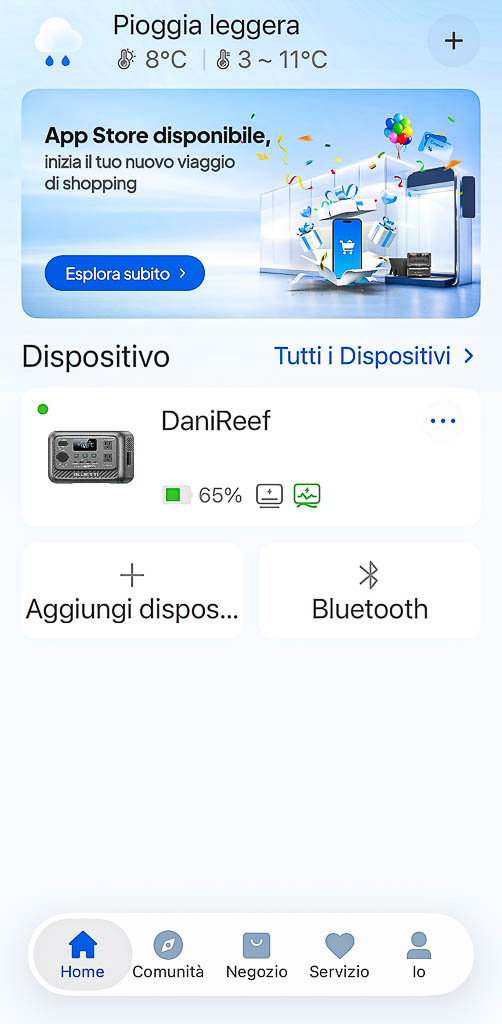
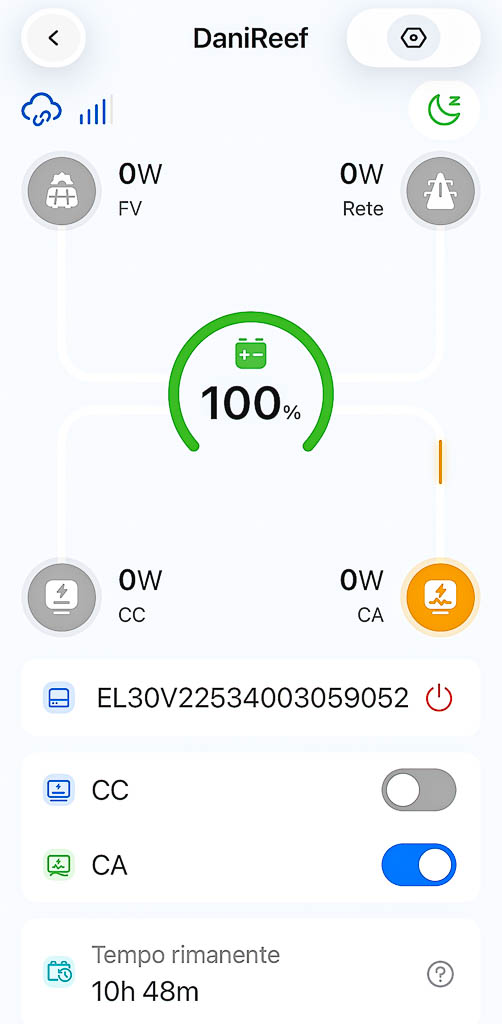
In the video, we show the app from exactly this point of view: as a practical tool to understand whether the unit is really working the way we want it to. In the event of a power outage, access to data is essential. And being able to check the status of the power station without having to rely only on the physical display is a concrete added value.
How to set up the Bluetti properly to work as a UPS
To use the Bluetti Elite 30 V2 as a continuity system for the aquarium, it is not enough to connect it “randomly.” It needs to be configured consistently with the function we want it to perform. The correct approach is to leave it ready to act as a power source in the event of a grid outage, powering only the truly essential loads.
First of all, it is advisable to leave only the AC outlet active. Then some changes should be made in the app setup:
- Operating mode: Standard UPS;
- AC-ECO: Disabled (otherwise, after a few minutes, it shuts down low-load devices);
- Auto sleep: Never.
Then you need to enter the advanced settings, select “save the main switch status” and choose On. Please note that to enter this menu, a password is required. We do not have authorization to publish it, but you can find it in our video by clicking here, or you can contact Bluetti customer service.
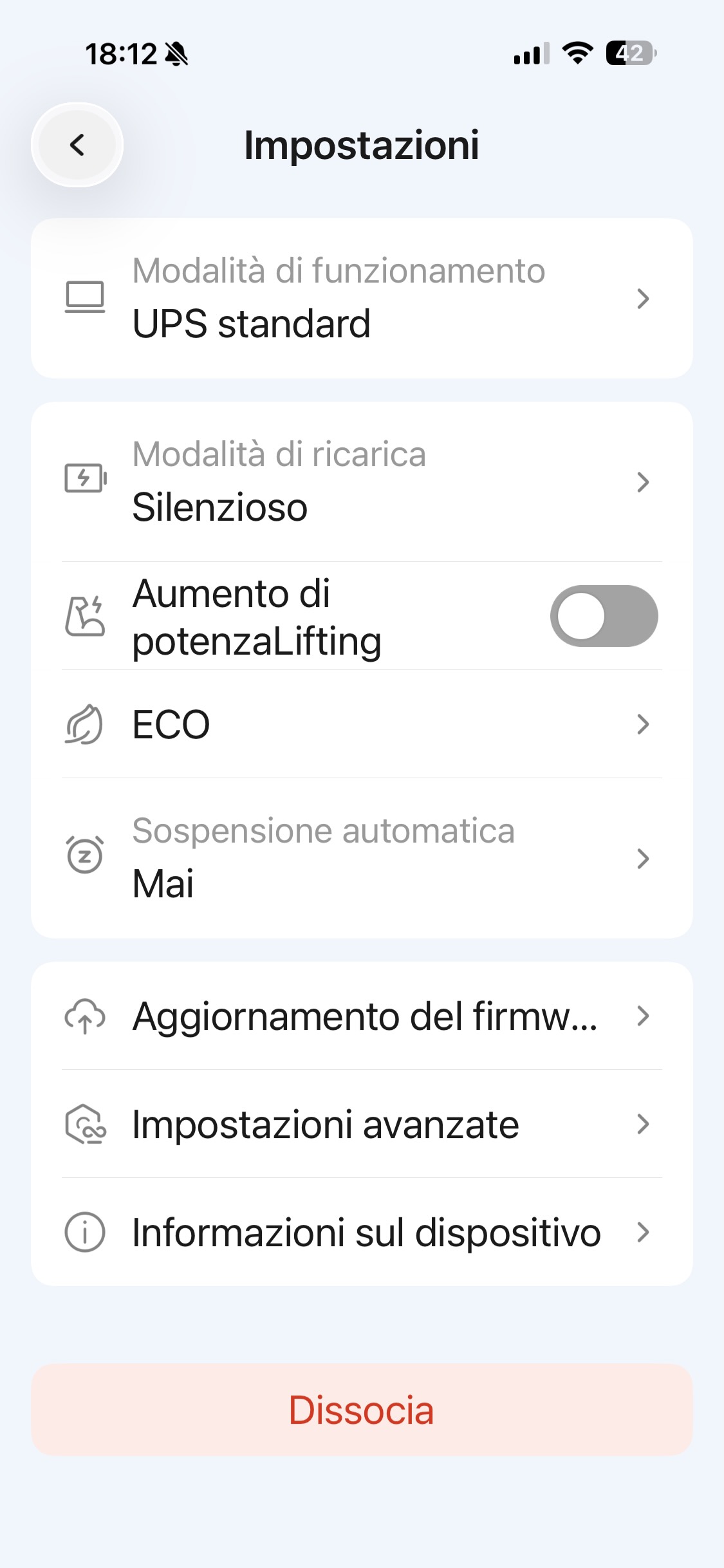
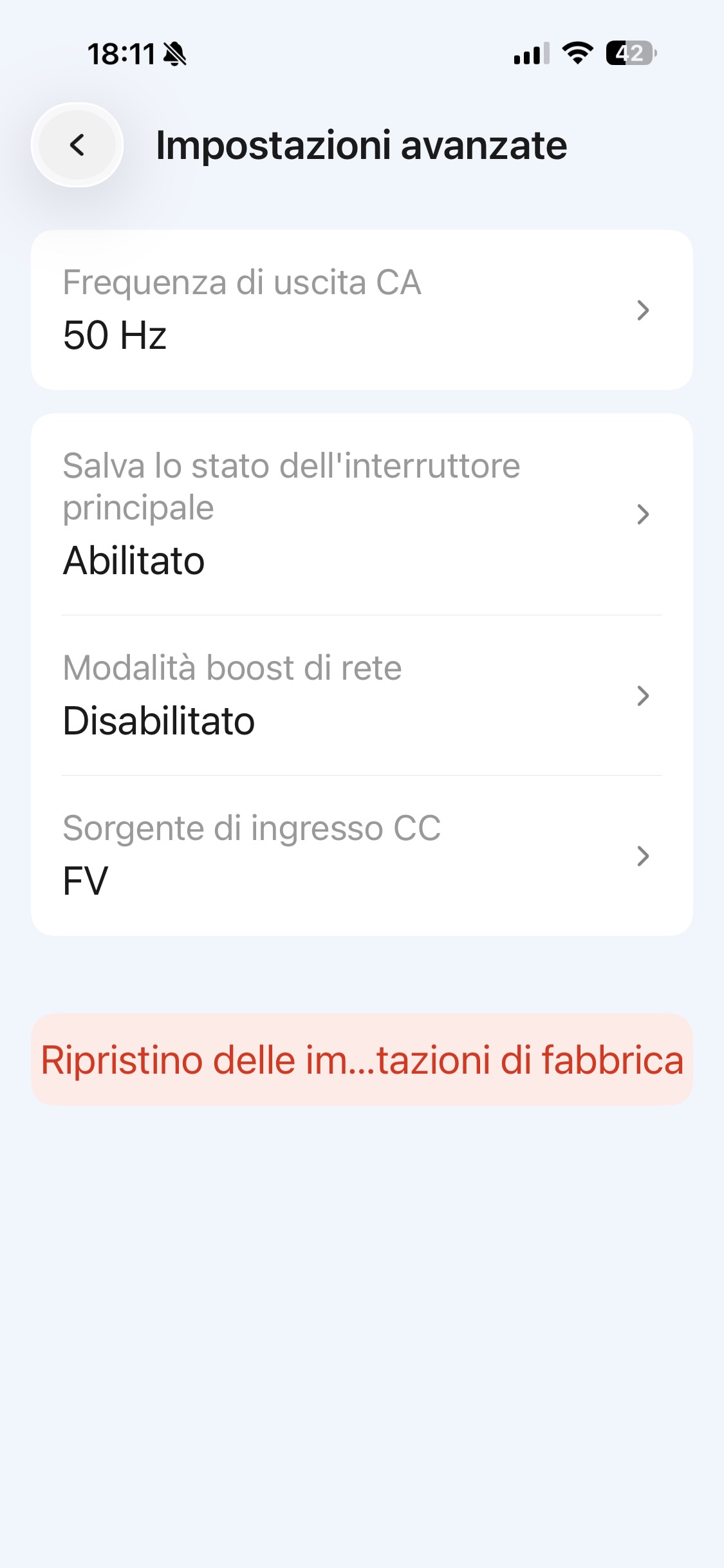
In other words, the ideal configuration is not the most generic one, but the most stable one for our scenario: output ready, essential load, settings checked, consumption monitored. It may seem like a minor setup detail, but this is precisely where a technological object becomes a real backup system for the aquarium.
First test: return pump only
The first test we carried out was deliberately the most rational of all: powering only the return pump of my aquarium. This is the test that interests us most from an aquarium point of view, because it tells us how effective a compact power station can be when used with the sole purpose of keeping the tank alive during a blackout.
Our pump, the Octo Varios2, is set in my aquarium to consume only 13 watts, for about 650 l/h of flow, enough for my Nyos Quantum 120 skimmer (our review is coming soon).
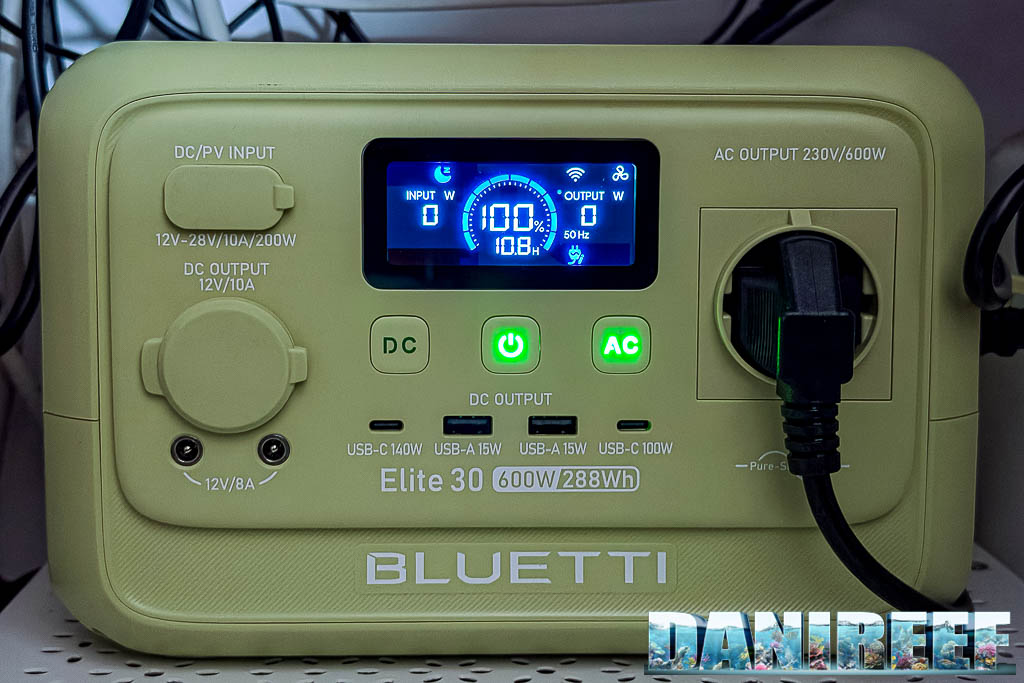
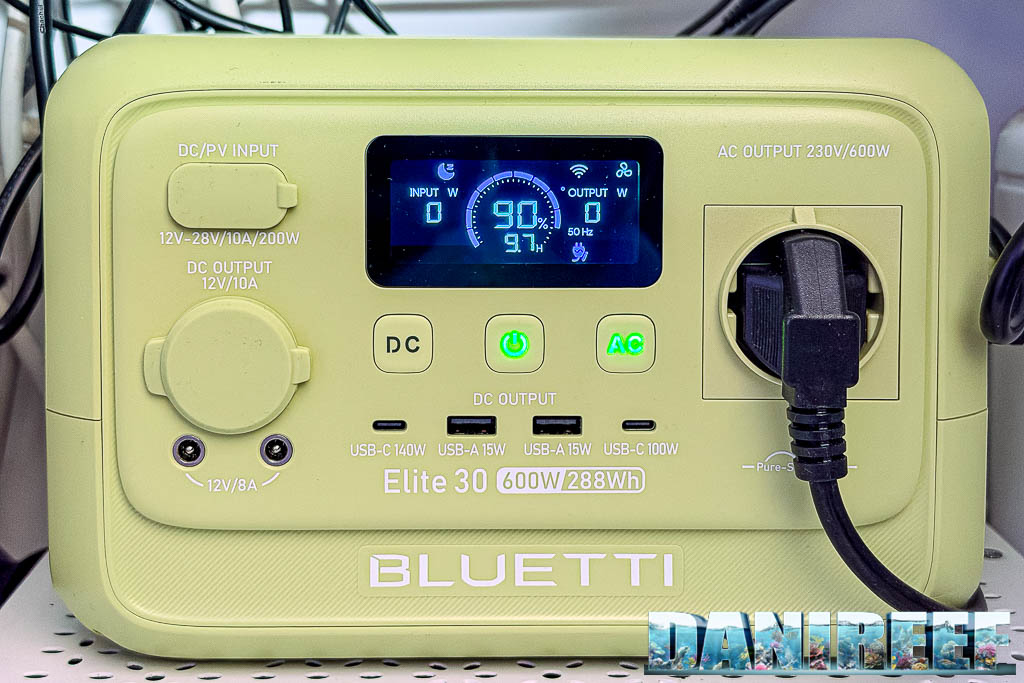
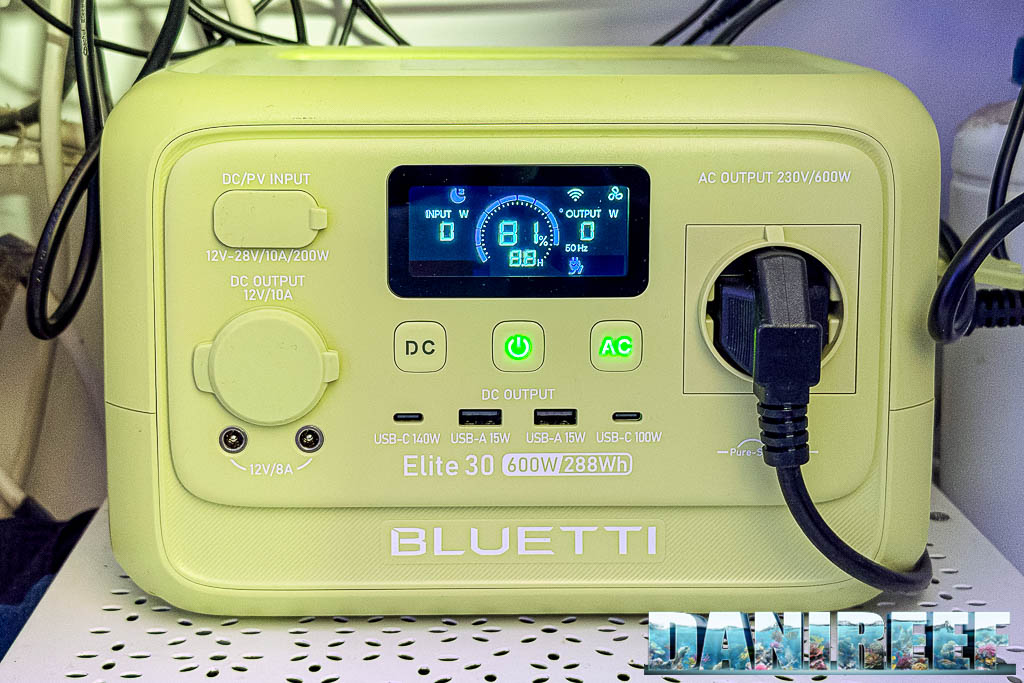
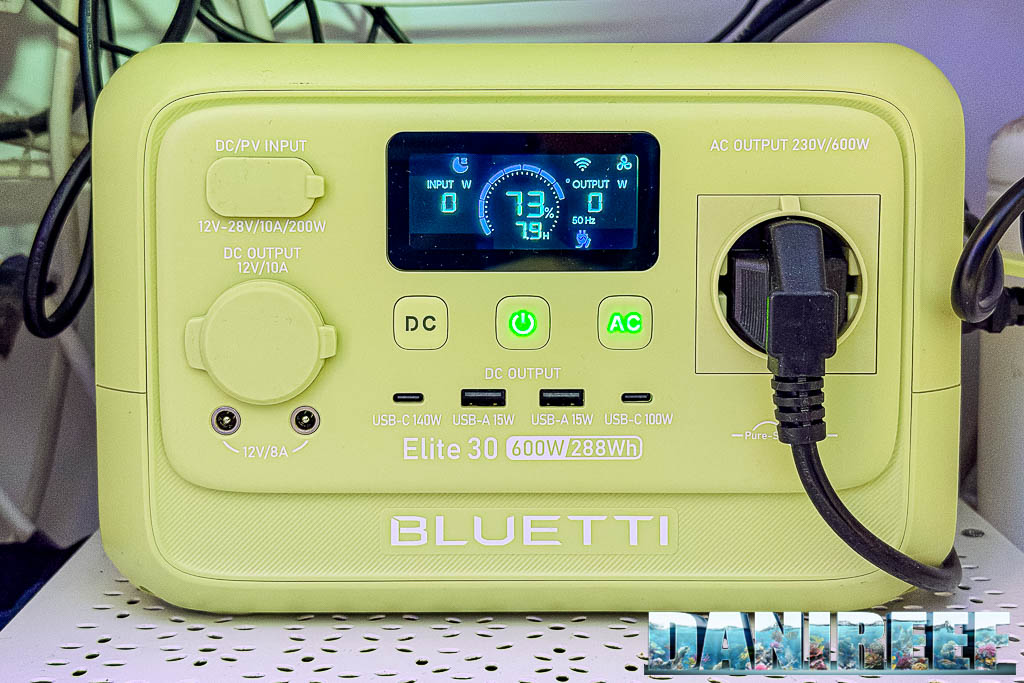
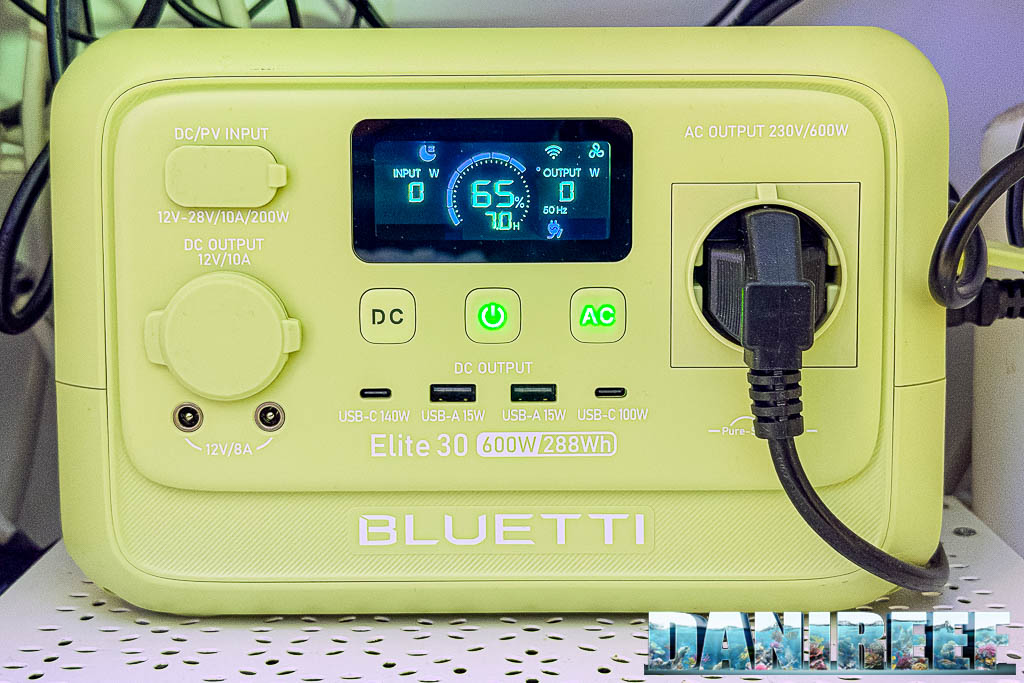
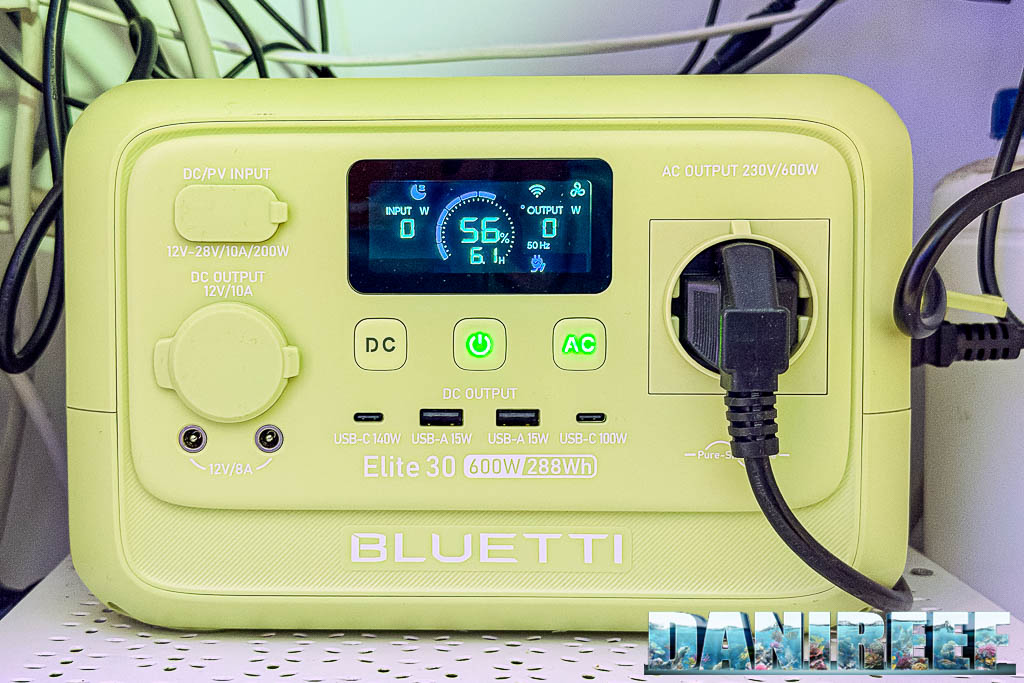
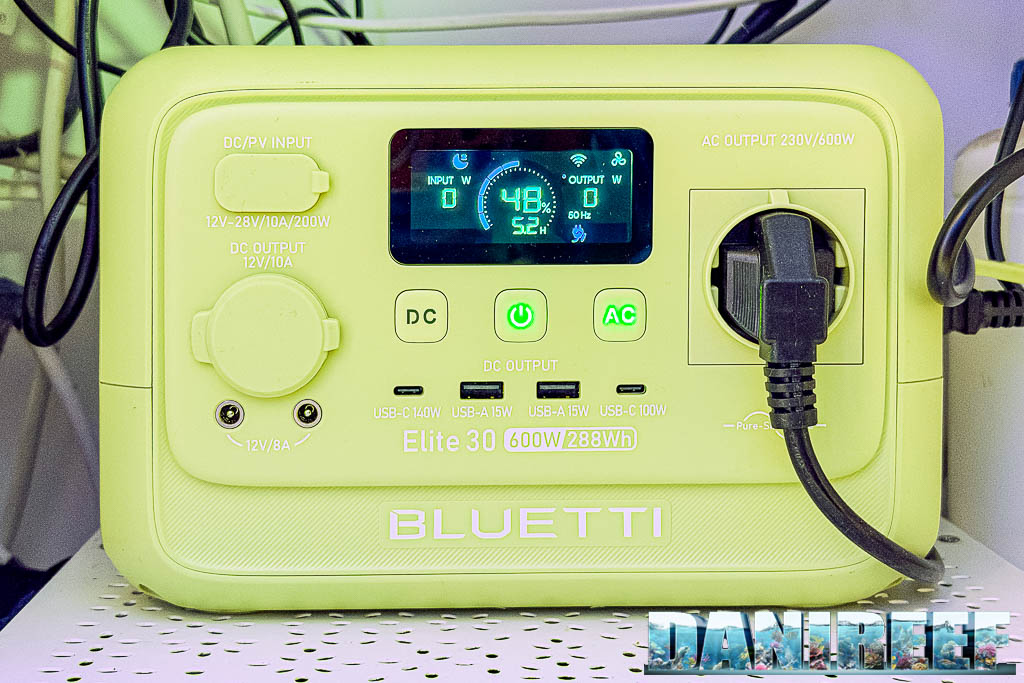
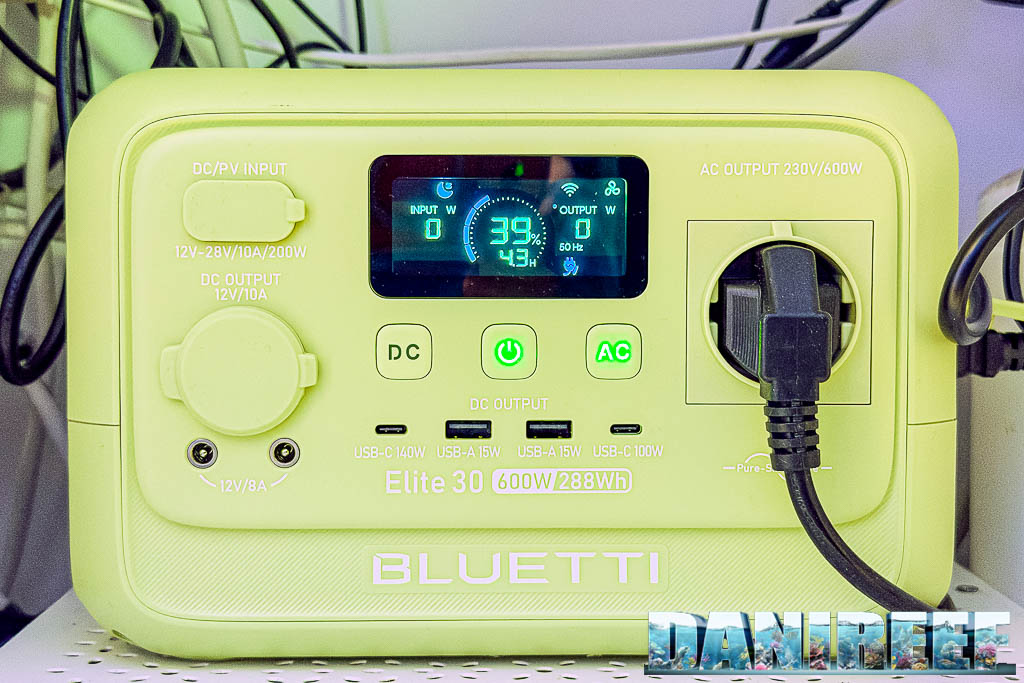
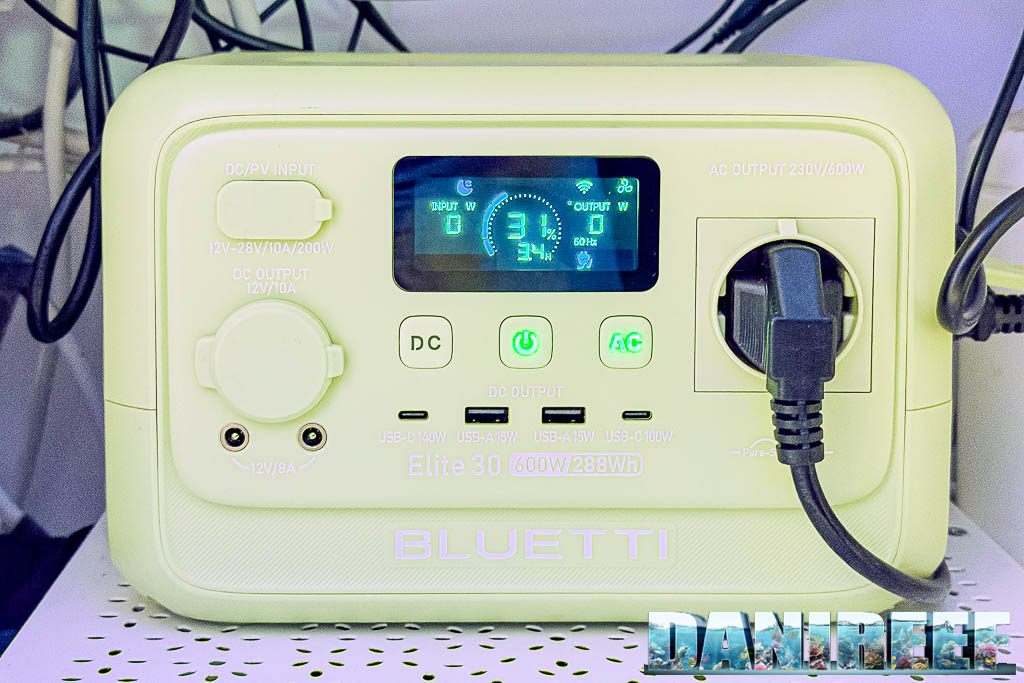
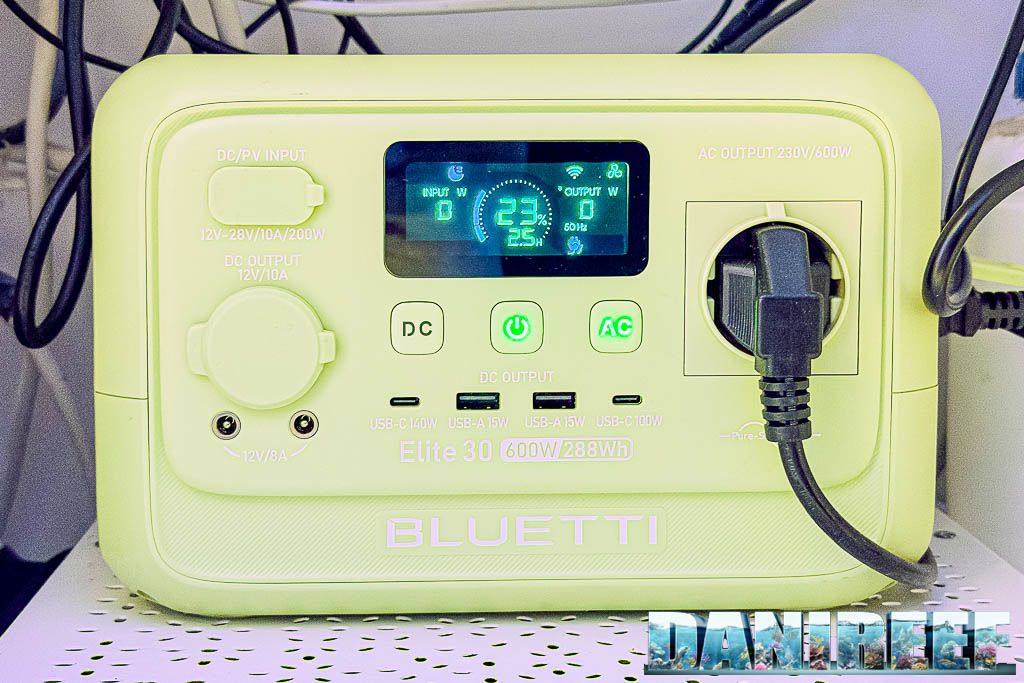
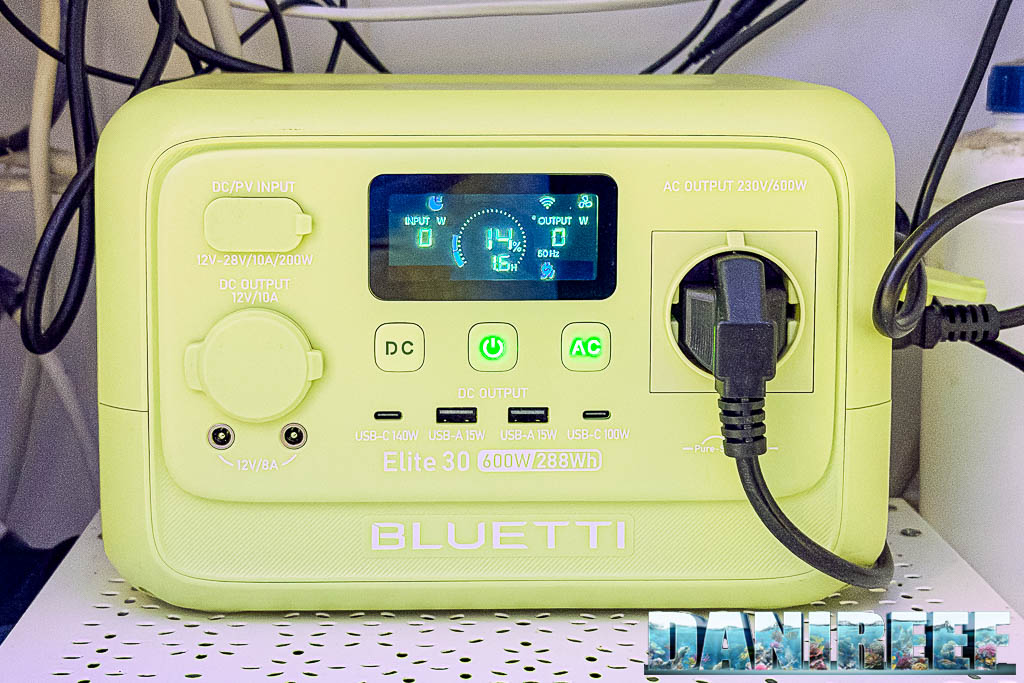
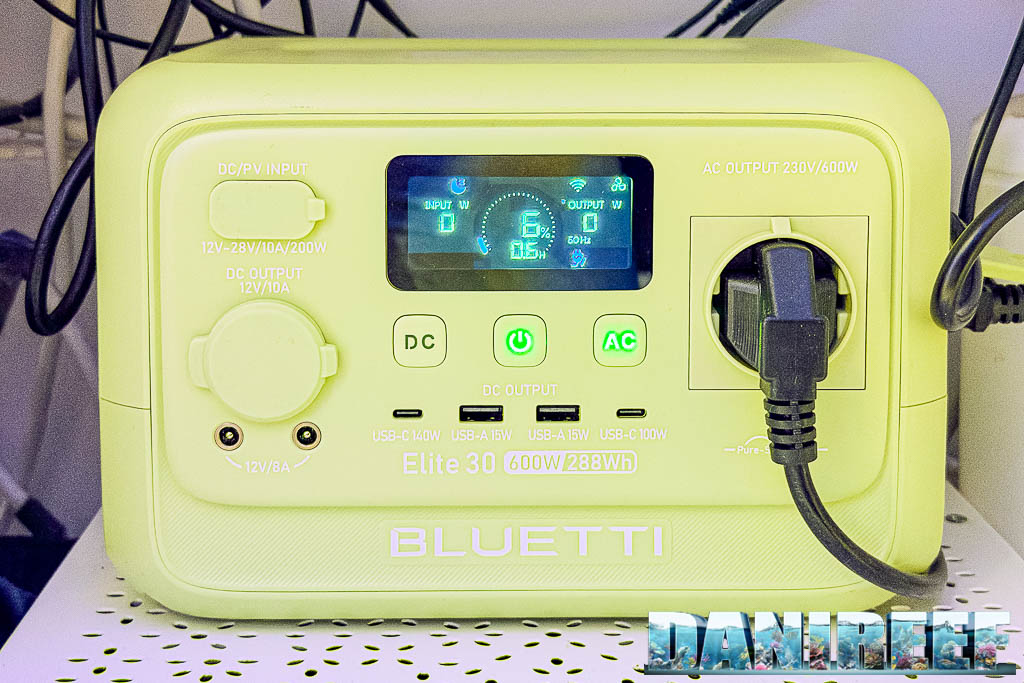
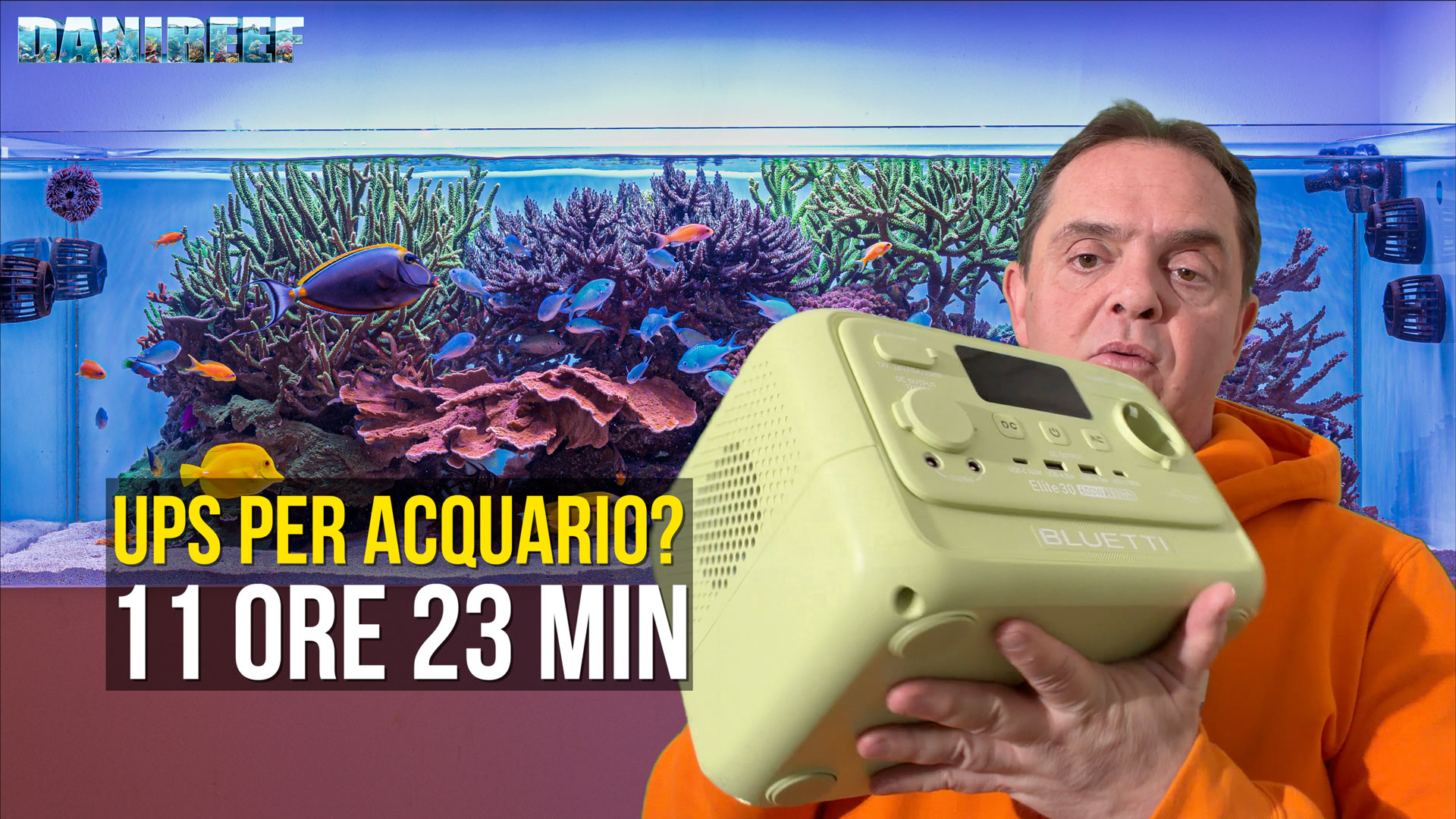
The results were very positive. The Bluetti Elite 30 V2, with a 13-watt pump load, achieved a runtime of 11 hours and 23 minutes. This showed that, with the right approach and a carefully selected load, a 288 Wh battery can become much more than a symbolic support. In fact, it can represent a concrete and credible answer to one of the most serious problems in managing a marine aquarium.
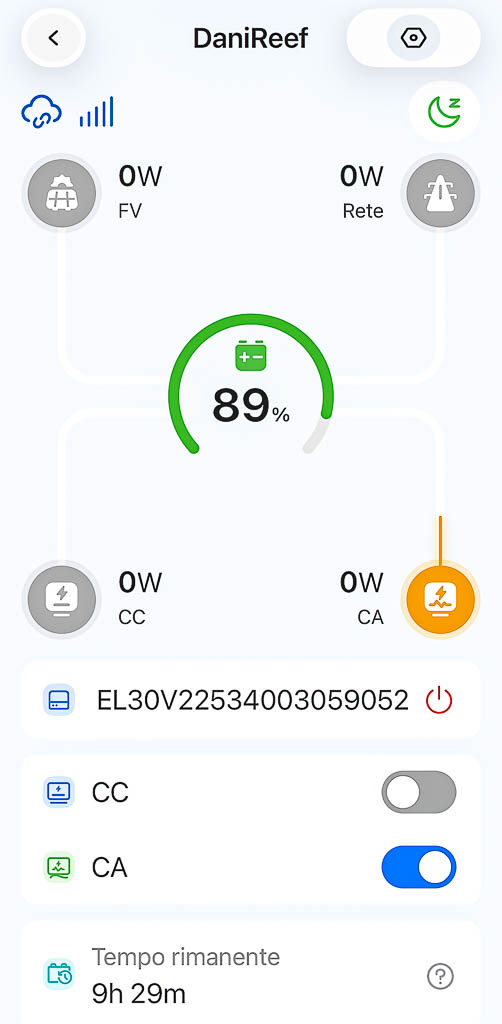
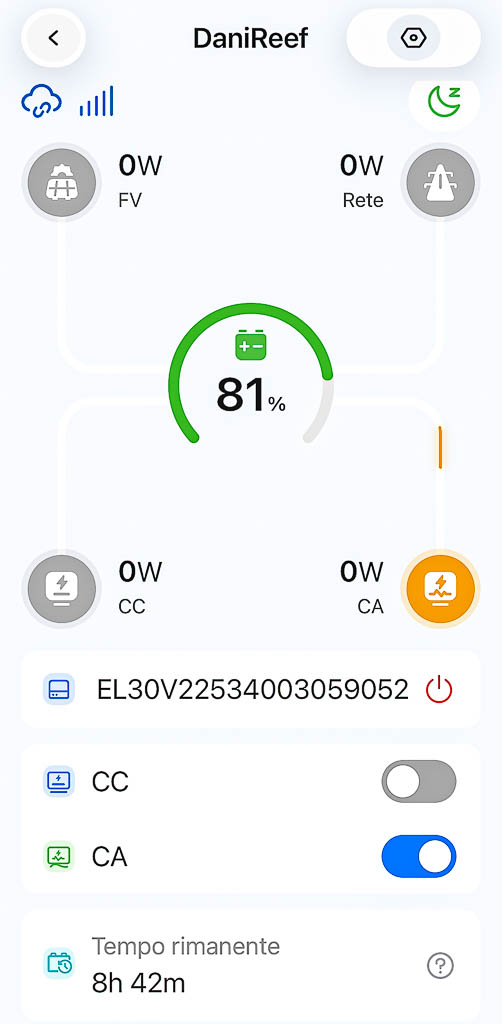
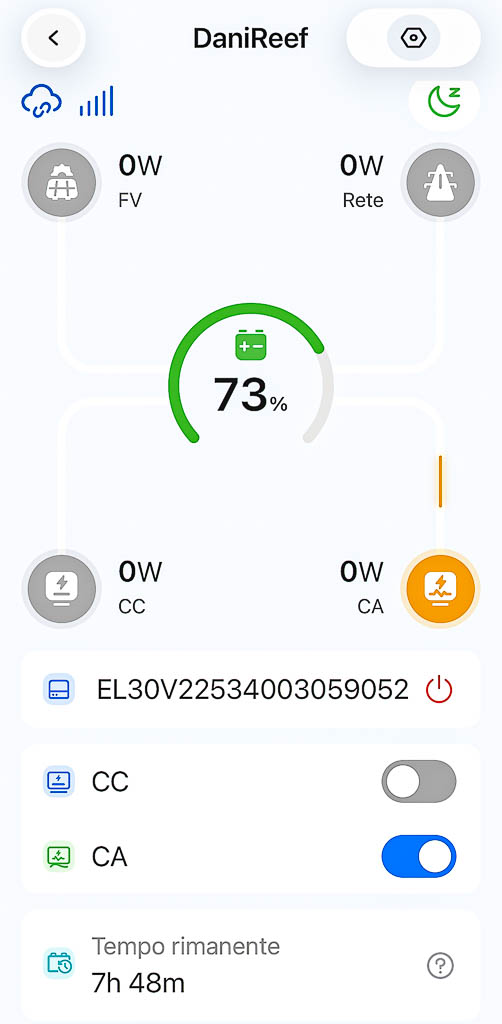
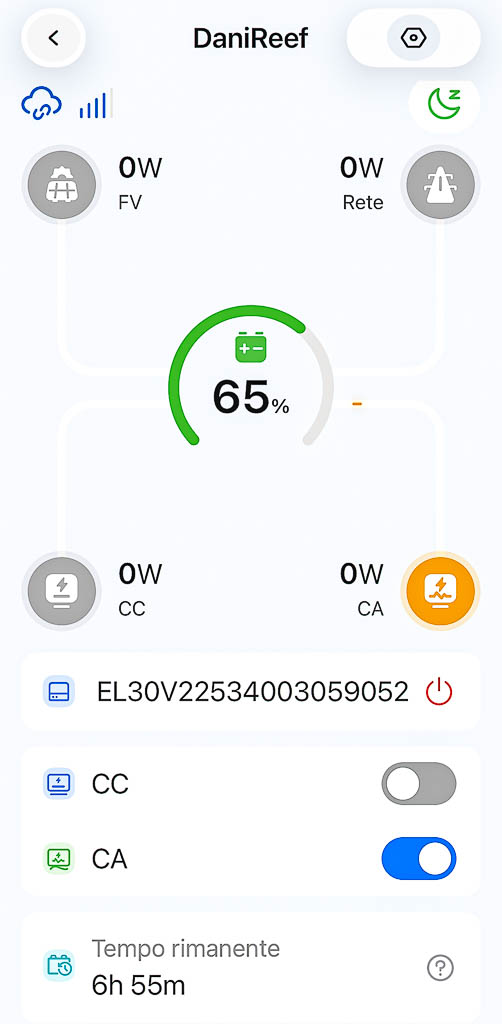
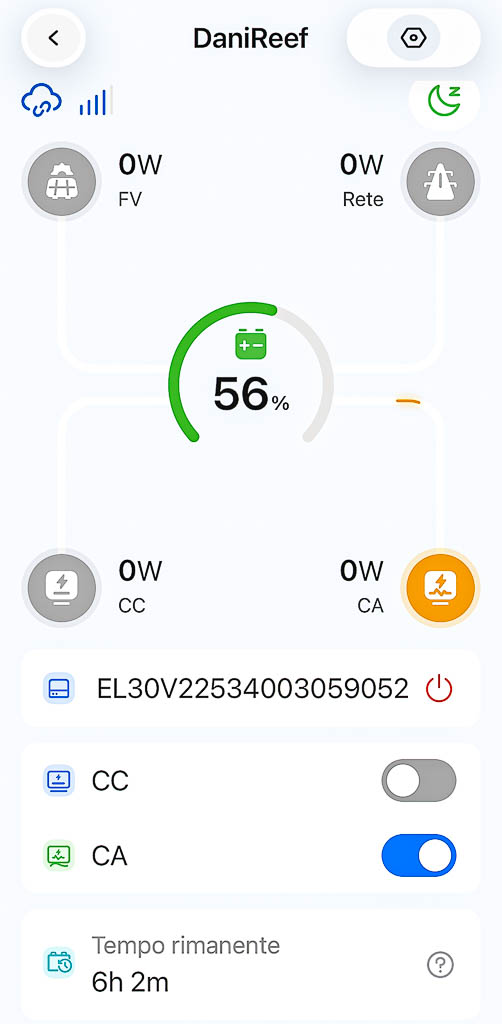
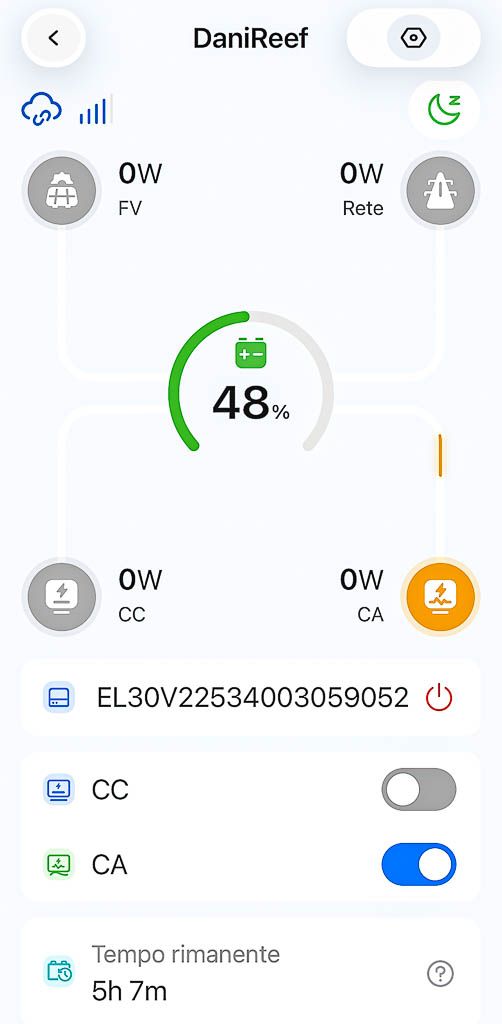
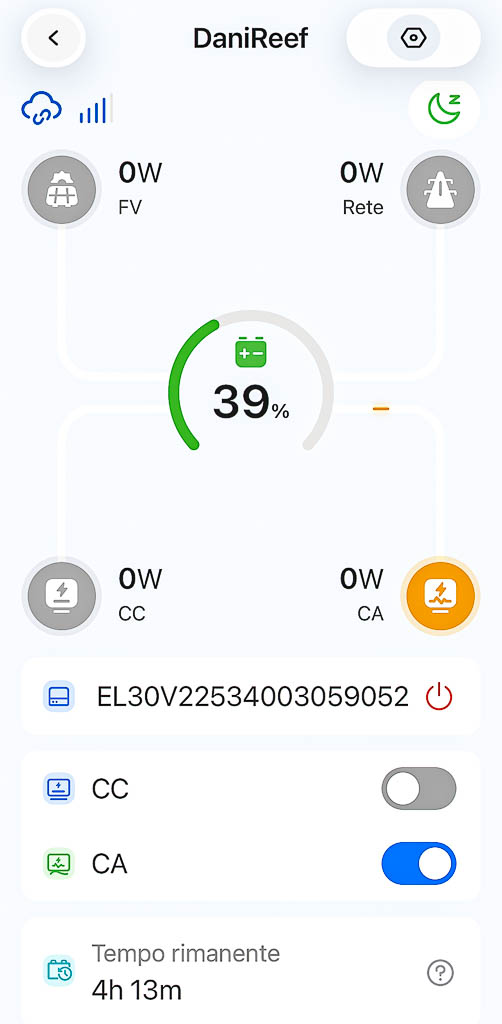
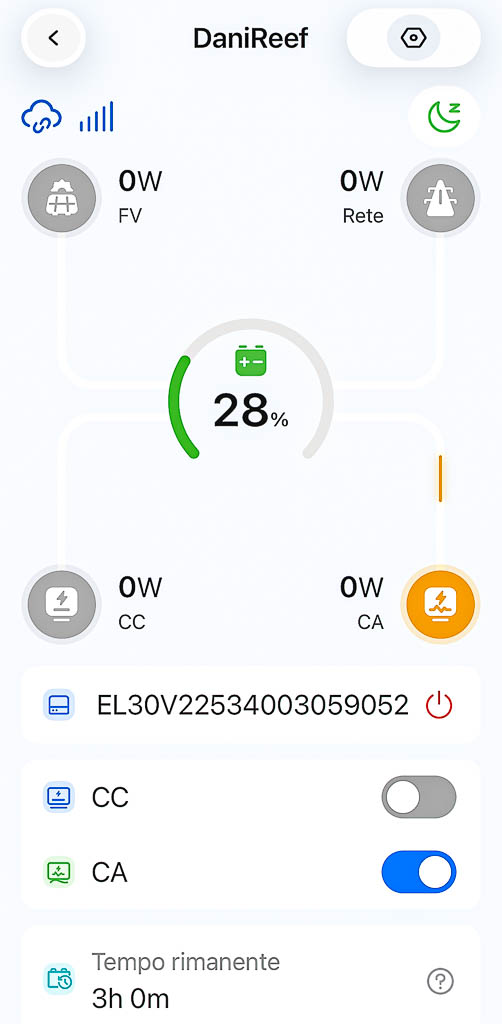
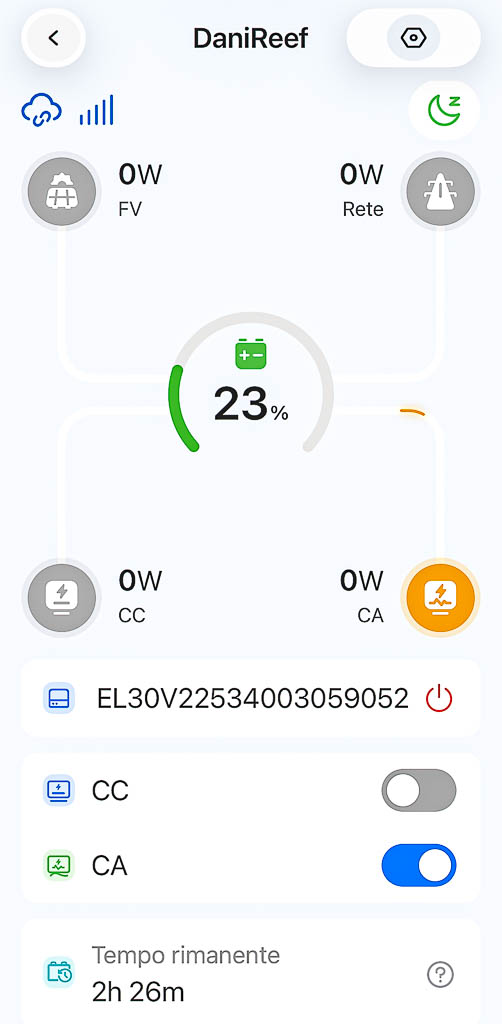
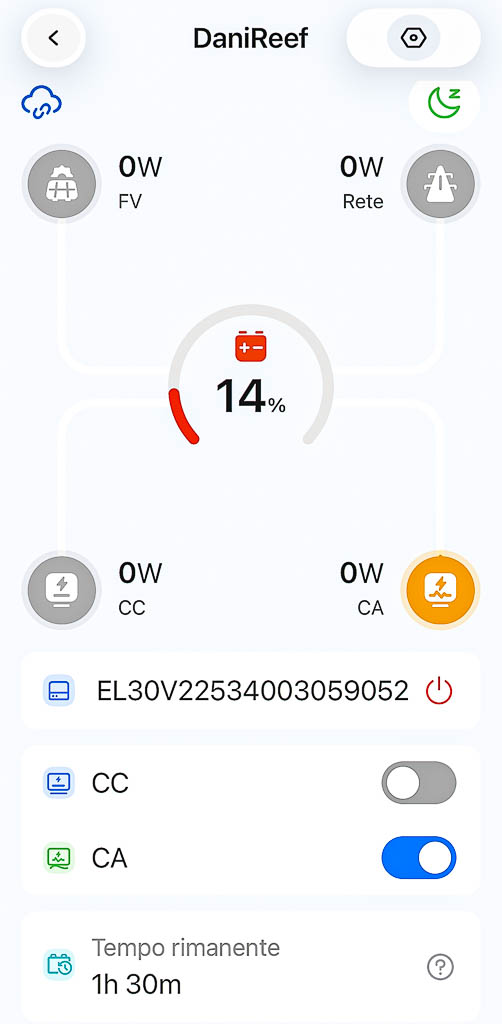
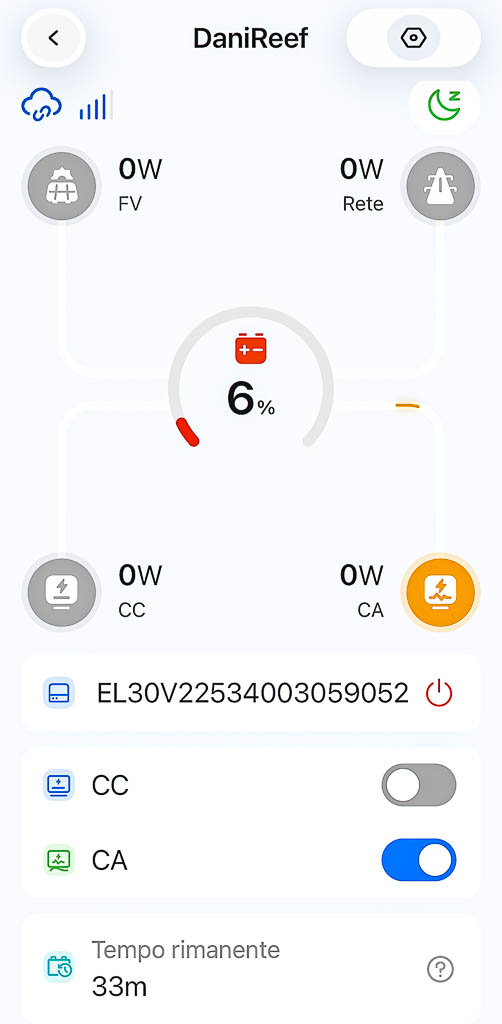
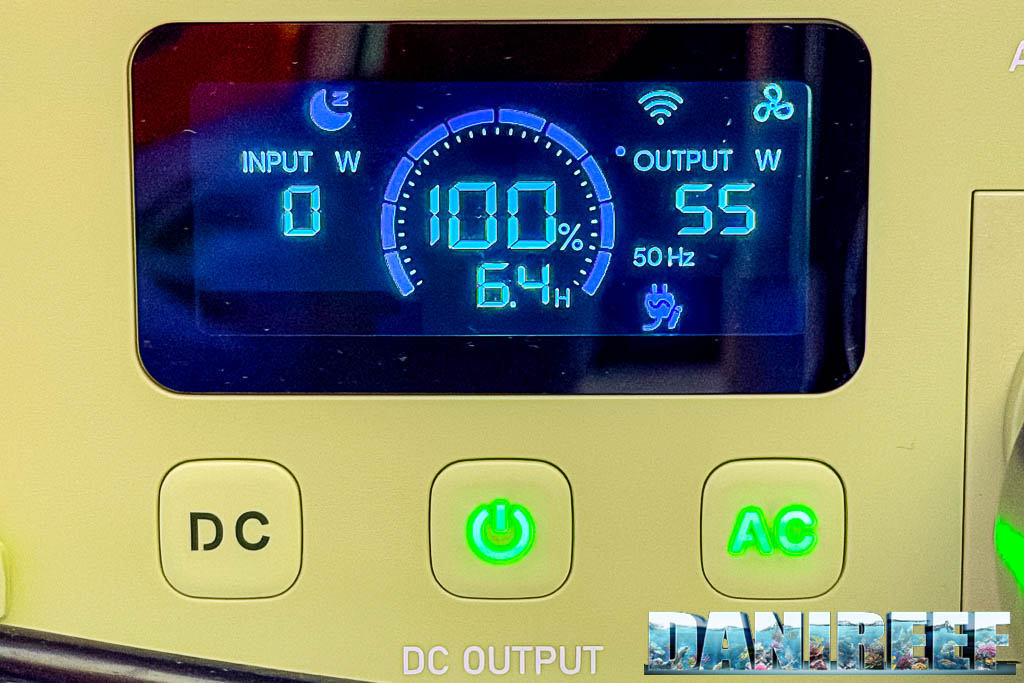
The most attentive among you will have noticed that the load shown both on the Bluetti Elite 30 V2 display and in the app was zero. Yet both still showed an estimated backup time. This is because this Bluetti cannot correctly read instantaneous consumption when it is very low, roughly below 15 watts. But with the settings we applied, it does not shut down and continues all the way to the end of the test. From 9:30 in the morning to 8:53 in the evening.
Second test: return pump, wave pump and skimmer
Given the excellent results of the first test, we decided to raise the level of the trial and check the behavior of the Bluetti Elite 30 V2 with a more complex load, consisting of the return pump, the wave pump and the skimmer. In this scenario, we are no longer at the bare minimum required for the survival of the tank, but in a configuration much closer to an “advanced” emergency setup.
Again, the results were very good. A full 6 hours and 39 minutes, as you can see below. Clearly, increasing the load also increases overall consumption and therefore reduces theoretical runtime, but the most interesting data point is that the system still proved to be credible and usable. This opens up a very important consideration: a compact power station is not only useful for keeping a single device running, but can also be used more flexibly, depending on the severity of the event and the expected duration of the blackout.
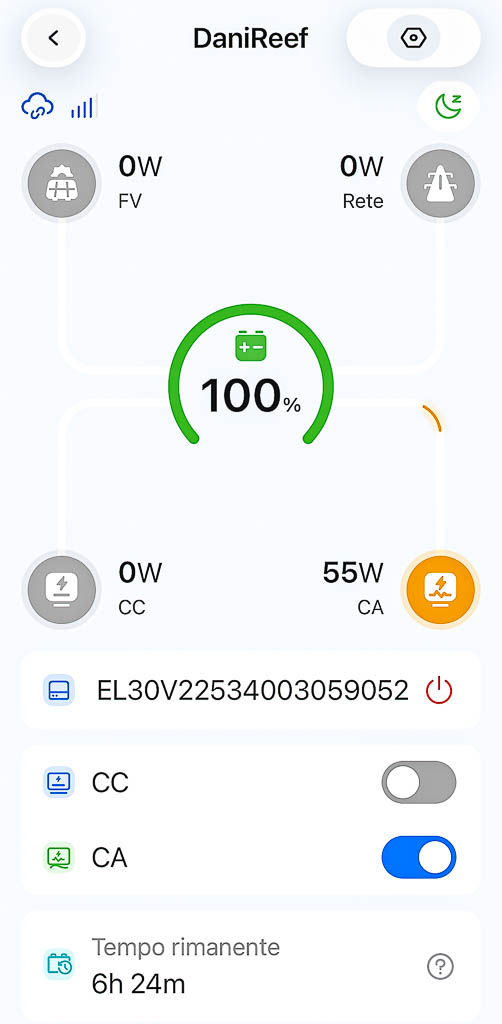
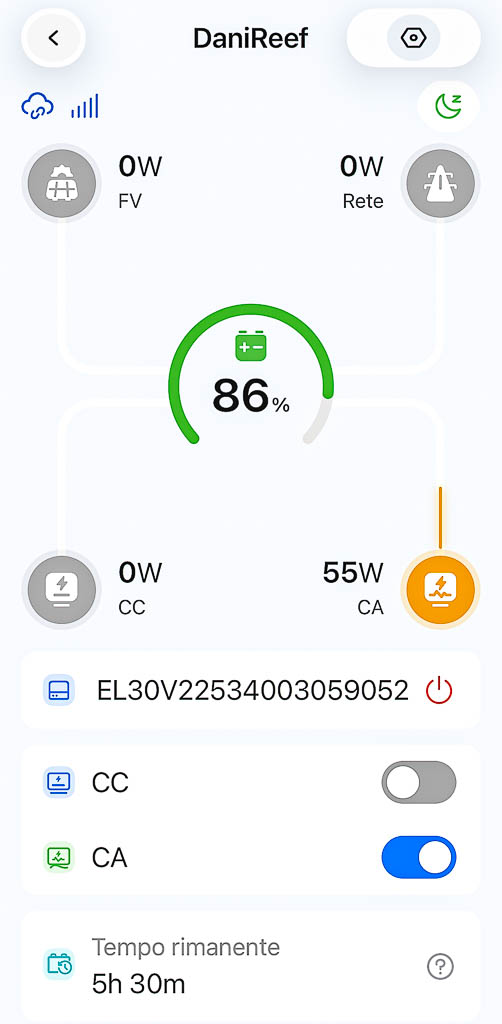
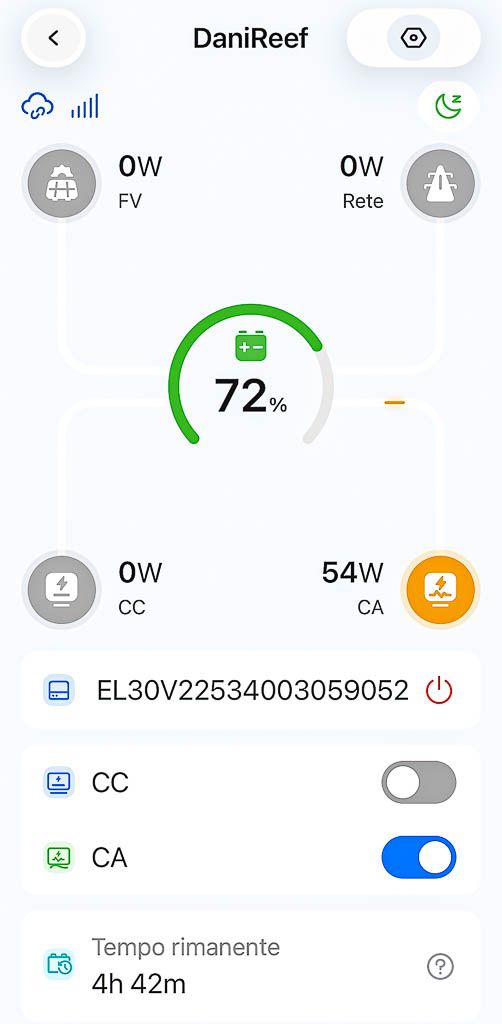
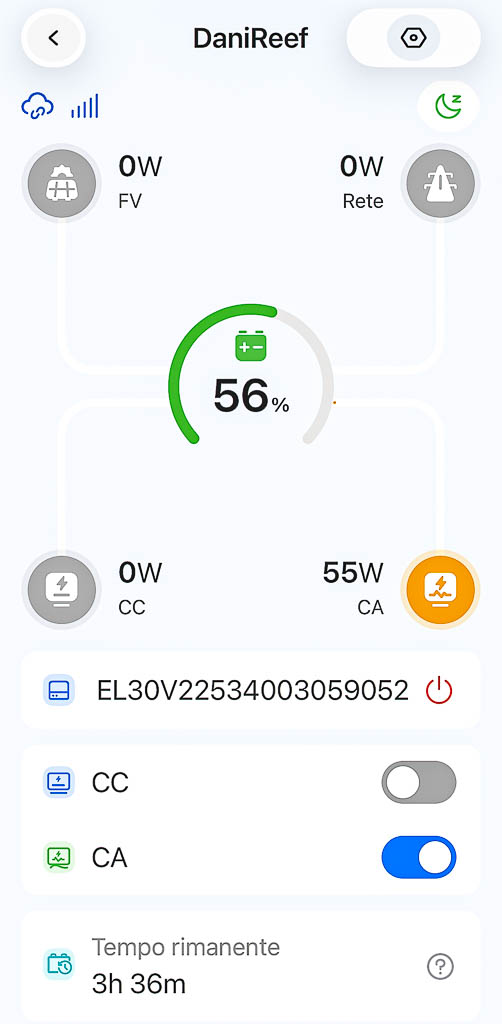
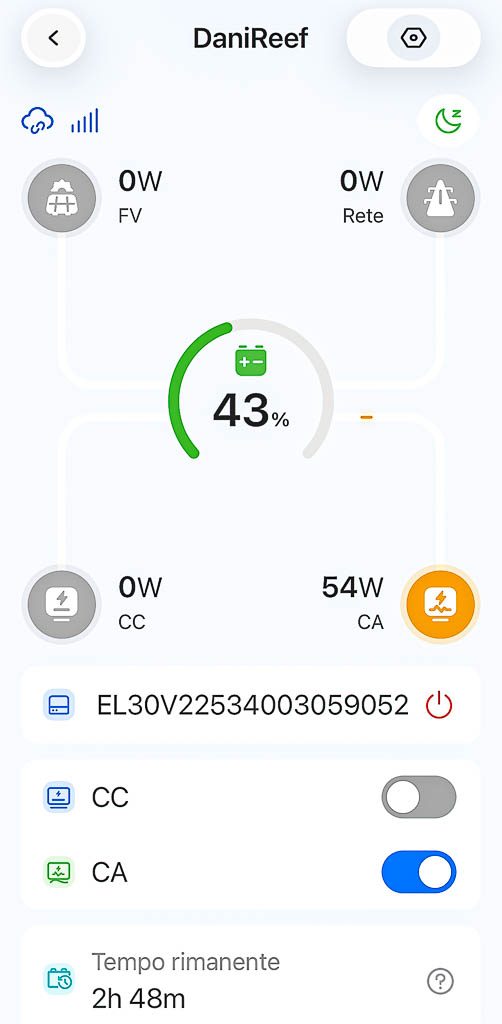
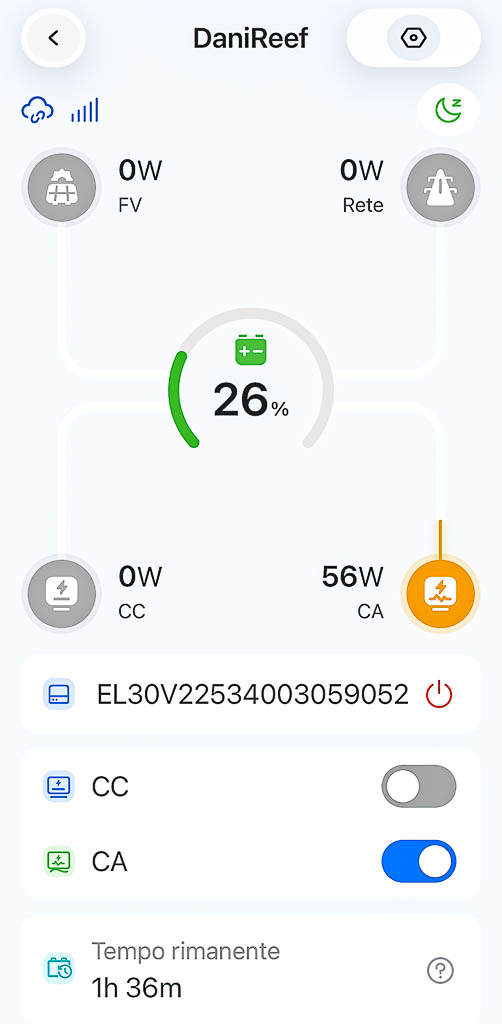
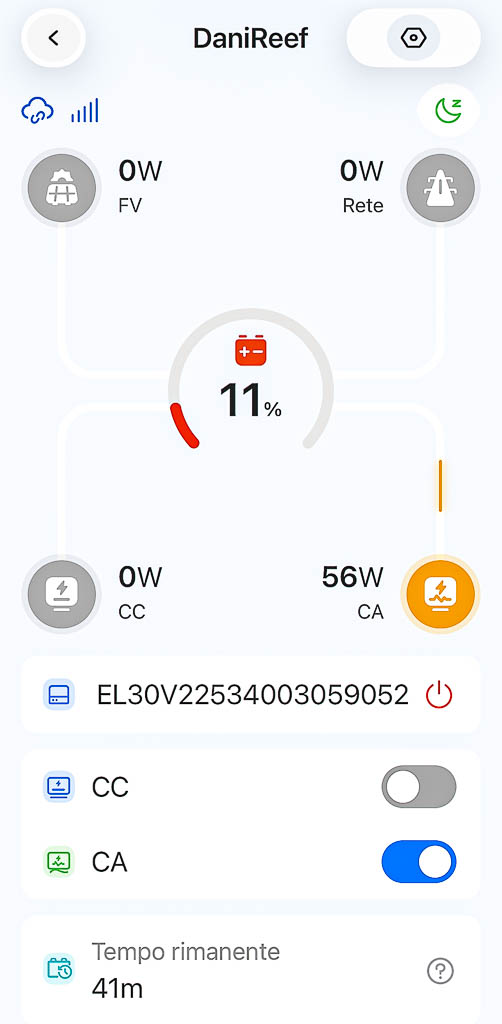
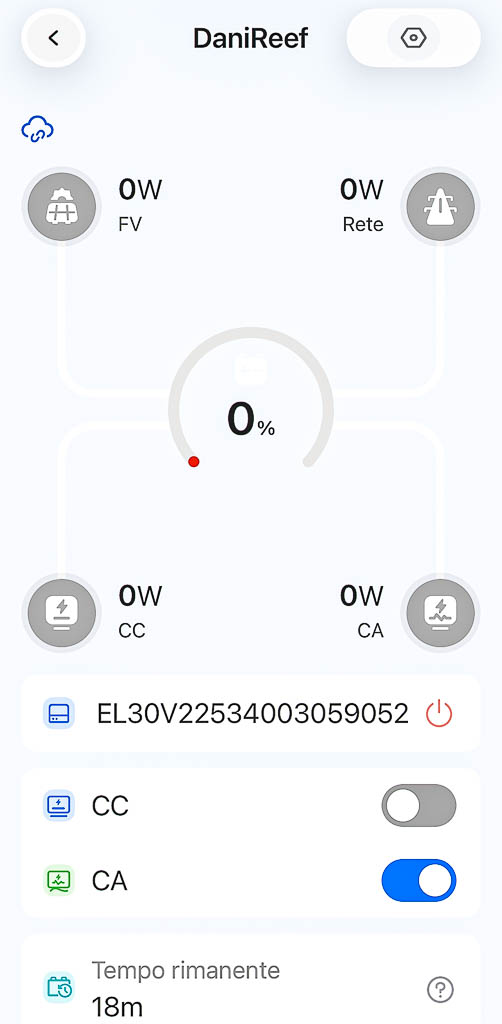
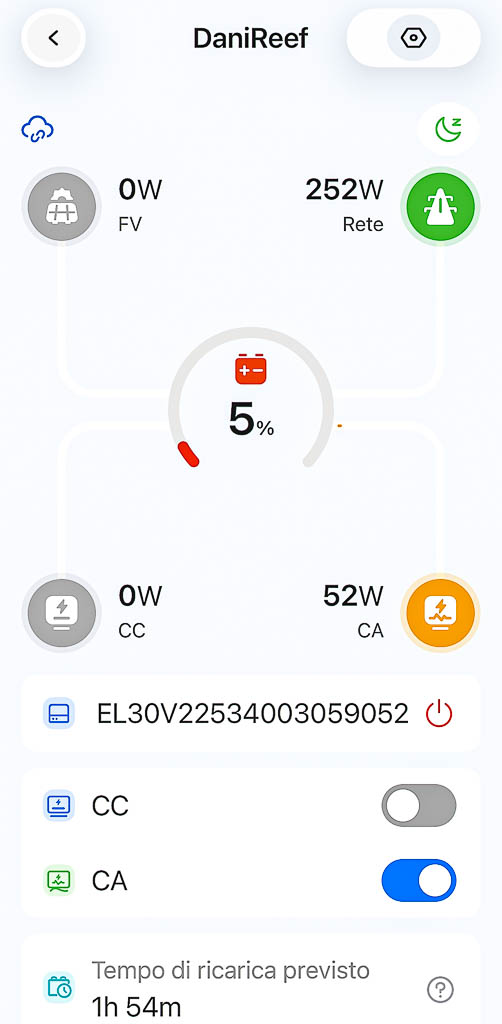
Here we see another discrepancy between reality and the behavior of the Bluetti. The actual load was around 32 watts, while the app (and the display) showed around 55 watts. We explain why in the next paragraph.
In any case, for me, with these runtimes, the first solution with only the return pump is still the one to prefer. We are in an emergency, and it needs to last as long as possible. 6 hours and 39 minutes, in my case, are not enough to make me feel safe, unlike 11 hours and 23 minutes. With 11 hours, I know I can cover an entire working day.
Real power, apparent power and why the numbers do not always seem to match
Here we enter a technical area that I believe is essential, because it explains many apparent inconsistencies that can be seen between display, app and external measurements. When we power a load such as an aquarium pump, the power we read does not always correspond perfectly and immediately to what we might expect. The reason is that in the real world there is a difference between real power and apparent power.
Real power, expressed in Watts (W), is the power that is actually converted into useful work, heat, movement or another form of energy used by the load. Apparent power, expressed in Volt-amperes (VA), is instead the result of voltage multiplied by current, without considering the phase shift between the two quantities. In purely resistive loads (such as heaters), W and VA tend to be much closer; in inductive or electronic loads, such as many pumps and power supplies, even significant differences can emerge.
This is where the concept of power factor comes into play. If a device has a power factor below 1, then apparent power can be significantly higher than real power. In practice, the system sees a certain current flowing, but only part of it is translated into energy actually converted into useful work. This explains why the numbers shown by apps, displays or external instruments may not always appear perfectly aligned.
In our case, this aspect is important for two reasons. The first is that it helps us correctly interpret the readings. The second is that it prevents us from making superficial calculations about runtime. If we do not understand exactly what we are measuring, we risk overestimating or underestimating the real duration of the backup.
What really matters to us, however, is that the effective runtime of the Bluetti depends on the real load, not simply on the apparent one.
Theoretical backup runtime calculation
So we come to the most important question of all: how long does it really last? The Bluetti Elite 30 V2 has a declared capacity of 288 Wh. This means, simplifying things, that the battery can theoretically provide 288 watts for one hour, or 144 watts for two hours, or 28.8 watts for ten hours. But this is only the ideal theory. In the real world, at least three other factors come into play: inverter efficiency, the power consumption of the unit itself and the real behavior of the load.
In the first case, we can calculate the “theoretical” consumption of the Bluetti Elite 30 V2 with its 288 Wh battery quite simply. The internal battery lasted 11 hours and 23 minutes, or 683 minutes. So, by dividing the battery capacity by 683 and then multiplying by 60, we obtain the total system consumption. 288/683*60=25.3 watts. Considering that our pump consumes 13 watts, in this configuration the Bluetti system seems to account for about 12.3 watts between conversion losses and internal consumption.
Let us repeat the same calculation for the second test we performed. Still 288 Wh of capacity and a runtime of 6 hours and 39 minutes, or 399 minutes. 288/399*60=43.308 watts. Since our average consumption was 32 watts, because the wave pump varies its output and is therefore not constant, we again have a Bluetti system consumption of around 11 watts.
However, an important point must be clarified: this is an empirical model built starting from the full nominal capacity of the battery, so it inevitably includes not only the unit’s own consumption, but also conversion losses. Bluetti, in fact, declares an overall system efficiency of 81% and an internal consumption of about 7 watts. Applying these figures to our tests, it becomes clear that with very low loads the impact of the system is proportionally higher, while with higher loads it tends to decrease.
For this reason, from an aquarium point of view, we have also chosen to provide a small automatic calculation based on our empirical approach, which we consider more conservative and more aligned with real emergency use. By entering the capacity of your Bluetti and the consumption of your setup, you can obtain a practical estimate of the runtime:
A small discount with dedicated link and DANIREEF code
At the time of writing, the Bluetti Elite 30 V2 has a list price of 279 euros. By using our dedicated link and entering the code DaniReef at checkout, you can get a small 5% discount on the product.
It certainly does not change the nature of the investment, but it is still a concrete advantage for anyone thinking about adding a serious backup to their aquarium.
Important: to get the discount, you need to open the product through our link and then enter the code DaniReef at checkout.
Conclusions
The Bluetti Elite 30 V2 convinced me a lot because it addresses a real problem in marine aquarium keeping in a concrete way: what happens when the power goes out. And it does so with a logic that I consider extremely intelligent. It does not promise miracles, it does not replace your home electrical system, it does not eliminate the need to think carefully about consumption, but it offers a serious, practical and immediately usable answer to an emergency that all of us should consider sooner or later.
The first test with only the return pump confirmed exactly what I have believed for years: in an emergency, you do not need to power everything, you need to power properly what really matters. And we achieved more than 11 hours of runtime. The second test with return pump, wave pump and skimmer then showed that the system has even more interesting margins, with almost 7 hours of runtime. And this opens up a very clear perspective: even a compact unit can provide real protection, while moving up in capacity could allow not only minimal tank survival, but a much broader continuity of operation.
This is where the discussion broadens. A Bluetti with greater capacity could, in fact, allow us to keep the entire aquarium alive, or at least dramatically increase its runtime, transforming the idea of backup from a “minimal emergency solution” into an “extended continuity system.” And for those who manage important tanks, full of delicate and valuable animals, this is far from a theoretical perspective. Because, in my opinion, the goal is 12 hours of autonomy. With double, or even triple, the capacity, we could therefore think about keeping many more aquarium devices running.
As a rough parallel, you can take the capacity of the Bluetti, multiply it by 0.7 and you will empirically obtain the ideal aquarium size when powering only the return pump. Or only the water movement, depending on the type of aquarium you own. Alternatively, you can multiply the gross liters of your aquarium by 1.4 to obtain a realistic estimated capacity for your aquarium. So a 500-liter aquarium should have a Bluetti Power Station of around 700 Wh.
📡 One extra tip: also power your home router
If you want to make the system even smarter, my advice is to connect not only the aquarium to the Bluetti, but also your home router. This way, in the event of a blackout, your home internet connection will also remain active.
The advantage is very concrete: since your Bluetti can be managed through the app, you will be able to monitor it remotely, checking battery status, connected load and remaining runtime even when you are not physically at home.
Of course, this slightly increases overall consumption, but in many cases the practical benefit is huge: not only do you keep the tank alive, but you also maintain the ability to check the system remotely, which can make a real difference in an emergency.
For me, the conclusion is simple: full enthusiasm. Because we are not talking about a superfluous accessory here, but about one of those solutions that can make the difference between a simple power outage and a serious problem for the life of the aquarium. And when a product manages to be technologically credible, practically useful and perfectly sensible for our hobby, then it truly deserves attention.
Useful further reading on blackouts and UPS systems in aquariums
If you want to explore the topic of emergency management in aquariums further, on DaniReef we have already covered several complementary aspects: from blackout alerts to the management of scheduled power outages, all the way to the importance of a real uninterruptible power supply.
- Blackout alerts with temperature sensor for just 40 euros with USBy
- How to prepare for a scheduled power outage
- The importance of an uninterruptible power supply in both freshwater and marine aquariums
FAQ: Bluetti, UPS and aquarium blackouts
Yes, it can be a very valid solution, especially if you are looking for more runtime than a traditional UPS and want to monitor battery, load and runtime through an app.
In a marine aquarium, in most cases, the priority is the return pump. In a freshwater aquarium or in a tank without a sump, it is better to prioritize the filter or surface water movement.
In our real-world test, it powered the 13-watt return pump alone for 11 hours and 23 minutes. With return pump, wave pump and skimmer, the runtime was 6 hours and 39 minutes.
It depends on the goal, but if you want real autonomy for several hours, a power station like Bluetti is often more interesting than many traditional consumer UPS systems.
With low loads or particular electrical loads, the display and app may not show values perfectly aligned with those measured by external instruments.
Yes. If the router remains powered during the blackout, you can continue to monitor the Bluetti remotely through the app even when you are away from home.
You need to consider the real consumption of the essential devices and the number of hours of runtime you want to achieve. This is why we also included a practical calculator in the article.
Yes. Even in freshwater aquariums, a blackout can be dangerous, especially if the filter stops or surface oxygenation is lost.
Have you already thought about a backup system for your aquarium? Have you ever tested a power station in a real emergency? Tell us about your experience in the comments, on our DaniReef Forum or on our social channels: Facebook, Instagram, YouTube, TikTok, Telegram, X/Twitter and LinkedIn.
Scopri di più da DaniReef - Portale dedicato a Acquario Marino e Dolce
Abbonati per ricevere gli ultimi articoli inviati alla tua e-mail.