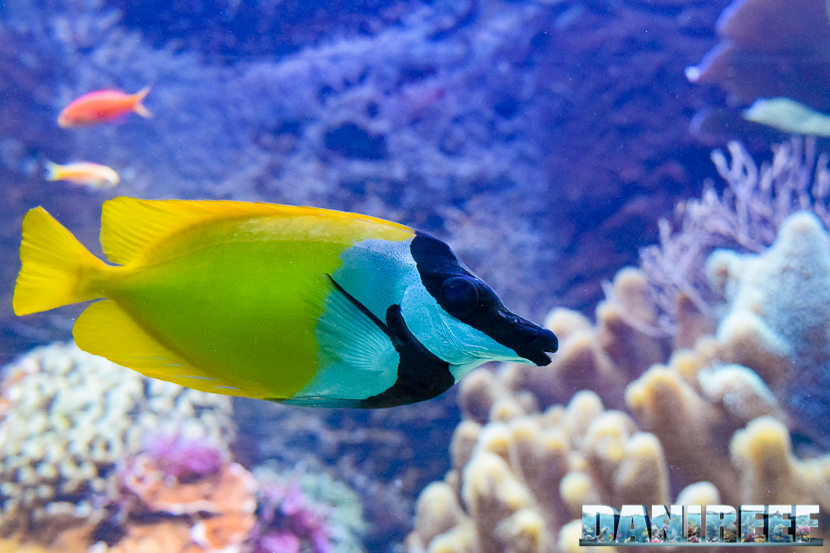
Elegant, hardy, and with an unmistakable snout: today we talk about the charming Siganus vulpinus, better known as the foxface fish in Italy and as the foxface rabbitfish worldwide.

The foxface rabbitfish is one of the most useful and appreciated herbivores in marine aquariums. With its elongated snout and bright yellow coloration, it stands out while playing a crucial role in algae control. A beautiful animal, but one that requires proper care.
Siganus vulpinus
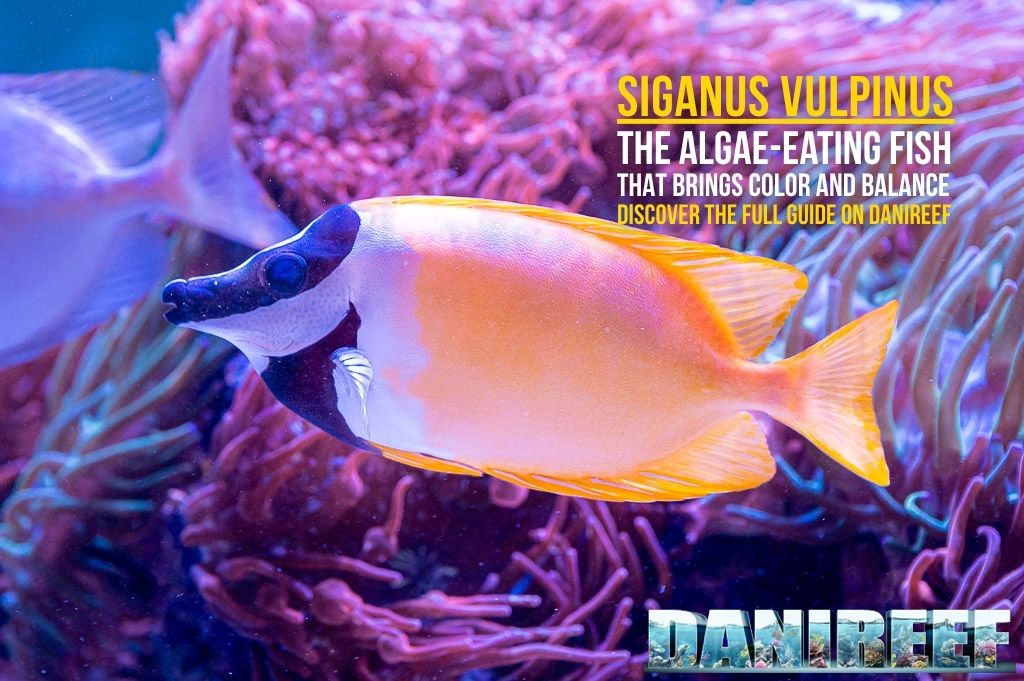
The Siganus vulpinus, also called foxface rabbitfish, belongs to the family Siganidae and was first described in 1845 by German zoologists Hermann Schlegel and Salomon Müller in the Moluccas, Indonesia. It can reach a length of 24–25 cm (Scott W. Michael and Fishbase), which makes it suitable only for large aquariums. Its coloration is striking: a vivid yellow body, a white head with a black mask across the eyes, and dorsal fins armed with venomous spines—a very effective defense system against predators, and a risk even for humans.
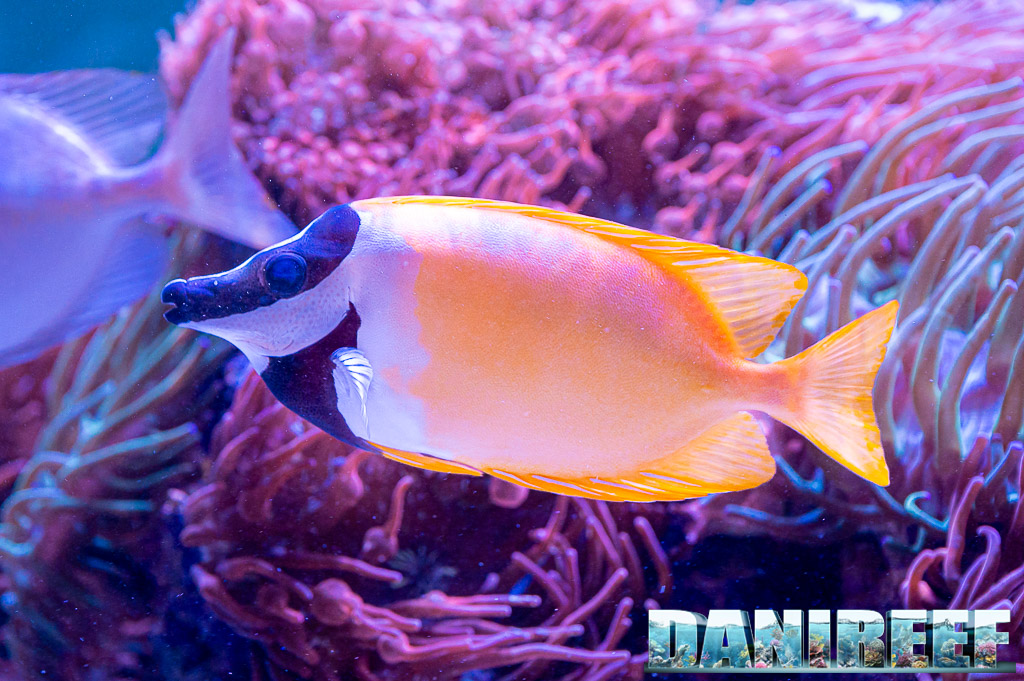
As a juvenile, it shows an orange base coloration, which gradually turns into its unmistakable bright yellow as it matures.
Vulpinus or Lo vulpinus?
The Siganus vulpinus was not always known by this name. Until a few decades ago, it was classified as Lo vulpinus, a name that remained in books and among aquarists for a long time. Only in the 1980s, following a taxonomic revision, the genus Lo was merged into Siganus, which is now the correct and universally accepted name. You may still come across the old name in older texts or among long-time enthusiasts, but it is now considered an outdated synonym.
Habitat and distribution
The Siganus vulpinus is widespread in the Western Pacific, from the western Philippines to Indonesia and New Guinea, reaching the Great Barrier Reef, Vanuatu, and New Caledonia. Its presence is also recorded in the Caroline Islands, Marshall Islands, Nauru, and Kiribati, with more recent sightings in Tonga. It lives mainly in lagoon reefs and coastal coral reefs, favoring areas rich in corals and benthic algae to graze on. It is usually found in pairs or small groups at depths ranging from the surface down to 30 meters, constantly moving among rocks and corals in search of filamentous algae.
Feeding
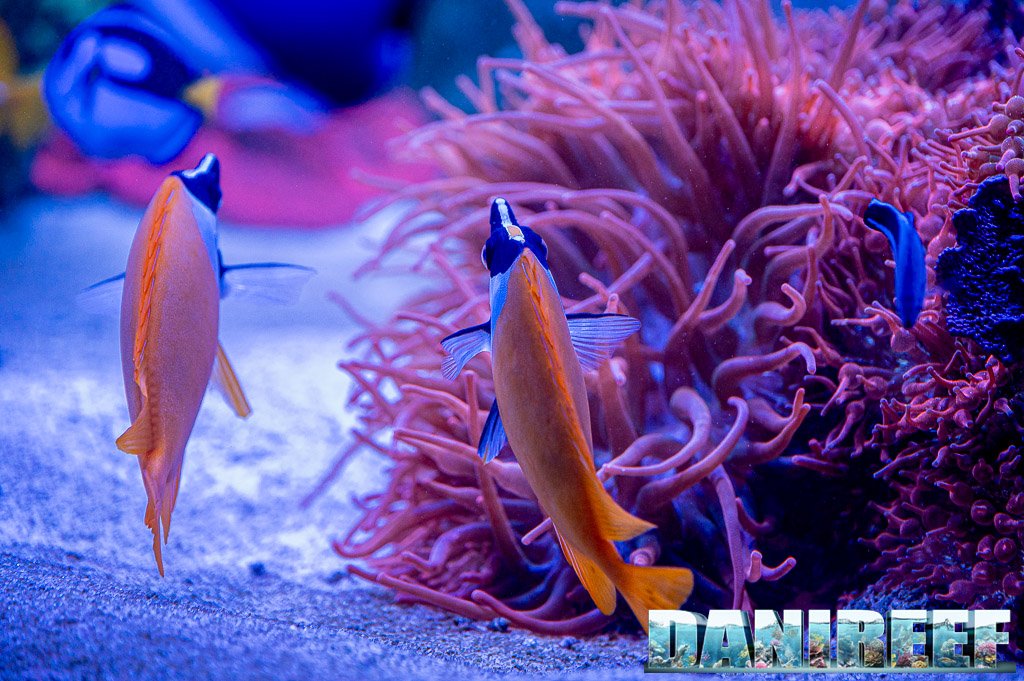
In the wild, the Siganus vulpinus is a herbivore, feeding mainly on filamentous algae and macroalgae. In the aquarium, it shows great feeding adaptability: in addition to fresh algae, it readily accepts commercial vegetable-based feeds and specific herbivore supplements. However, the variety and quality of vegetable sources remain essential to keep it healthy.
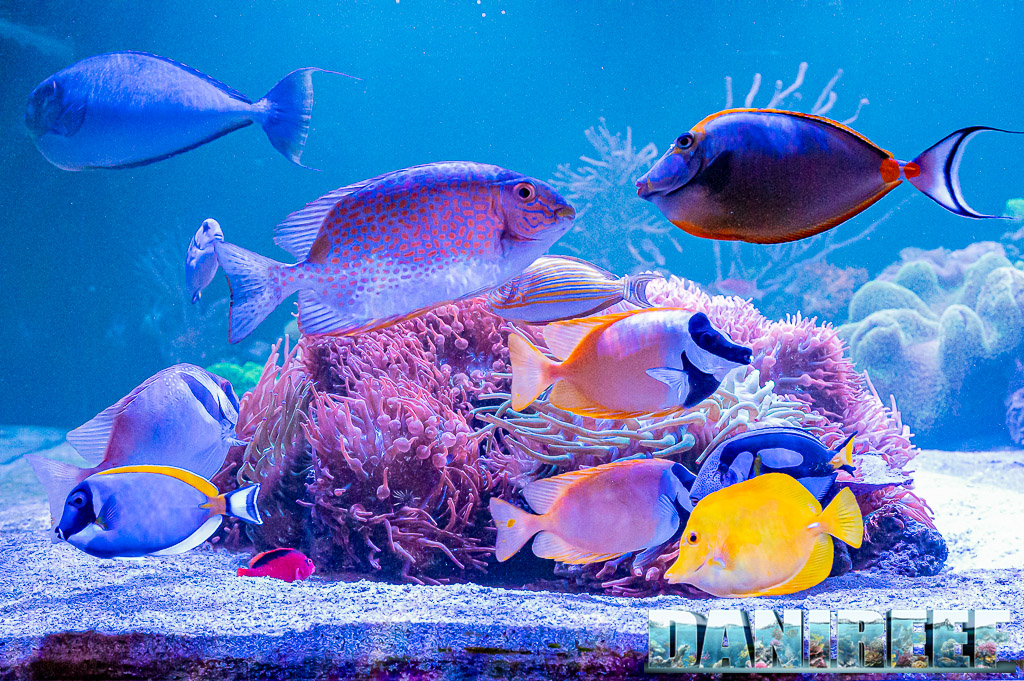
To ensure the well-being of Siganus vulpinus in captivity, it is recommended to regularly offer whole marine algae (Nori, Ulva, Gracilaria), supplemented with dry feeds enriched with spirulina and vitamins. The presence of raw vegetable fiber supports intestinal function, while the bioactive compounds in algae strengthen the immune system. A balanced diet not only enhances the health and vibrant coloration of the fish but also contributes to the ecological balance of the aquarium, simulating its natural grazing behavior.
For more details on feeding marine herbivorous fish, read our dedicated article on Acanthurids, where we analyze in depth the role of algae and the best feeding strategies in aquariums.
Tank compatibility and care
This is a generally peaceful and non-aggressive fish, coexisting well with most marine species. The only exceptions are other rabbitfish or very similar species, with which it can show territoriality. As juveniles they can group together, but as they grow adults become territorial toward conspecifics and can only be kept as a bonded pair, believed to be maintained for life.
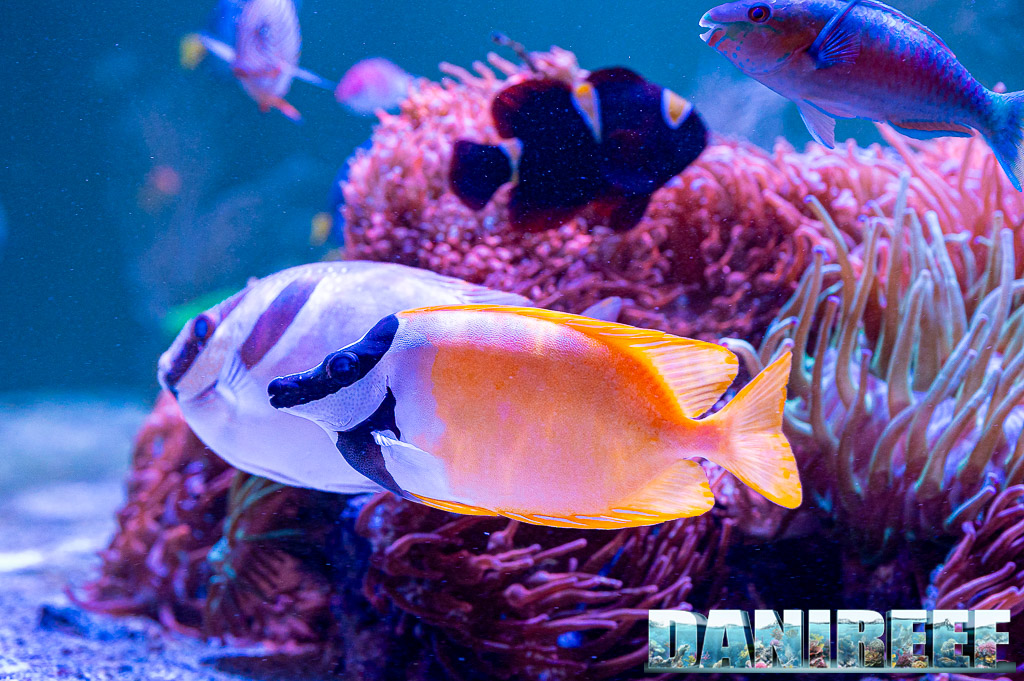
It should be housed in aquariums of at least 300 liters, ideally rich in live rock and with plenty of swimming space. Care must be taken with its dorsal spines: the first spines are covered in venomous mucous and can cause intense pain if they puncture the aquarist during maintenance. Handle with care.
Behavior and tank size
The Siganus vulpinus is an active swimmer. In captivity it can easily exceed 20 cm, requiring large spaces. For this reason, it is not suitable for nano reefs but thrives best in medium to large aquariums. It is a hardy and resilient fish, also recommended for less experienced aquarists, provided its space and feeding needs are respected. Being a specialized herbivore, it spends most of the day grazing filamentous and macroalgae on reef rocks and at the base of Acropora corals. This natural habit makes it a valuable ally in reef tanks, helping keep algae blooms under control that could otherwise smother corals and live rock.
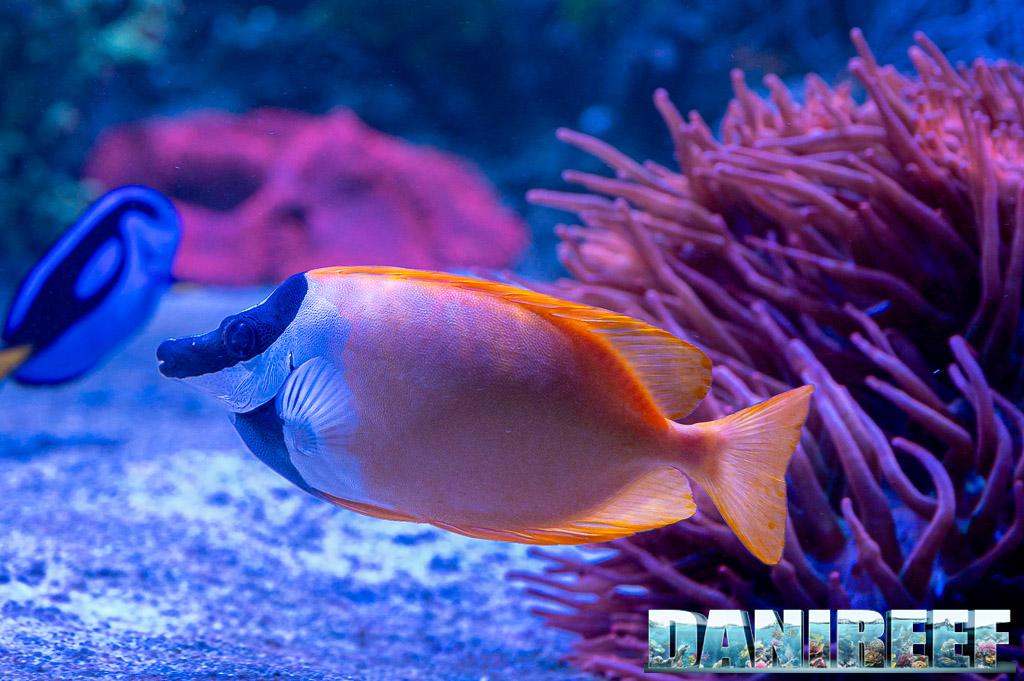
For this reason, we included it among the 9 best algae eaters for marine aquariums, and the family was also featured in UltraMarine magazine in 2023: “UltraMarine Magazine 97 talks about rabbitfish“.
Breeding Siganus vulpinus
In the wild, Siganus vulpinus reproduces in open waters, releasing eggs and sperm into the water column, where external fertilization occurs. In aquariums, breeding is extremely difficult, due to tank size requirements and the pelagic nature of the larvae, which need very specific conditions. To date, there are no reports of successful home breeding, only in specialized research facilities.
Did you know?
The Siganus vulpinus has venomous dorsal spines. While not lethal to humans, they can cause intense pain and swelling, similar to a scorpionfish sting. Yet another reason to handle this fish with extreme care during tank maintenance.
DaniReef’s tip: recommended for large aquariums, both for its algae control role and its striking coloration. Not suitable for beginners with small tanks. Beware of the spines!
Have you ever kept a Siganus vulpinus? Share your experience in the comments and follow us on Telegram, Instagram, Facebook, X/Twitter and YouTube for more articles and video reports from the marine aquarium world. And if you want to discuss it, join our forum.
Scopri di più da DaniReef - Portale dedicato a Acquario Marino e Dolce
Abbonati per ricevere gli ultimi articoli inviati alla tua e-mail.