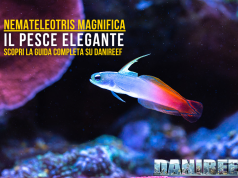
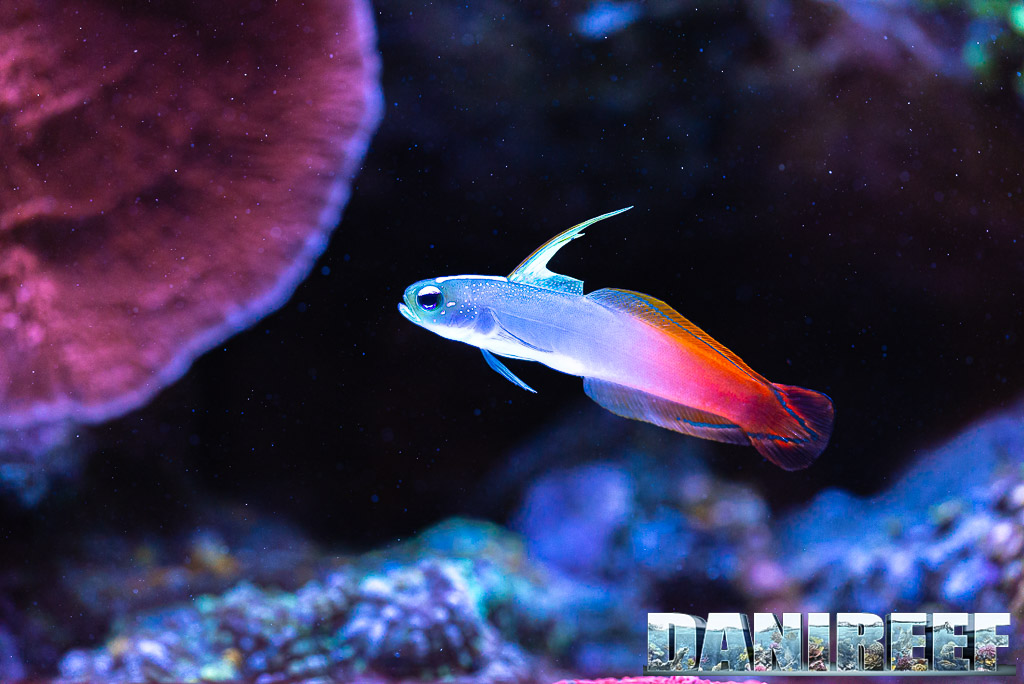
Nemateleotris magnifica, commonly known as the firefish, or magnificent dartfish, is one of the most elegant small fish you can add to a marine aquarium. Its slender body, pale coloration, yellow head and, above all, its spectacular elongated dorsal fin make it instantly recognizable and highly appreciated by aquarists.

But this small firefish is not only beautiful to look at. It is also a very interesting fish from a behavioral point of view, with very specific habits and a shyness that must be understood even before it is managed. It is not a difficult fish in absolute terms, but it requires calm, a covered tank, suitable tank mates and a smart introduction. In this guide we will see how to keep it properly and why, in a well-planned tank, it can become one of the most refined and graceful inhabitants of our home reef aquarium.
Our guide to Nemateleotris magnifica
Nemateleotris magnifica was long placed within the Microdesmidae, but more recent classifications bring it closer to gobies in a broader sense. Unlike classic benthic gobies, it has a swim bladder that allows it to hover elegantly in midwater. Beyond taxonomy, what matters most to us as aquarists is its behavior: it is a small, peaceful planktivorous fish, strongly tied to a stable refuge.
In nature it lives very close to holes, crevices and small shelters in the reef, from which it moves only a short distance to feed in the water column. It is the classic fish that loves to hover, with its almost motionless posture, but always paying close attention to everything happening around it. As soon as it senses danger, it shoots back into its burrow. And this is exactly where we need to start if we want to understand it properly in the aquarium.
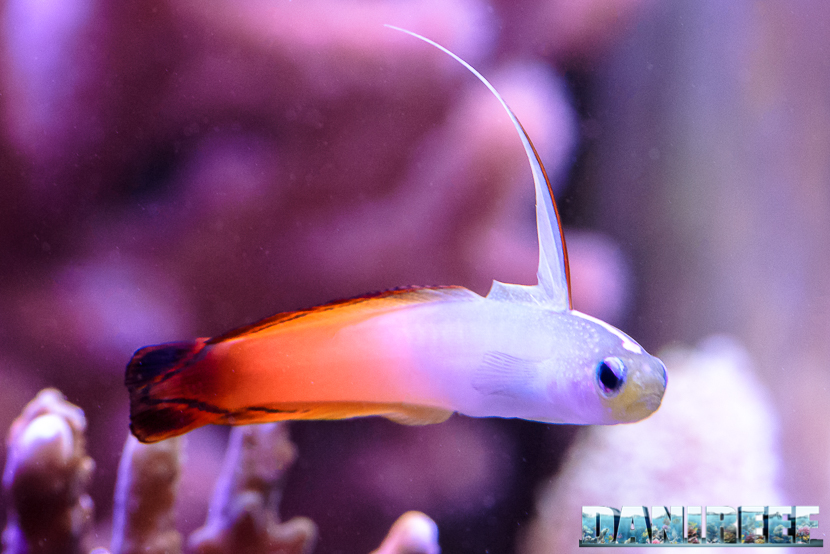
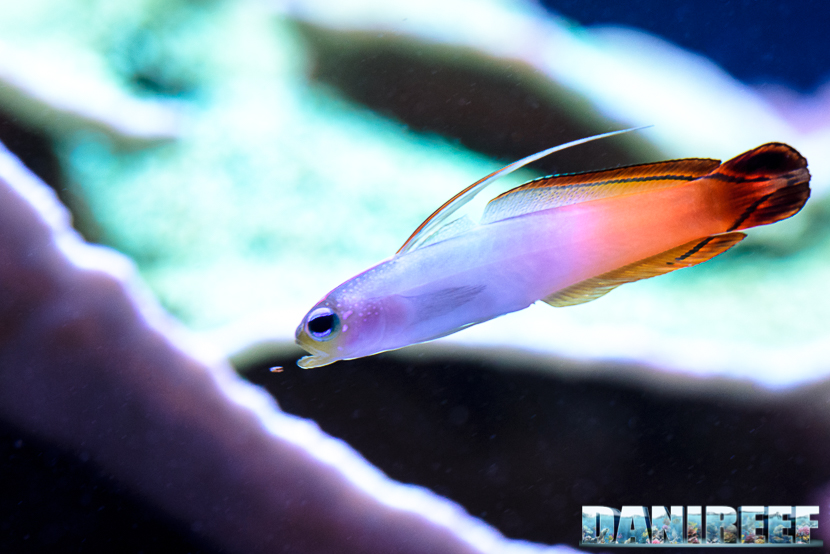
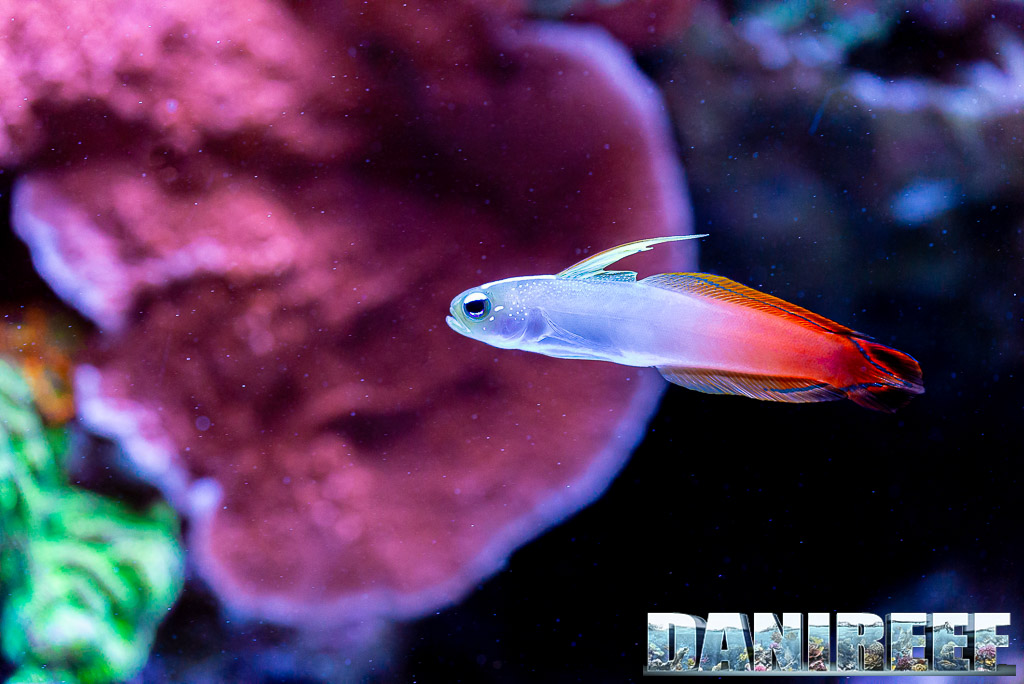
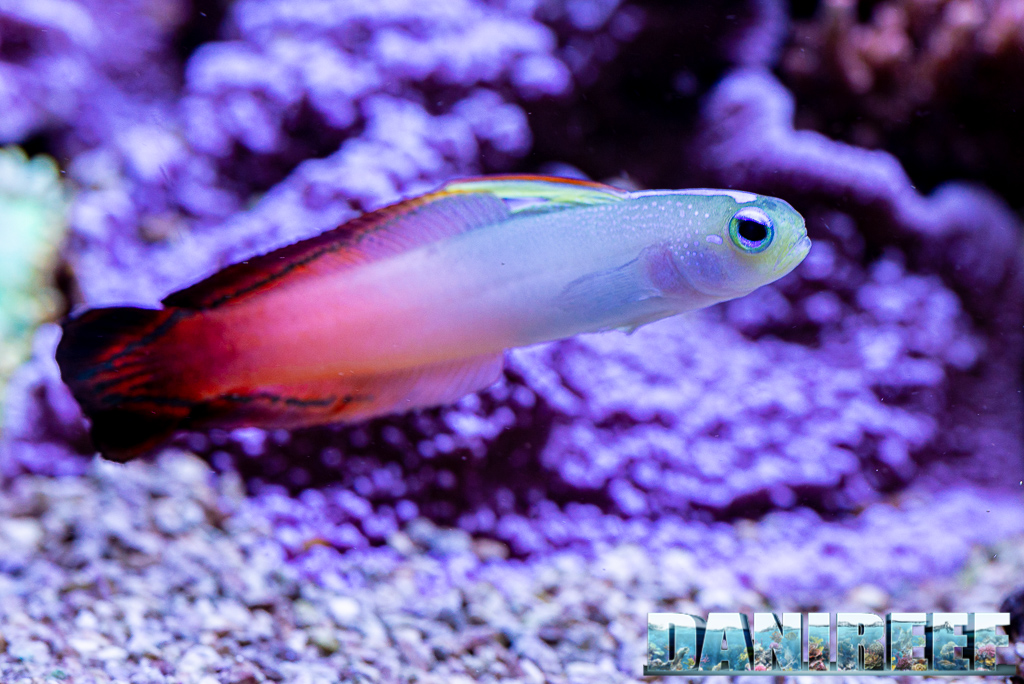
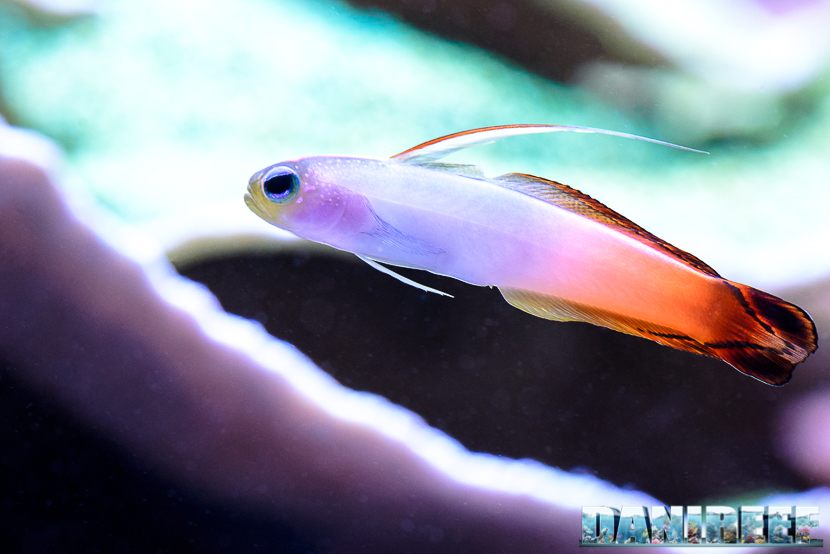
Physically, it is one of the most intriguing fish we can keep in our tanks. Its body is long and slender, almost torpedo-shaped, with coloration fading from white in the front to red-orange toward the rear. The yellow head and the long filamentous dorsal fin give it an unmistakable look, with an incredible visual impact. It does not reach a large size: in the aquarium it usually stays around 7-9 cm, making it perfect even for tanks that are not huge, provided they are set up correctly.
Distribution
Nemateleotris magnifica is widespread across a very large area of the Indo-Pacific, from the Red Sea to East Africa, through the Indian Ocean and into much of the tropical Pacific. It is therefore a widely distributed species, associated with outer reef areas and reef slopes with moderate current.
It is often found near mixed bottoms, where sand and rock alternate. It is not a fish that likes to live completely exposed, but always prefers to have a retreat close by. This habit, which in nature is a survival strategy, translates in the aquarium into the need to provide many hiding places and a well-designed rock structure.
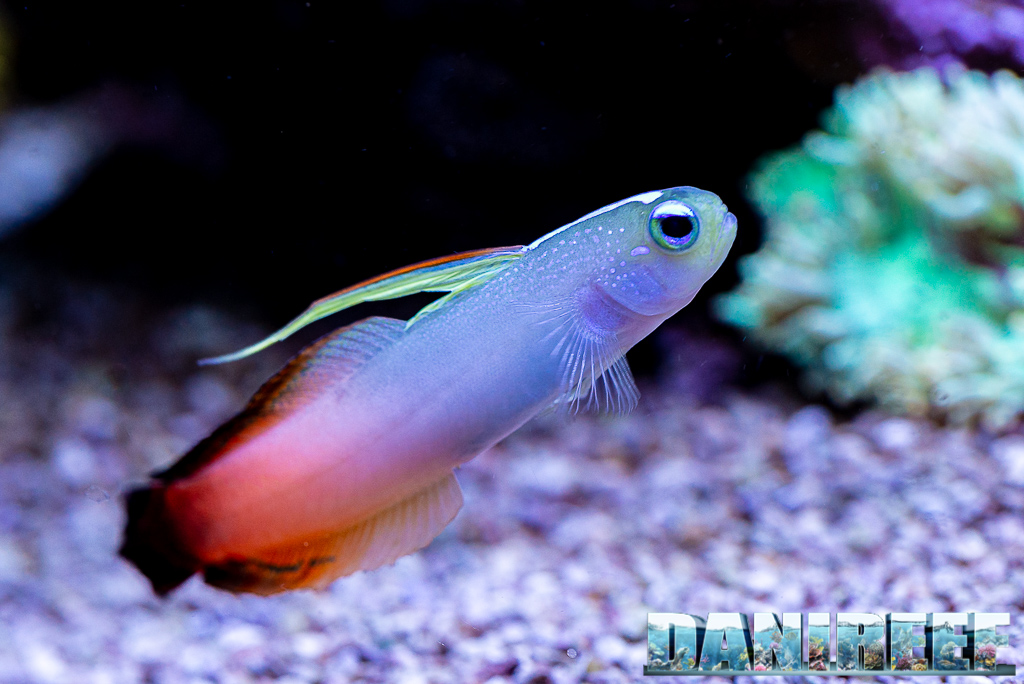
From a practical aquarium-keeping perspective, there are no real population differences comparable to those we see in other marine species. What matters much more is the quality of the individual fish, its nutritional condition and, above all, how it has been handled throughout the supply chain.
Behavior
We are talking about a peaceful, shy and very cautious fish. In the aquarium, this is both its charm and its fragility. Once acclimated, it is extremely elegant: it remains suspended in the water, moves with small quick bursts, observes everything and gives the tank a sense of lightness. But if it gets too frightened, it tends to hide for long periods or, even worse, to jump.
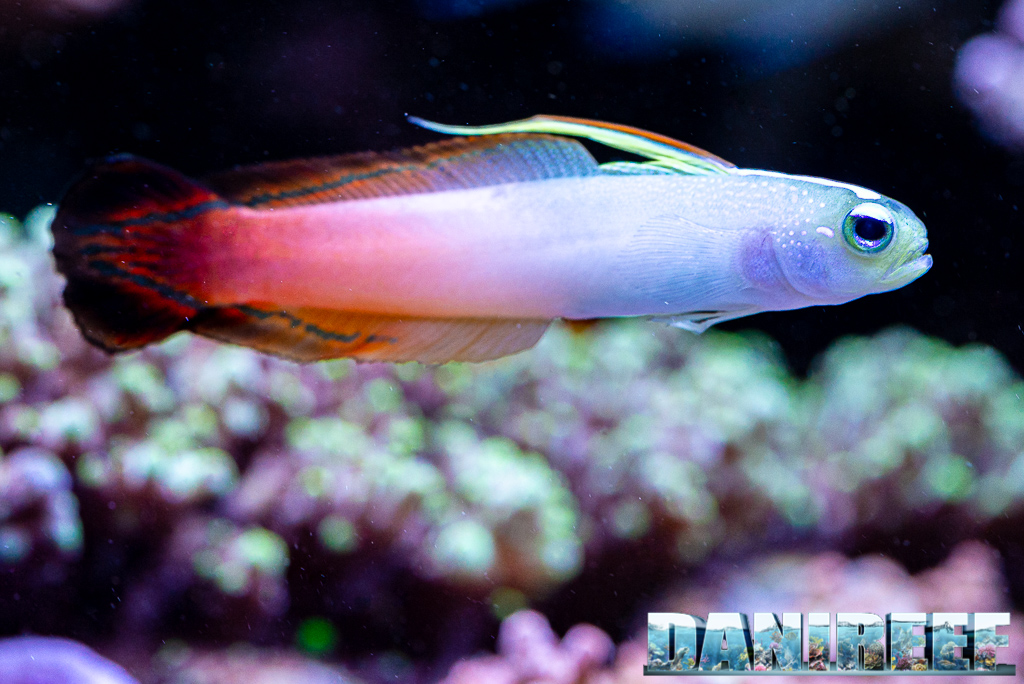
It is a fish that rarely causes problems for other tank inhabitants. On the contrary, it is much more likely to suffer from the presence of aggressive or overly boisterous tank mates. With lively, large or territorial fish, it tends to be behaviorally dominated, spending much of its time hidden. This makes it an ideal species for calm aquariums, with carefully selected companions.
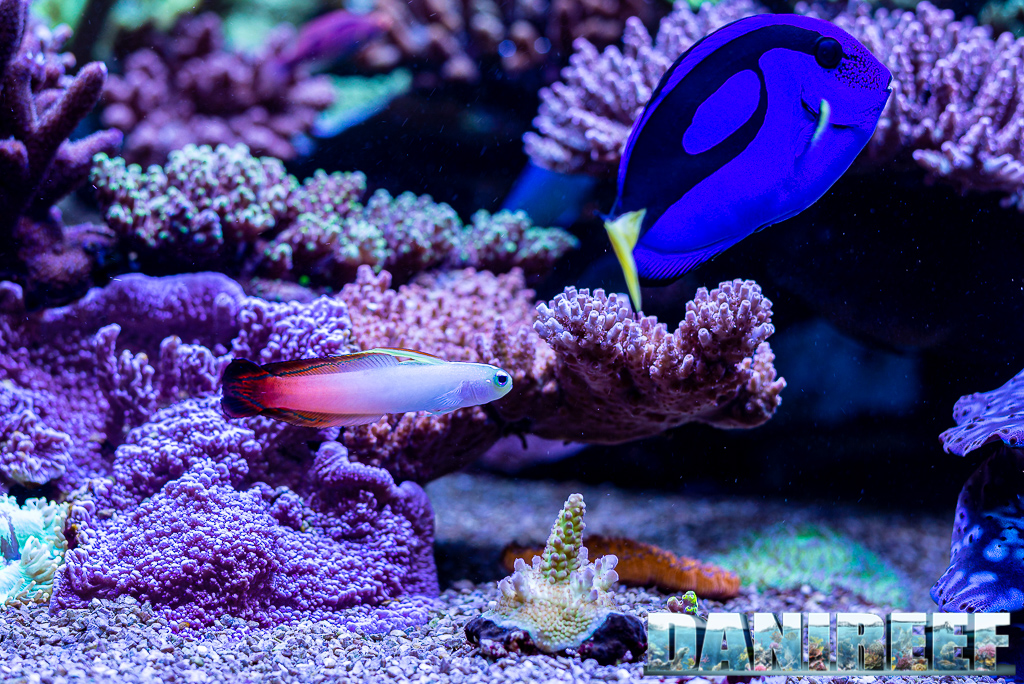
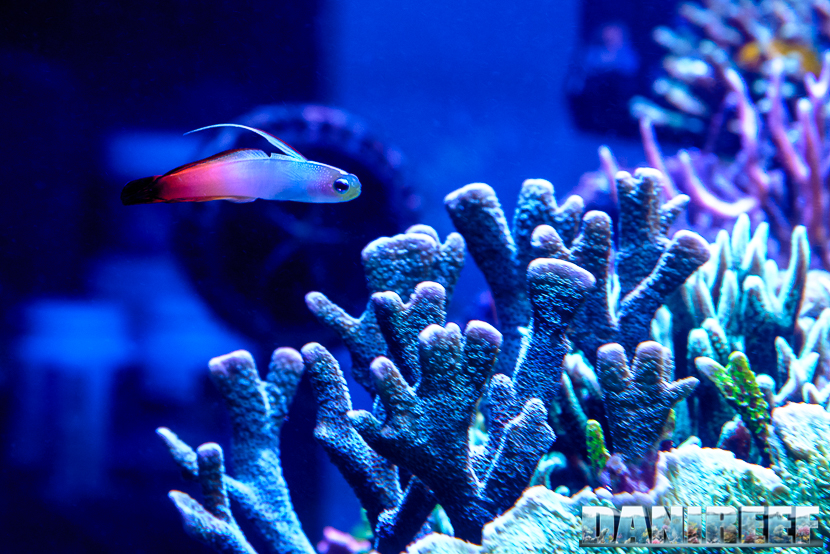
Once acclimated, however, it offers truly fascinating behavior. It positions itself in open water but never too far from its burrow, observes the movement in the tank, darts toward food and then returns to its place. Very easy to photograph, it is an incredible addition to the aquarium.
🐠 Fun fact: it is one of the marine fish most likely to jump
If there is one thing every aquarist needs to know about Nemateleotris magnifica, it is that this fish has a very strong tendency to jump.
When frightened, it does not always seek refuge in the rockwork: very often it reacts with a sudden dash upward. For this reason, an open-top tank, however beautiful it may be, represents a real risk.
If you want to keep it safely, the advice is simple: cover the aquarium, even with a light mesh or an elegant but secure solution. This is one of those cases where prevention really saves the fish’s life.
Another piece of advice I can give you is to use a night light, which helps the fish maintain its points of reference and reduces the tendency to jump during the night.
Feeding
From a feeding point of view, Nemateleotris magnifica is generally much less problematic than other, more demanding marine fish. In nature it feeds on small planktonic organisms and zooplankton captured in the water column. In the aquarium, if properly acclimated, it usually accepts a varied, high-quality diet quite readily.
Among the most suitable foods we find:
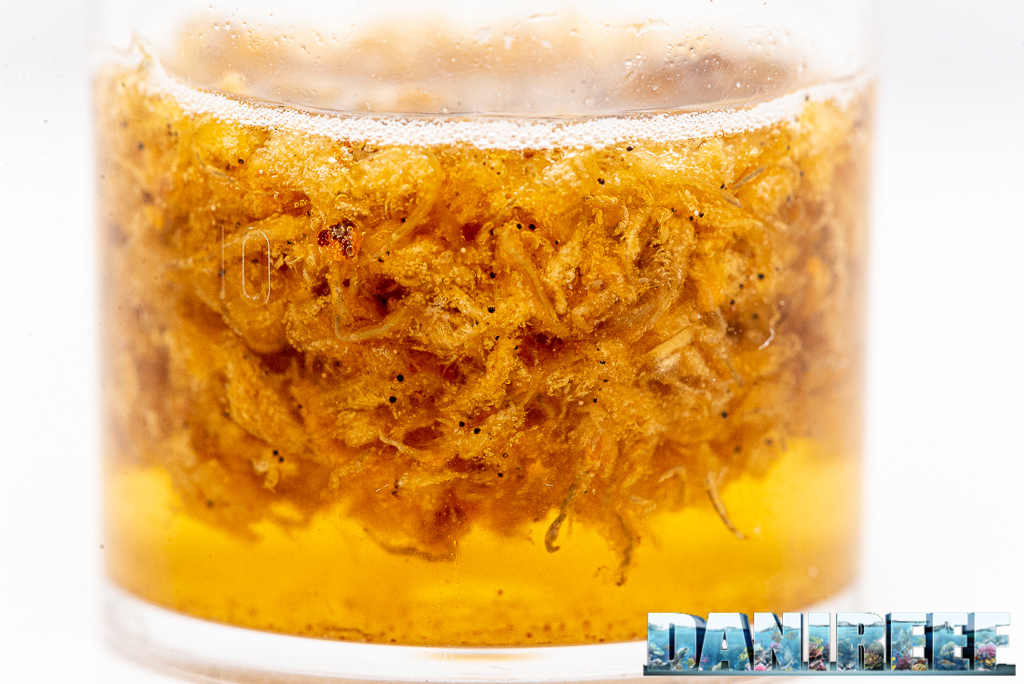
- Frozen mysis;
- Enriched brine shrimp;
- Plankton and fine preparations for marine fish;
- High-quality small pellets;
- Well-selected flakes, if the individual accepts them.


The important point is not only what it eats, but how it eats. Being a shy fish, in the first few days it may be intimidated by faster and more assertive tank mates. For this reason, it is important to observe carefully whether it is actually feeding and not simply making a few unsuccessful dashes. It is better to offer small but frequent meals, especially at the beginning. And it is absolutely essential to check that it feeds in the aquarium without being beaten to the food by the other tank mates.
It remains essential, before purchase, to verify that the fish is eating in the store and, especially at the beginning, perhaps use the same food that was being offered there.
To learn more about fish feeding, I also recommend our dedicated article: Fish feeding.
Recommended marine aquarium size
Nemateleotris magnifica is not a large fish, but for this reason it should not be underestimated. For a single specimen I recommend an aquarium of at least 100-120 actual liters, preferably well structured with rocks, shelters and a relatively quiet area where it can establish its own burrow.

It can certainly live in very small tanks, but the risk is that it may not have enough space to feel safe, or that it may be too easily dominated by other fish. In larger, mature and well-balanced tanks, however, it shows its best side.
Reproduction in nature
The reproduction of Nemateleotris magnifica in nature follows patterns typical of many small reef fish connected to plankton and life close to the bottom. The species can live singly or in pairs, and the formation of stable pairs is one of the most interesting aspects that can also be observed in the aquarium.
During the reproductive period, individuals perform brief courtship rituals near their refuge. Available information suggests that spawning takes place in close connection with the burrow or a small cavity chosen as a reference point. It is believed that the eggs are then guarded and protected, at least in the very early stages, in a much more contained and less dispersive context than that of larger pelagic fish.
Once hatched, the larvae then move into a planktonic phase, as happens with many reef fish. This explains both the geographic distribution of the species and the difficulty of directly observing the entire cycle in the natural environment. In the aquarium, reproduction is rarely documented in a stable way, but pair behavior and the strong association with a refuge remain very fascinating clues to their biology.
📚 DaniReef fun fact – A small fish that changes the rhythm of the tank
Nemateleotris magnifica is not the kind of fish that steals the spotlight through aggression or size. It does the opposite: it brings a sense of elegance, calm and almost suspended movement to the aquarium.
It is one of those fish that, when placed in the right context, can change the way we perceive movement in the tank. It does not dominate, it refines.
And this is exactly why, in my opinion, it remains one of the most beautiful and underrated small marine fish of all.
Care in the aquarium
The secret to successfully keeping Nemateleotris magnifica is very simple to say, but must be taken seriously: calm, hiding places and a covered tank. If these three elements are present, the fish has an excellent chance of acclimating and living well for years.
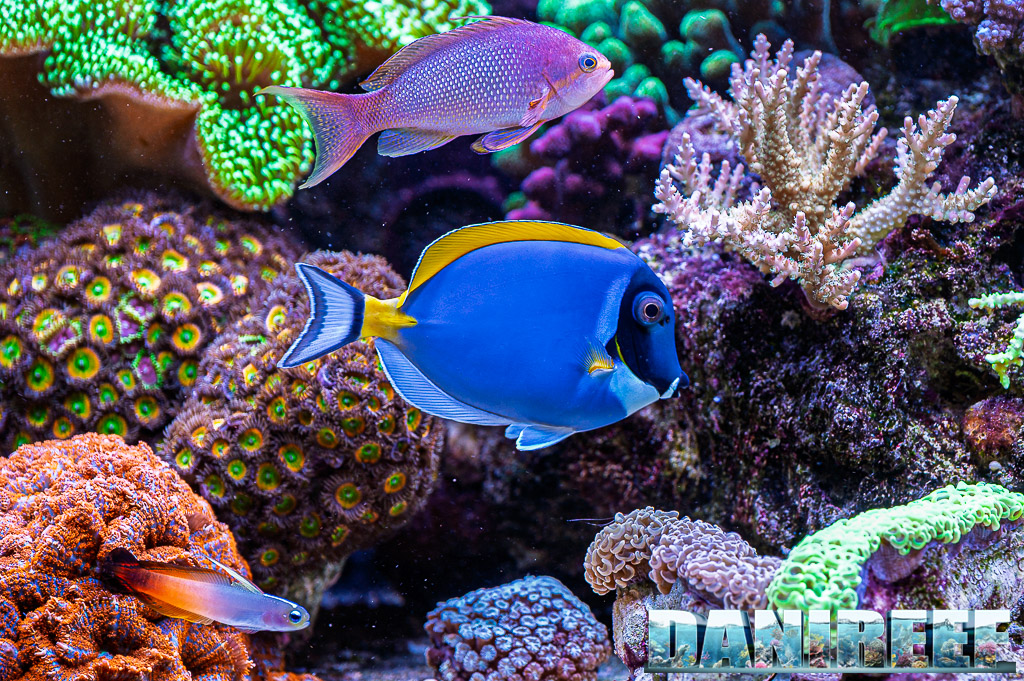
I recommend adding it to already mature aquariums, with stable rockwork, many crevices and non-aggressive tank mates. It is perfect with calm small wrasses, gobies, clownfish that are not too territorial, small tangs in large tanks, or other peaceful fish. I would avoid keeping it with aggressive pseudochromis, very dominant fish or species that are excessively boisterous during feeding.
If properly acclimated, this firefish becomes a stable, long-lived and very rewarding guest. It is not a fish for a chaotic or overly active aquarium, but in a tank planned with sensitivity it can offer a great deal.
Keeping a pair
One of the most beautiful aspects of Nemateleotris magnifica is the possibility, in some cases, of observing it as a pair. A true pair is spectacular to see: the two fish share the same refuge, move together and bring an incredible sense of natural behavior to the aquarium.
That said, care is needed here. Adding two random specimens is not always a good idea, because if a compatible pair does not form, there is a risk of aggression or dominance. It is much better to buy an already formed pair or to carefully observe their behavior in the early stages.
In small aquariums I remain cautious and tend to advise against it. In larger tanks, well covered and with many hiding places, a pair can be a wonderful choice.
A group: fascinating in theory, not recommended in practice
It is common to read or hear the suggestion of adding a “small group” of 4 or 5 Nemateleotris magnifica, hoping to see them swimming together in midwater. In the vast majority of cases, we do not recommend it. Although in nature young individuals may tolerate one another in open spaces, in the aquarium, once sexual maturity is reached, intraspecific intolerance becomes very high.
Forced group living almost always leads to what we could call “natural selection in the tank”: the dominant specimen or pair will begin to chase the others away, condemning them to death by starvation, because they will no longer leave their burrow to feed, or forcing them to jump out of the aquarium out of stress. In the end, only one individual, or one pair, will remain. For this reason, in the aquarium, Nemateleotris should be kept strictly as a single specimen or as a confirmed pair.
Why many Nemateleotris do not survive in the aquarium
The mortality of Nemateleotris magnifica in the aquarium is almost never due to extreme feeding difficulty or mysterious problems. In most cases, the reasons are much more practical: introduction stress, aggression from other fish, uncovered tanks and jumping out of the aquarium.
Many aquarists underestimate its shyness. They buy it thinking it is a simple, hardy little fish, then add it to a tank that is too lively or open-topped, and lose it within a few days. This is a real shame, because if treated correctly, Nemateleotris is much more manageable than many people think.
For this reason, I always recommend choosing active specimens that are already feeding in the store and are responsive but not frantic. And, as I often say, do not be afraid to ask for a feeding demonstration: it is always time well spent.
Conclusions
Nemateleotris magnifica is one of those fish that, without making a fuss, wins over the aquarist day after day. It is not the most striking fish of all, not the rarest, not the most expensive. But it has a grace and cleanliness of behavior that make it special.
DaniReef’s recommendation: elegant, peaceful and fascinating, perfect for calm and well-covered aquariums, provided it is chosen and introduced intelligently.
📌 Summary sheet – Nemateleotris magnifica
- Common name: Firefish, dartfish
- Scientific name: Nemateleotris magnifica
- Family: Microdesmidae
- Origin: Indo-Pacific and Red Sea
- Aquarium size: 7–9 cm
- Reef safe: Yes
- Recommended volume: 100–120 liters for one specimen
- Diet: Mysis, brine shrimp, plankton, fine pellets
- Difficulty: Low–medium
- Essential note: Always keep the tank covered
🐟 Did you enjoy this guide to Nemateleotris magnifica? Tell us about your experience in the comments or in our DaniReef Forum and discuss it with other enthusiasts.
🔔 To make sure you don’t miss our next guides and tips, follow DaniReef on our social channels too:
👉 Facebook | Instagram | YouTube | Telegram | LinkedIn | X / Twitter | TikTok
Scopri di più da DaniReef - Portale dedicato a Acquario Marino e Dolce
Abbonati per ricevere gli ultimi articoli inviati alla tua e-mail.