
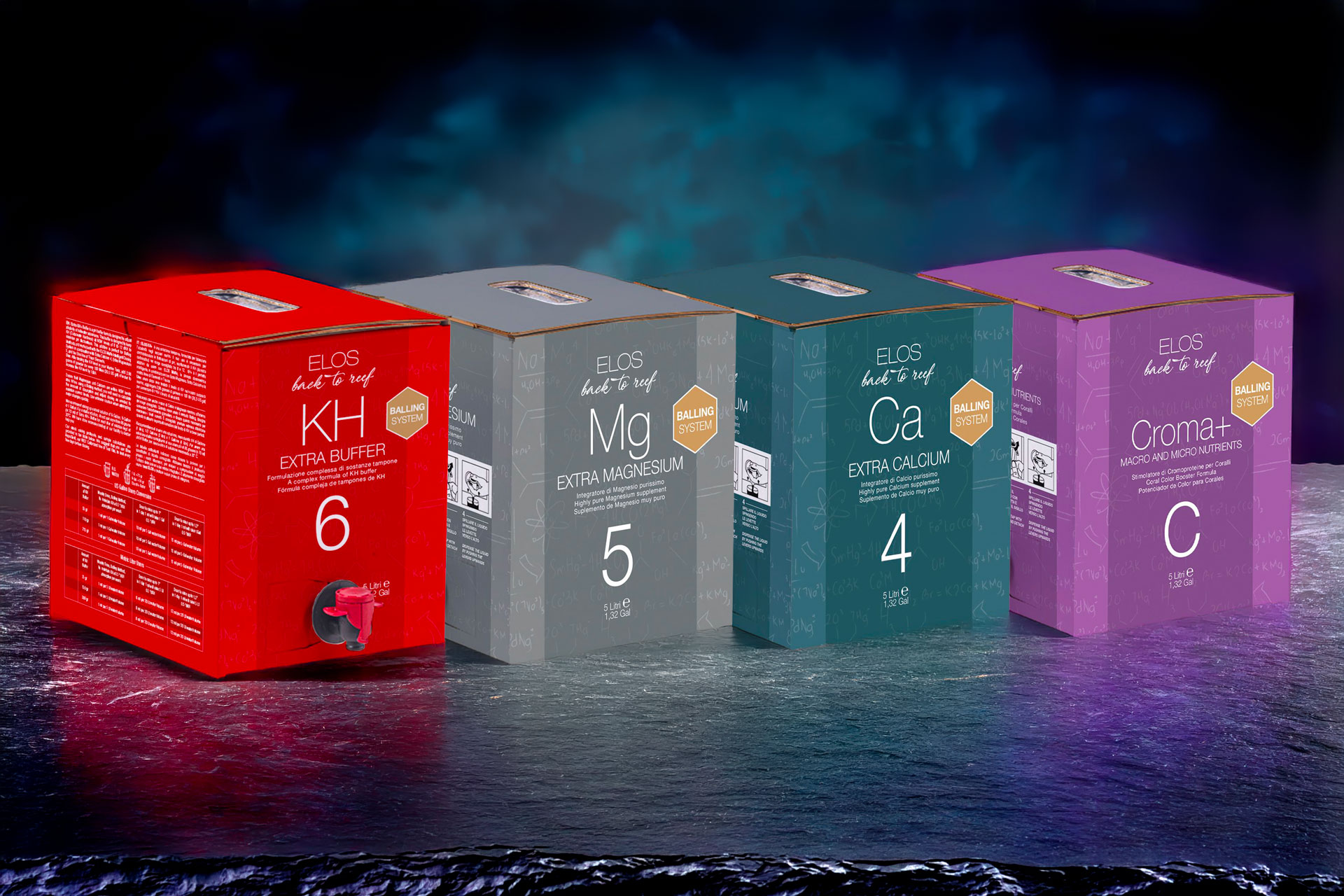
When we talk about supplementation in a marine aquarium, sooner or later we always get there: the daily consumption of calcium, magnesium and alkalinity. It is the heart of hard coral growth, the construction of the calcareous skeleton, pH stability and, more generally, the ionic balance of the tank. That is why every time a historic company like ELOS introduces a new line dedicated to this topic, it is worth stopping for a moment to understand not only what it sells, but above all how it has chosen to interpret the method.

In this article we take an in-depth look at the new ELOS proposal for managing the triad in reef aquariums: Extra Calcium, KH+, Extra Magnesium and Croma+. We will not simply list the products, but use them as a starting point to clearly explain what the Balling method is, why it works, what its strengths are and how this ELOS interpretation fits into the modern management of a reef aquarium.
Because the truth is very simple: talking about Balling does not only mean talking about products to dose. It means talking about the real consumption of the tank, the relationship between ions, consistency, automation and, above all, control.
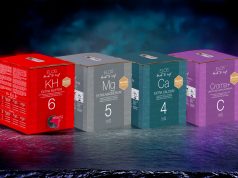
The 4 ELOS products for the Balling method
The line we are looking at is based on four distinct products:
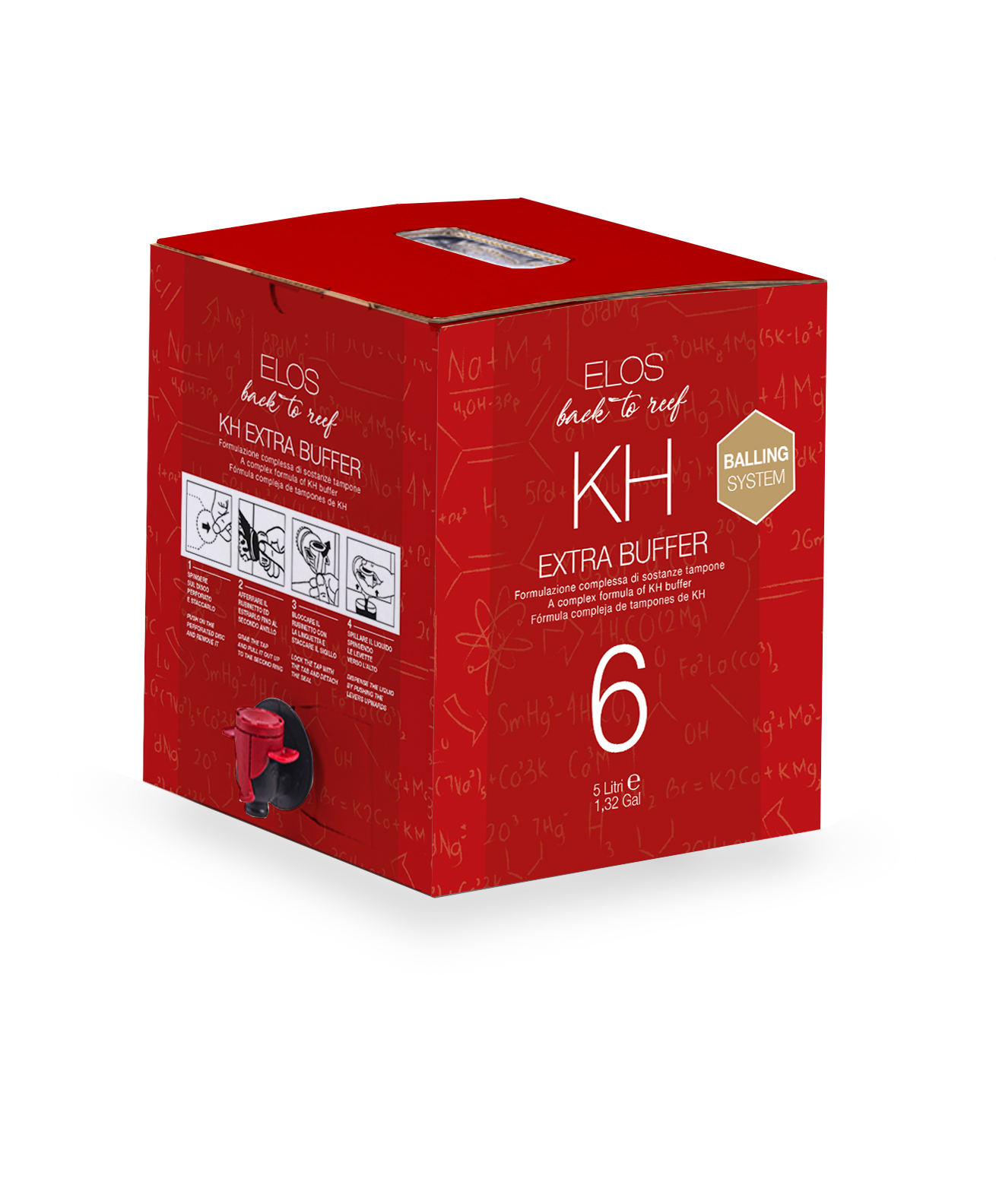
- ELOS KH+;
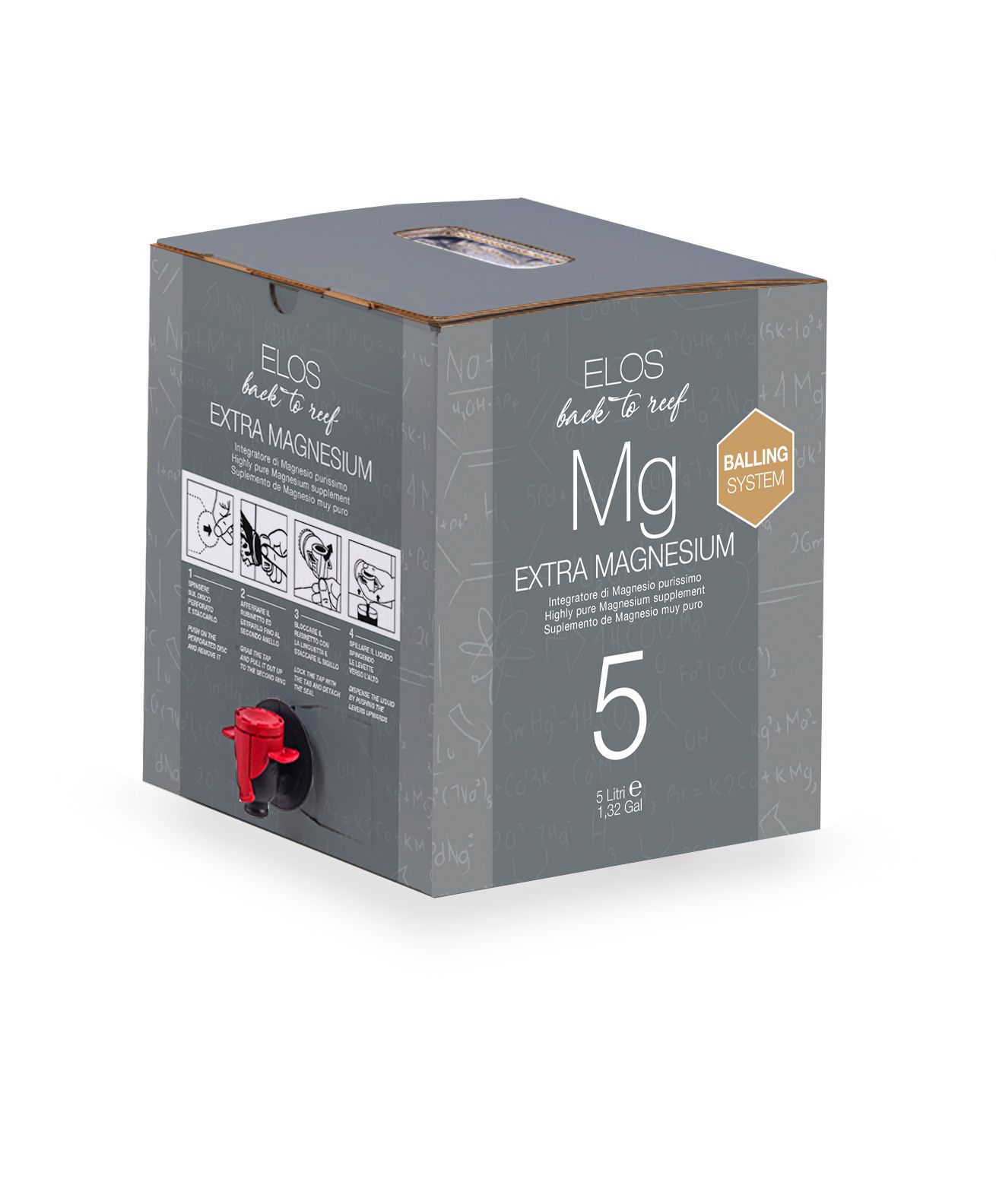
- ELOS Extra Magnesium;
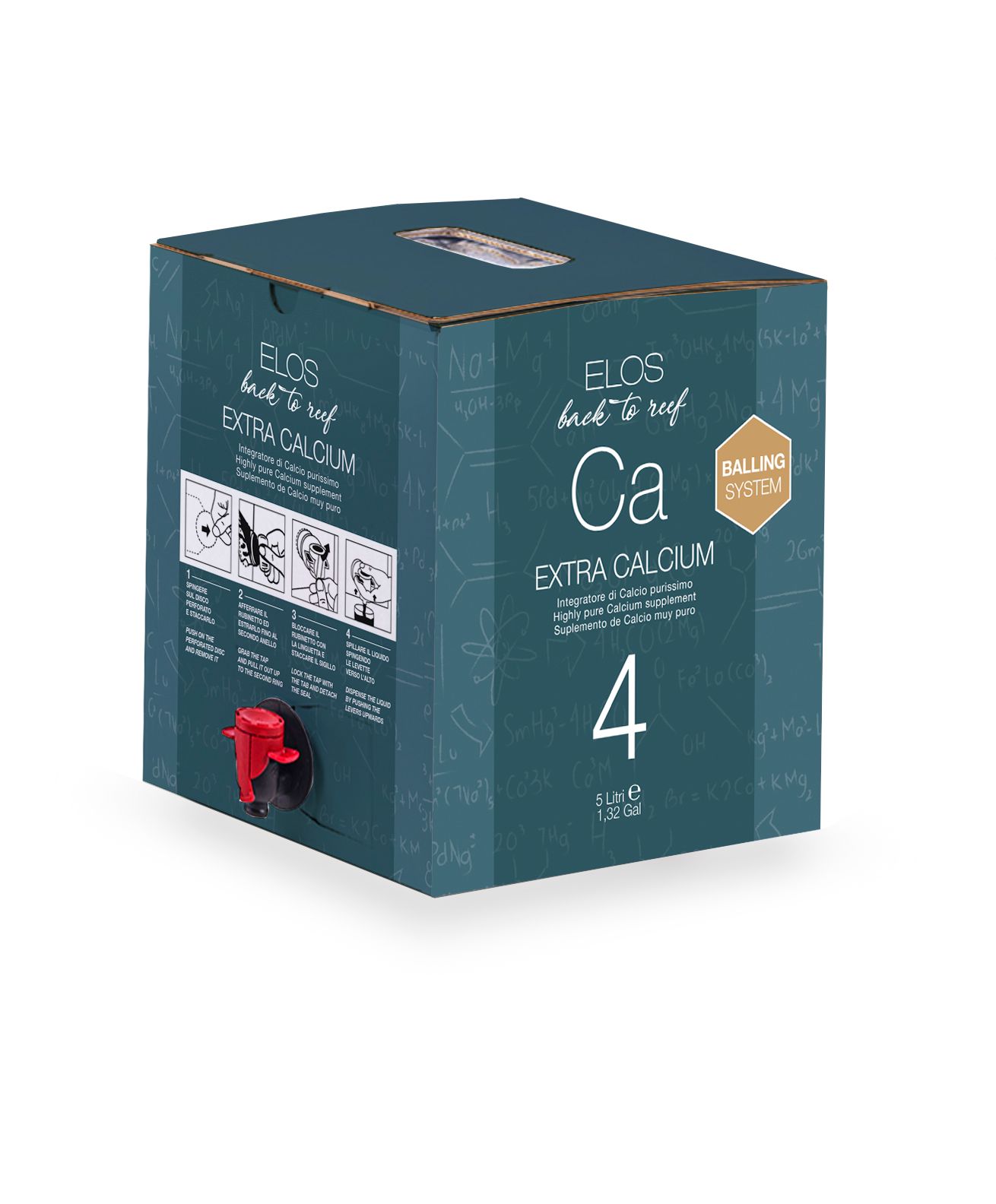
- ELOS Extra Calcium;
- ELOS Croma+.
The first three form the classic base of any Balling approach: alkalinity, calcium and magnesium. The fourth, Croma+, broadens the discussion and introduces the topic of complementary elements linked to coral skeleton formation and pigmentation, especially in aquariums dominated by SPS and LPS corals.


Alongside the composition of the line, there is another very interesting aspect to highlight: ELOS has chosen a 5-liter bag-in-box format for all four products. In practice, it is a box containing an internal plastic bag with a tap. The logic is simple but smart: as the liquid is drawn out, the bag collapses on itself, preventing air from entering. This reduces oxidation and also limits the risk of contamination of the content. In addition, compared to other traditional solutions, the system reduces the amount of plastic used in the packaging. At the moment, the line is available exclusively in this 5-liter format.
It should also be added that this format, although it has a higher purchase price, allows for a very low running cost.
The Balling method explained properly
The Balling method, in its basic idea, was born for a very practical reason: corals, coralline algae and, more generally, all organisms that deposit calcium carbonate consume calcium ions and carbonates/bicarbonates every day. At the same time, magnesium plays a fundamental role in maintaining the balance of the water and limiting unwanted precipitation, helping the system remain stable over time.
In a mature and well-stocked reef aquarium, these consumptions can become significant. At the beginning, water changes may be enough. Then, as the tank grows, water changes are no longer sufficient and regular supplementation becomes necessary. This is where the Balling method comes into play: supplying separately the main elements consumed by the tank, in a controlled, precise way that can be adapted to the real consumption of the system.
The advantage of the Balling method is that it does not impose a single rigid logic. It is a very rational system: you measure, you observe consumption, and you dose accordingly. This means it works both on relatively simple mixed reefs and on heavily stocked SPS reefs, where daily consumption can be high and require continuous dosing through a dosing pump.
Naturally, like all serious methods, it requires one fundamental thing: discipline. Without reliable tests, without a good routine and without the patience to understand how the tank reacts, Balling risks becoming random dosing. But when applied correctly, it remains one of the smartest, most modular and most controllable systems for keeping a marine reef aquarium in balance.
Why calcium, KH and magnesium must be read together
One of the most common mistakes is to consider calcium, KH and magnesium as three separate numbers. In reality, this is not the case. In a marine aquarium these parameters influence each other and must be interpreted as a system.
Calcium is the main building block of calcification. KH represents, simplifying slightly, the availability of carbonates and bicarbonates and therefore the ability of the water to support both calcification and pH stability. Magnesium, finally, is the great silent mediator: when it is too low, the tank becomes more unstable and the risk of calcium precipitation increases, making it more difficult to keep the other two parameters in balance as well.
Extra Calcium: the pillar of calcium
ELOS Extra Calcium is the product dedicated to restoring and maintaining calcium, the element most immediately associated with the growth of hard corals, coralline algae and other calcifying organisms.
The logic of the product is very clear: to offer a concentrated and easily dosable source, suitable both for the initial correction of a low value and for compensating daily consumption in a true Balling management system.
Suggested dosage provided: 10 ml per 100 liters increases calcium by 20 mg/l.
This figure is very useful because it allows us to reason quantitatively. If, for example, a 300-liter tank needs to recover 20 mg/l of calcium, the theoretical dose is immediate to calculate. Likewise, if the value is correct but the tank consumes calcium every day, the product can be included in a maintenance program, even better if supported by a dosing pump.
KH+: the heart of stability
If there is one parameter that modern marine aquarium keeping observes almost obsessively, it is KH. And that is understandable: a stable KH means a more predictable tank, a better coral response and, often, a system less prone to sudden swings.
ELOS KH+ is the component dedicated precisely to this aspect. From a Balling perspective, its role is to compensate for alkalinity consumption caused by the growth of calcifying organisms and to help keep the system within the desired range.
Suggested dosage provided: 10 ml per 100 liters increases alkalinity by 1 dKH.
Here we need to make a very important consideration. In a marine aquarium, KH should never be treated lightly. Raising it is easy; keeping it stable is the difficult part. That is why products like this give their best not when used in large occasional corrections, but when they become part of a precise and repeatable routine. In SPS-rich tanks, KH is often the parameter that first reveals a change in consumption. If it starts to drop regularly, it means the tank is pushing growth.
Extra Magnesium: the element that is too often underestimated
Magnesium is probably the most underestimated parameter of the triad. It does not make headlines like KH, it is not chased like calcium, but in reality it has a huge impact on the overall stability of the system.
ELOS Extra Magnesium fits exactly here: as a supplement designed to restore and maintain magnesium within the correct range, preventing the tank from becoming more difficult to manage in the long term.
Suggested dosage provided: 10 ml per 100 liters increases magnesium by 10 mg/l.
Read like this, the figure may seem less “impressive” than calcium and KH. In reality, it is consistent with the very nature of magnesium: it is an element present at a much higher concentration and therefore moves on different numerical scales.
Croma+: the product that broadens the discussion beyond the triad
With Croma+, the discussion changes slightly. Here we are no longer at the heart of the triad, but in that very interesting area where the simple supplementation of calcium, KH and magnesium is completed by a more refined logic.
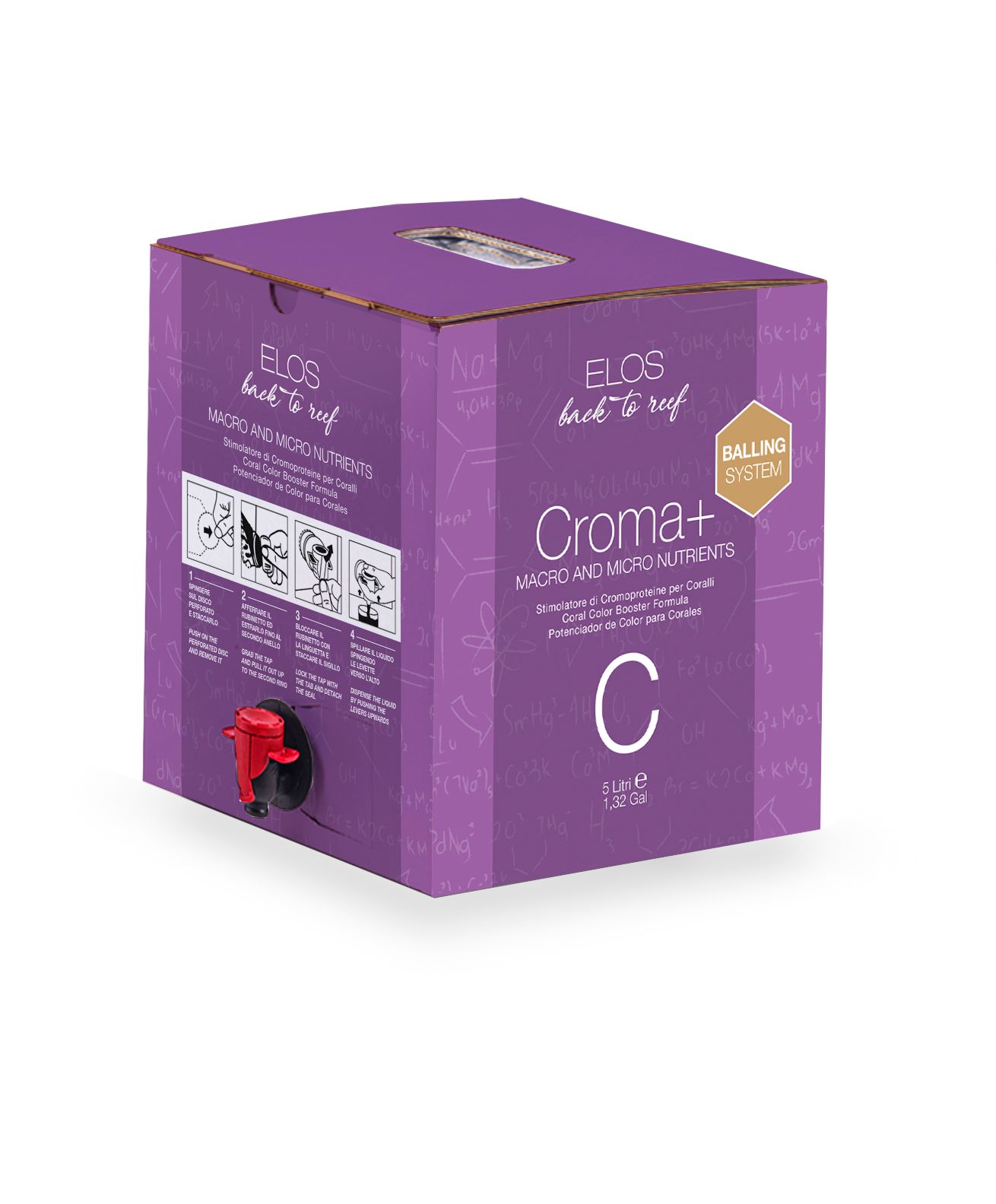
According to the information provided for the product, 10 ml per 100 liters are used to balance the consumption of Ca/Mg/KH related to coral skeleton formation and the pigmentation of SPS and LPS corals.
This is a very interesting point, because it recognizes something that more experienced reef keepers know well: managing an aquarium does not only require the triad. A management approach focused only on the three main values may work for a fish-only aquarium or a soft coral system, but in more demanding tanks, with stronger lighting and a higher density of demanding corals, support linked to complementary elements is also needed.
In this sense, ELOS Croma+ should not be read as a simple “extra”, but as a formulation designed to accompany Balling management with a macro and microelement component built to follow the real consumption of an advanced reef tank. According to ELOS, the product contains 18 elements: lithium, iodine, barium, zinc, iron, molybdenum, nickel, vanadium, manganese, cobalt, chromium, copper, strontium, fluorine, boron, bromine, potassium and sulfur.
A list like this tells us two things. The first is that we are not talking about generic supplementation, but about a reasoned blend. The second is that a product of this kind gives its best when included in truly conscious management, ideally also supported by ICP tests, so as to understand the real consumption of trace elements and not simply dose “blindly”.
How to set up a Balling method in the aquarium
A Balling system is not set up simply by buying the individual products. It is set up by measuring, understanding consumption and translating that consumption into a daily dose.
The correct procedure, in general terms, is this:
- bring the tank to the desired Ca, KH and Mg values;
- measure consumption over several days, preferably without making continuous corrections;
- calculate the daily dose needed to compensate for that consumption;
- divide the dosage into regular administrations, ideally automatic ones;
- periodically check that the values remain stable and correct only when consumption really changes.
From this point of view, Balling is a dynamic system. A tank with a few corals consumes in one way. A tank with many growing Acropora consumes in a completely different way. And the same aquarium, over six months, can change quite a lot.
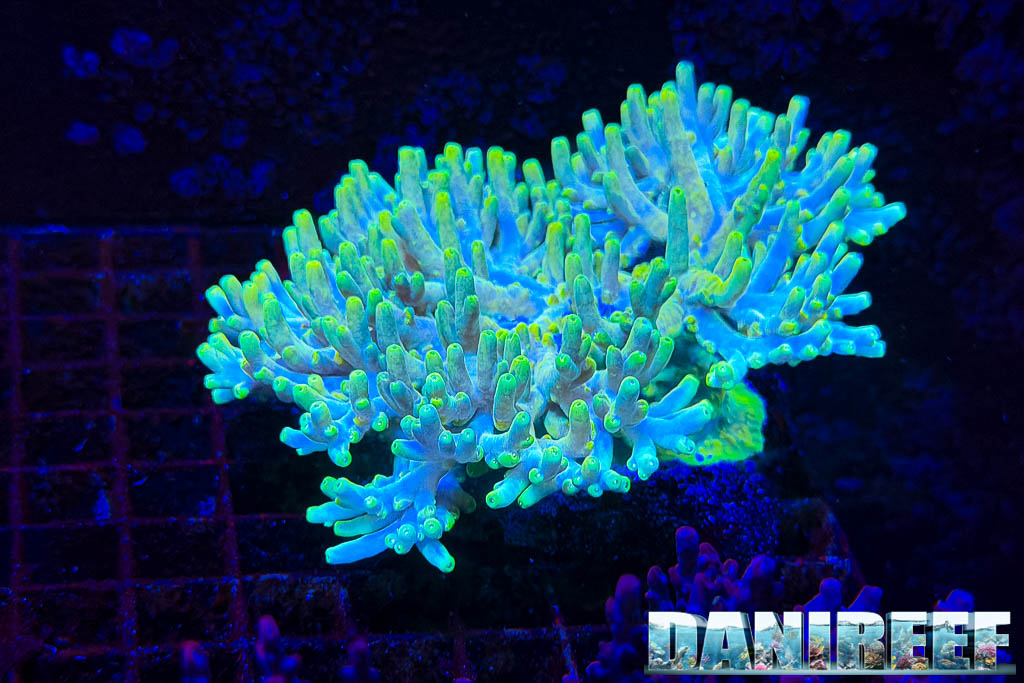
That is why lines like this give their best when accompanied by reliable tests and at least a minimum of automation. Consistency matters more than spectacular corrections.
The declared dosages
ELOS declares the following for its Balling system:
- Extra Calcium: 10 ml per 100 liters = +20 mg/l of Ca;
- Extra Magnesium: 10 ml per 100 liters = +10 mg/l of Mg;
- KH+: 10 ml per 100 liters = +1 dKH;
- Croma+: 10 ml per 100 liters as support for balancing consumption linked to skeleton formation and pigmentation.
This approach is useful because it allows us not to proceed “by feeling”. Knowing how much a product changes a value is the first step to using it well. Naturally, as always, the theoretical dosage must then be interpreted in light of the real response of the tank, because every system has its own consumption, biological density and dynamics.
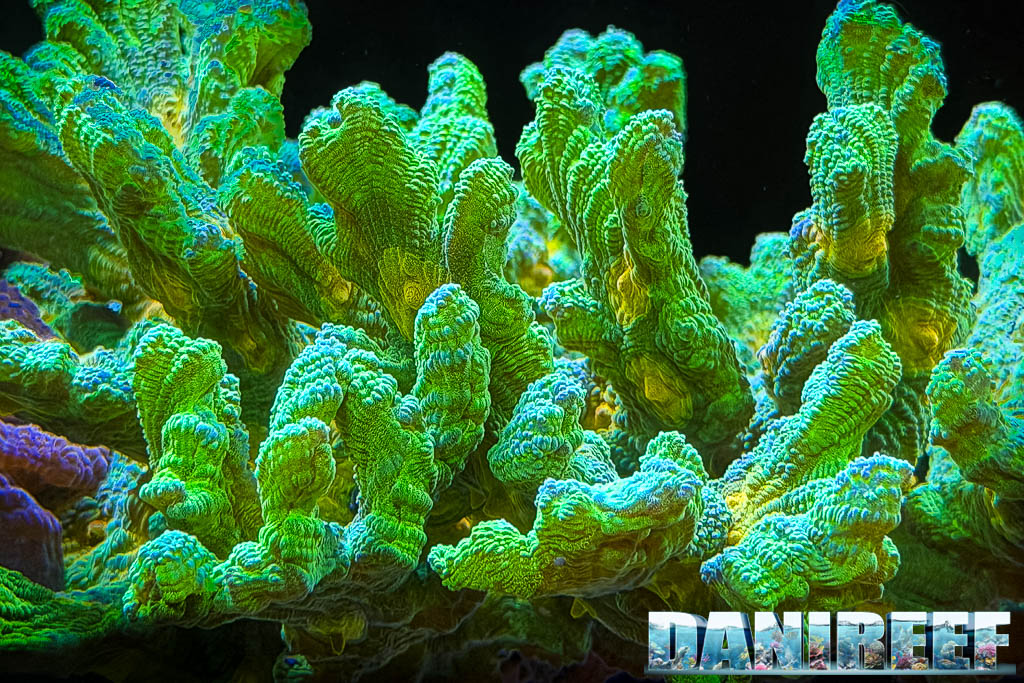
The advice, in these cases, is always the same: it is better to increase gradually, better to test often at the beginning, and even better to use a logic of dosages distributed over time. Large swings are almost never a good idea, even when the product itself is correct.
According to ELOS, these dosages are not based on an abstract theoretical estimate, but on the result of hundreds of ICP tests carried out on different aquariums over the last two or three years. The usage rate would therefore be the result of practical testing and daily dosages refined over time, with the aim of offering a line that is as close as possible to the real consumption of a modern marine reef aquarium. This is an important detail, because it develops the discussion around an approach built on observation and analytical verification.
The costs of the ELOS Balling system
The three Bag in Box products for Calcium, Magnesium and KH each cost 42.94 euros for 5 liters of product. The Bag in Box of Croma+ costs 87.23 euros. Price recorded at the time of publication and always to be checked on the ELOS website or through retailers.
Who does this system make sense for?
A line like this can make sense especially for three categories of users:
- those with a mixed reef that has gone beyond the stage where water changes alone are sufficient;
- those managing an SPS reef with already significant consumption and looking for a more predictable system;
- those who want to set up an orderly Balling management, perhaps with a dosing pump, without getting lost in overly complicated solutions.
Conversely, in a newly started or still biologically unstable tank, the risk is always to look for the solution to problems in supplements when those problems originate elsewhere. And no serious product can solve that on its own.
Conclusions
The new ELOS proposal for the Balling method seems to start from the right premise: simplifying without trivializing. Extra Calcium, KH+ and Extra Magnesium cover the classic triad with a clear logic, while Croma+ tries to broaden the discussion towards a more complete management of coral growth and pigmentation.
The really interesting part, however, is not the single product. It is the method. And the Balling method, even today, remains one of the smartest ways to seriously follow a reef aquarium: measure, understand, dose, stabilize. In this sense, the ELOS line seems to fit coherently into a very rational, very readable and potentially very effective vision of marine aquarium keeping.
The circle is closed by the choice of the bag-in-box format, which is not only a practical 5-liter solution, but also a system designed to better protect the content from oxidation and contamination during use.
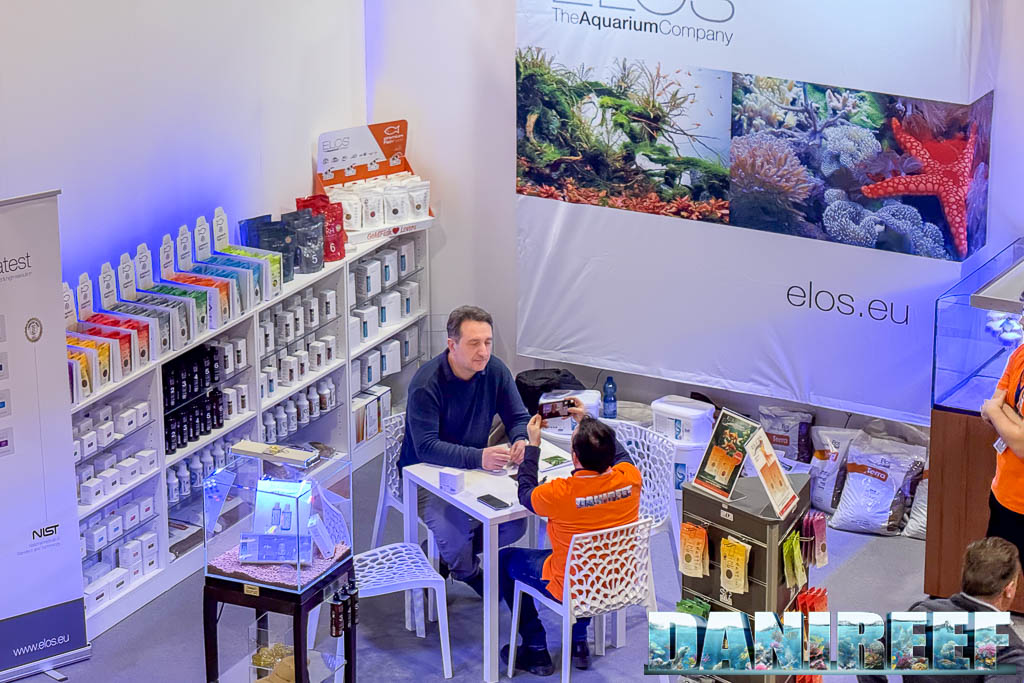
Have you already tried the Balling method in a marine aquarium? And what do you think of this new interpretation proposed by ELOS? Let us talk about it in the comments, on our forum and on DaniReef social media: Facebook, Instagram, YouTube, TikTok, Telegram, X/Twitter and LinkedIn.
Scopri di più da DaniReef - Portale dedicato a Acquario Marino e Dolce
Abbonati per ricevere gli ultimi articoli inviati alla tua e-mail.