
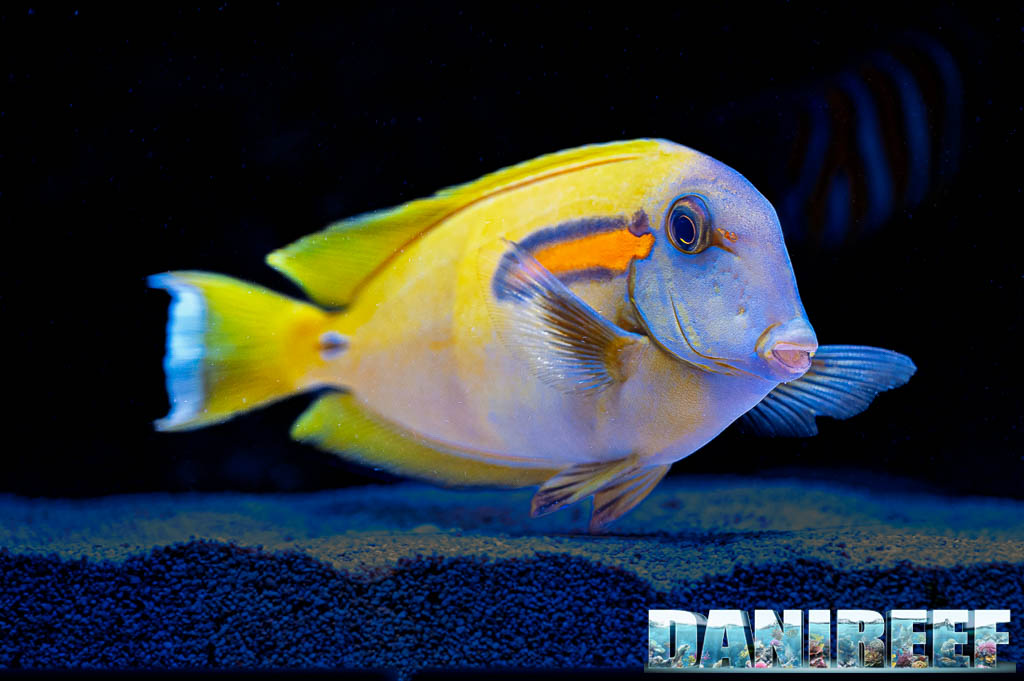
Acanthurus olivaceus immediately stands out with its vibrant colors and the distinctive orange “patch” on its dorsal area. It is one of the most beautiful and unique surgeonfish, usually peaceful yet with a special role to play. Let’s explore everything you need to know about this fascinating species.
Acanthurus olivaceus, also known as the Orange-shoulder surgeonfish, belongs to the family Acanthuridae, commonly referred to as surgeonfish.
Acanthurus olivaceus
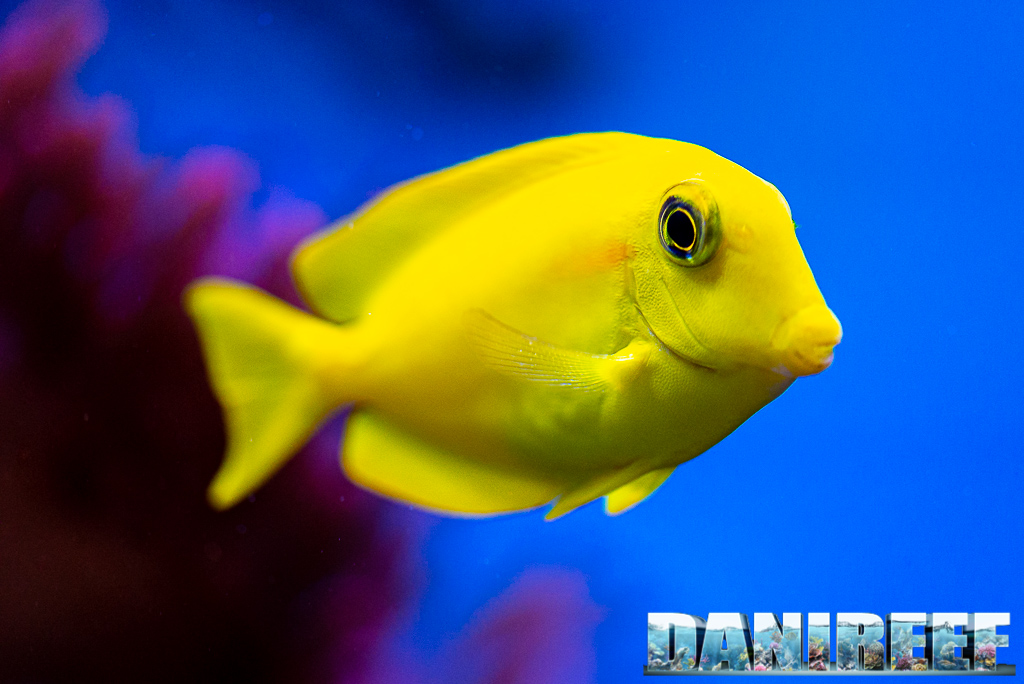
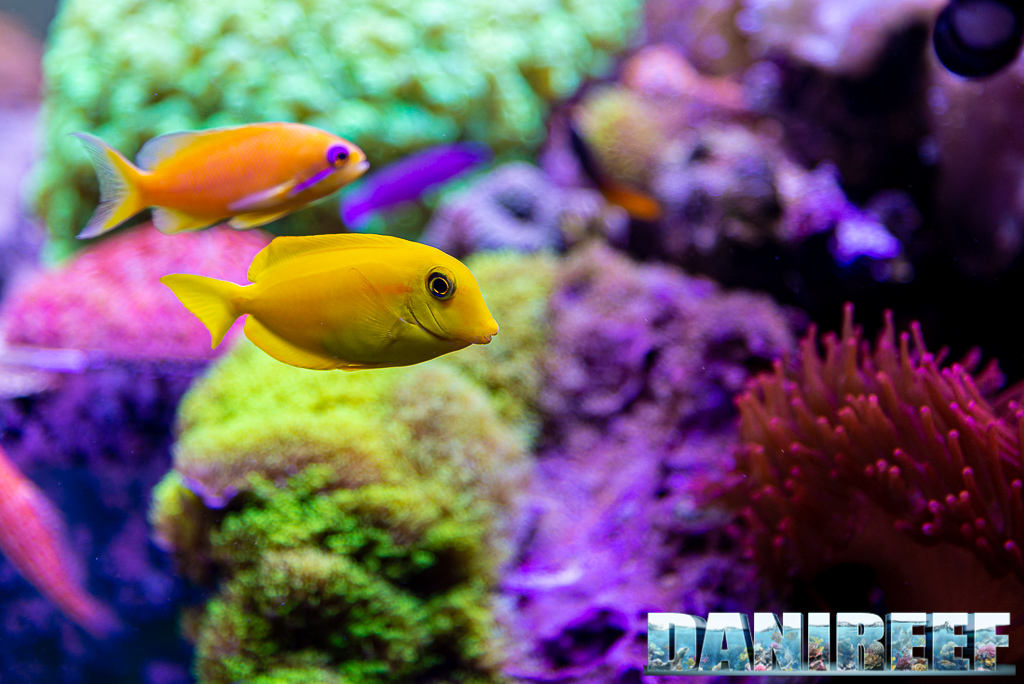
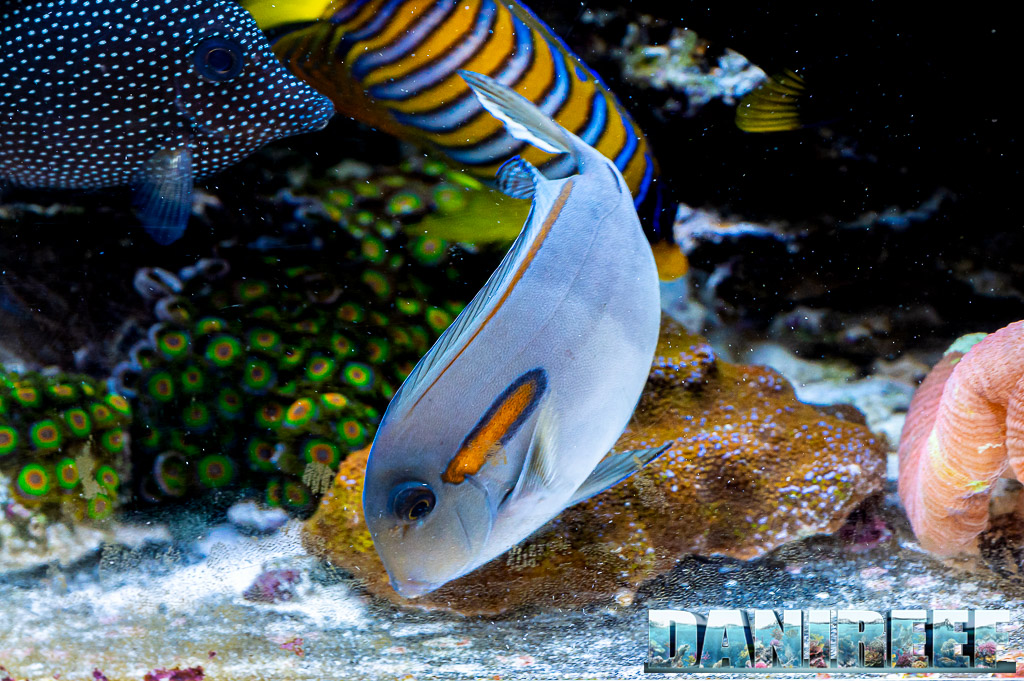
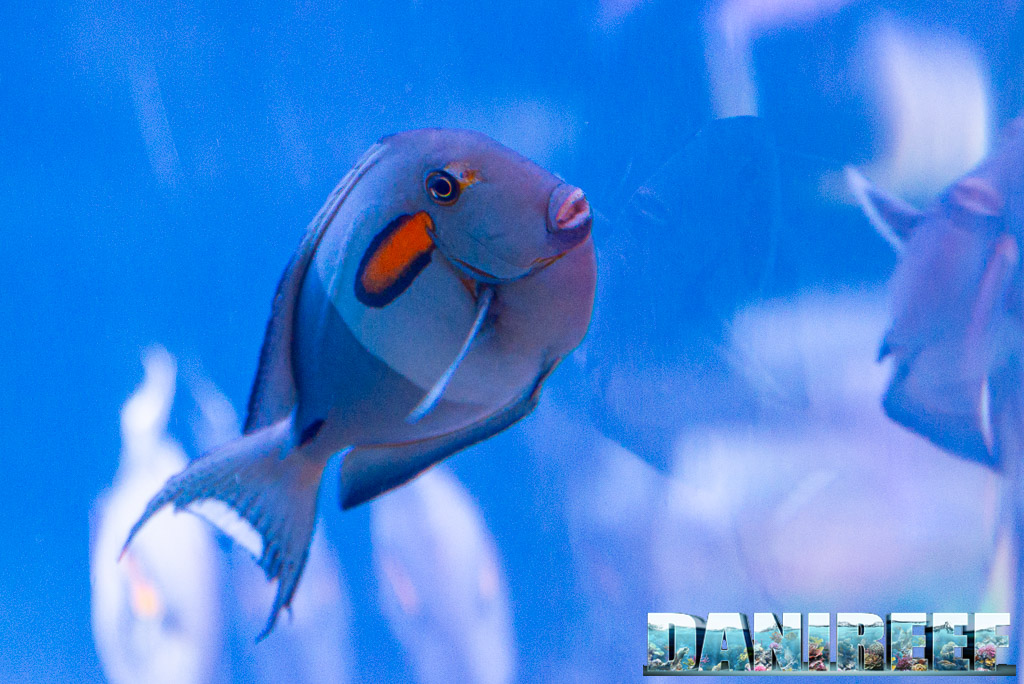
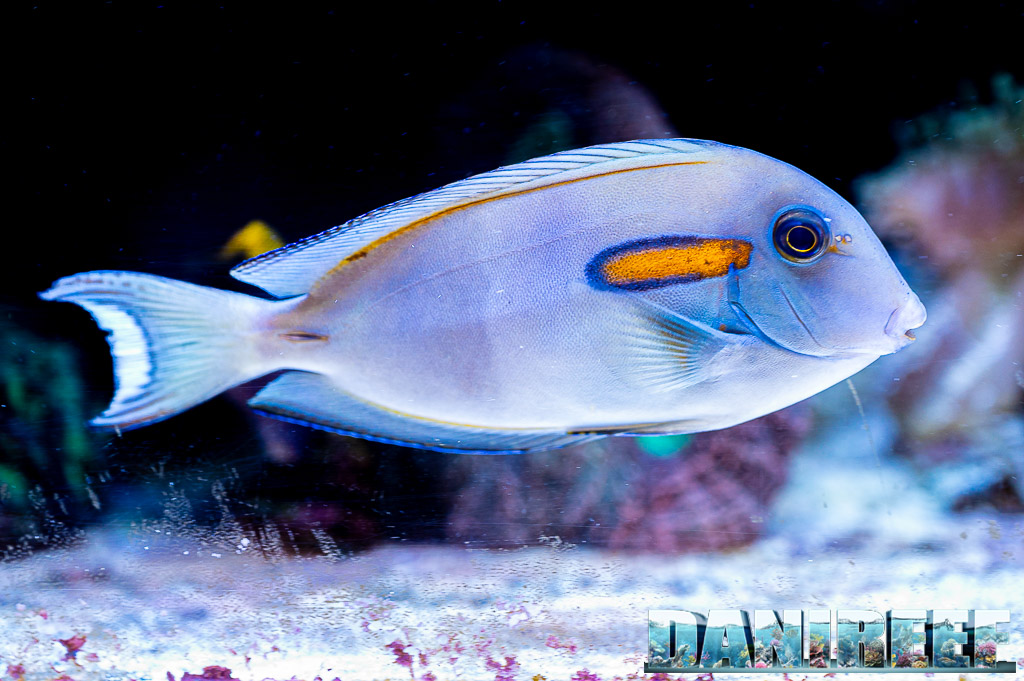
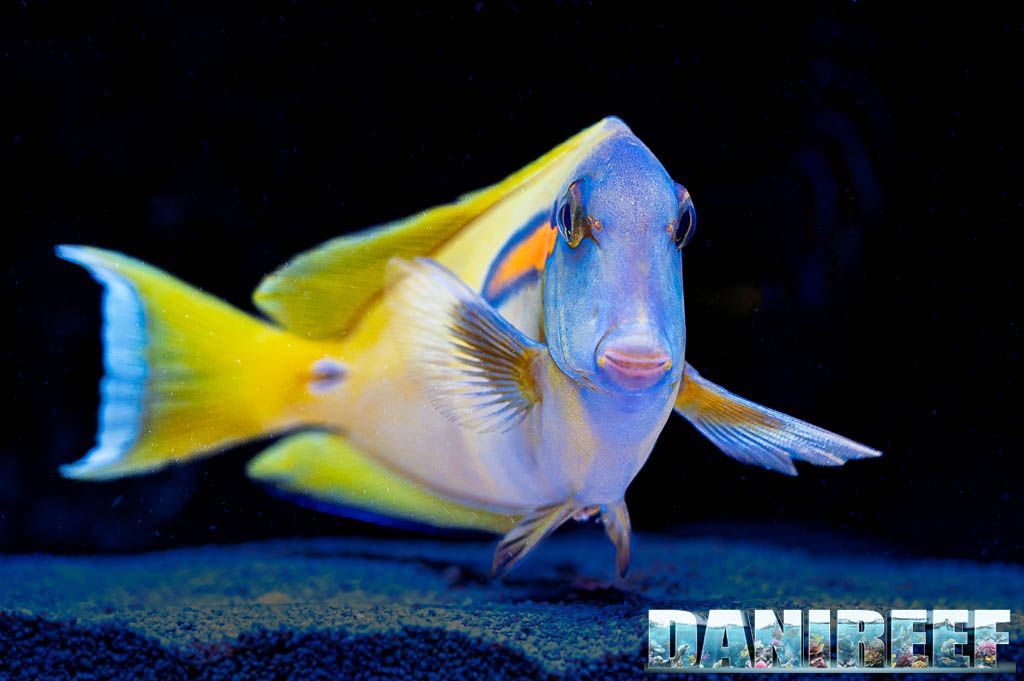
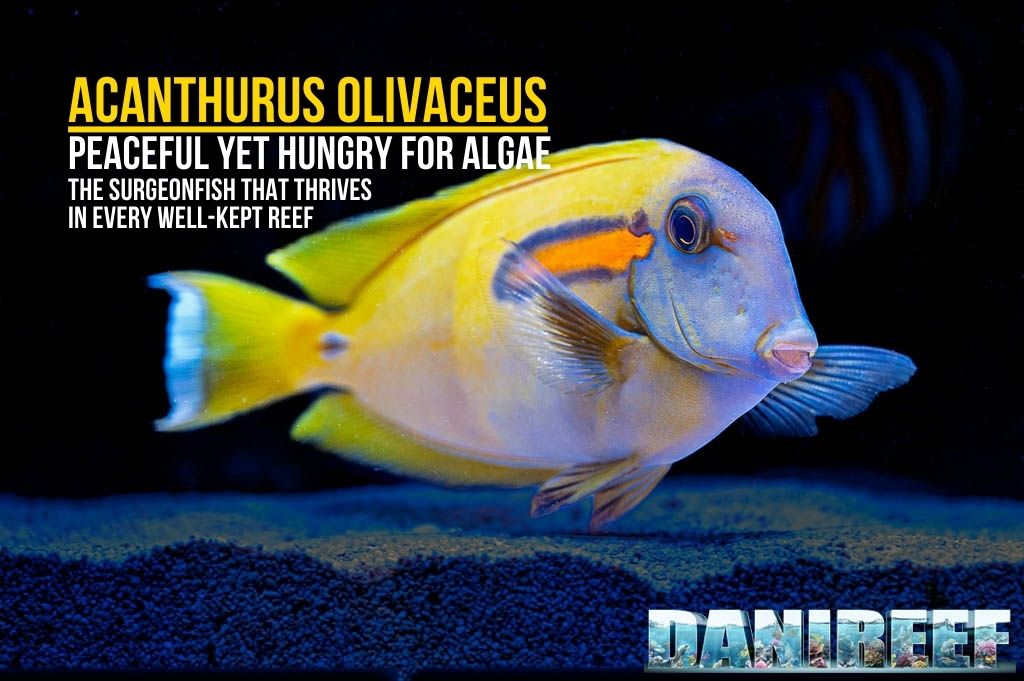
The common name “Orange-shoulder surgeonfish” comes from the striking orange band that appears on its flank during adulthood. This species undergoes a dramatic color transformation: juveniles are bright yellow with a small dark spot, while adults develop an olive-gray body with the iconic orange patch outlined in black behind the operculum. Below is a beautiful juvenile Acanthurus olivaceus, still entirely yellow, with just a faint trace of the orange mark.
Like all surgeonfish, it is a tireless swimmer and plays a key role in controlling filamentous algae and diatoms, which are its main food sources. In the wild, it inhabits Indo-Pacific coral reefs, often in shallow waters with abundant algal growth. It spends most of its time grazing algae and detritus in lagoons, which is why a marine aquarium for this species should include a sandy lagoon-like area.
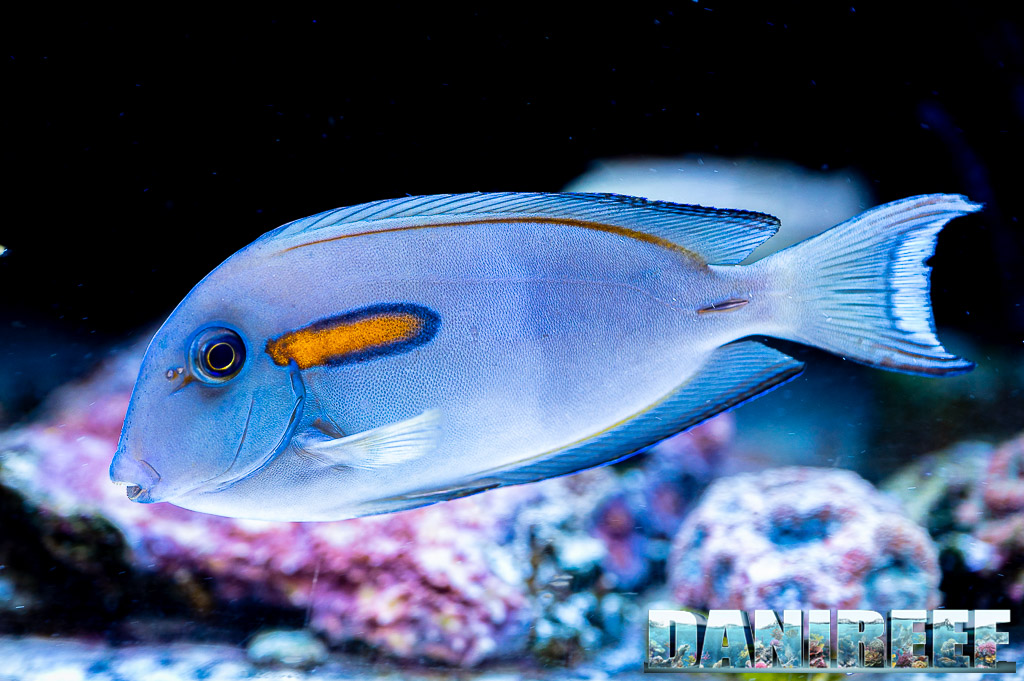
In the wild it is an extremely hardy fish, though in aquariums it can be more delicate, especially during acclimation. Once adapted, however, it becomes long-lived and reliable.
Behavior and swimming
Anyone who has watched an Acanthurus olivaceus swim knows how mesmerizing it is. Constantly patrolling the tank, gliding effortlessly among rocks and corals, it commands attention without aggression. It is among the most peaceful surgeonfish, second only to Acanthurus nigricans and Acanthurus triostegus, making it an ideal early addition to a reef tank.
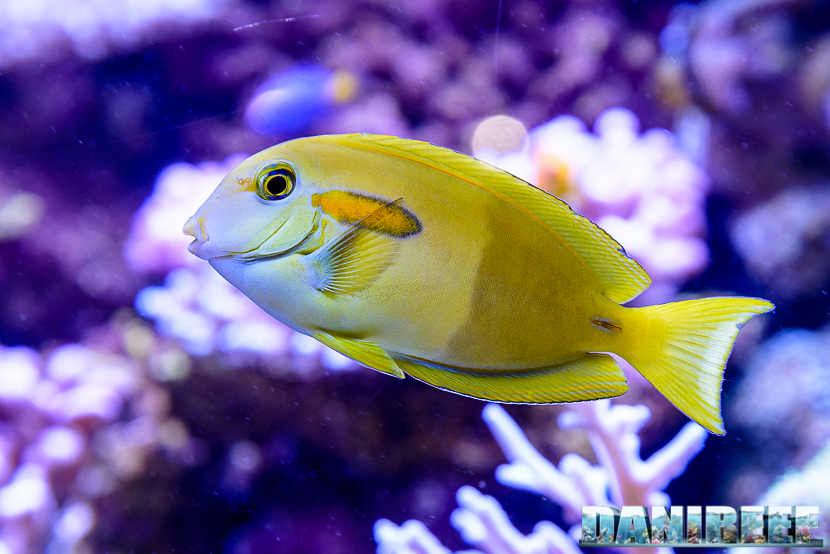
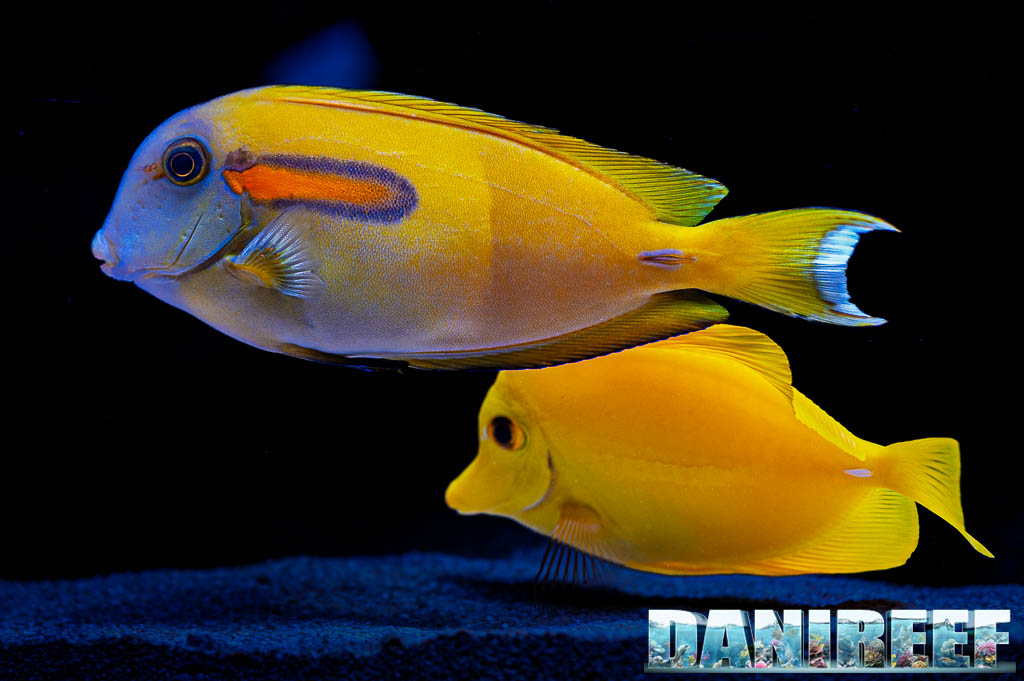
As noted, it generally won’t disturb other fish, but only one specimen should be housed per tank—unless both a juvenile and an adult are introduced together.
Diet and feeding
Acanthurus olivaceus is a specialized herbivore. In the wild, it feeds on benthic algae, algal films, filamentous algae, diatoms, and detritus.
In aquariums, a varied and nutrient-rich diet is essential, including:
- Dried nori seaweed;
- Vegetable-based foods made for surgeonfish;
- Spirulina and phytoplankton;
- Supplements of high-quality protein foods such as marine granules for complete nutrition.
For further advice, check out our dedicated guide: Feeding Surgeonfish in Reef Aquariums.
A lack of vegetable matter can lead to stress, weight loss, and increased aggression toward tank mates. In some cases, it may also nip at LPS coral polyps.
Size and tank requirements
In the wild it can exceed 35 cm (14 in) (FishBase), although in captivity it usually remains slightly smaller. This means it requires large aquariums: at least 500 liters (130 gallons), but preferably over 700 liters (185 gallons) if other surgeonfish are present.
A spacious setup with extensive live rock and natural algal growth helps this species thrive and display its best behavior.
Compatibility with other fish
As with all surgeonfish, if housed in tanks smaller than recommended, it may show aggression. However, under normal conditions it is peaceful and coexists well with most fish—even those with similar coloration. The only exception is another Acanthurus olivaceus of the same life stage, unless paired as juvenile and adult.
This species is also remarkably long-lived: there is evidence of individuals reaching 33 years of age.
Distribution
Acanthurus olivaceus is found primarily in the Pacific Ocean: from Christmas Island and Cocos-Keeling in the eastern Indian Ocean to the Hawaiian Islands and Tuamotu Archipelago, extending north to Japan and south to Lord Howe Island. In the rest of the Indian Ocean, its ecological niche is replaced by its close relative, Acanthurus tennenti.
Difficulty in aquariums: final thoughts
Although it becomes hardy once acclimated, Acanthurus olivaceus remains a challenging species, requiring a large aquarium and a varied diet. Its beauty alone is not a reason to keep it in an unsuitable setup. Give it the proper space and care, and it will reward you with years of graceful swimming and vibrant colors.
Did you know?
The Acanthurus olivaceus is highly sought after for its reputation as an excellent eater of filamentous algae and diatoms—making it a must for large reef aquariums.
DaniReef’s tip: This spectacular fish is recommended only for those with the space and experience to manage surgeonfish properly. In a large, well-maintained aquarium, it will reward you with stunning colors and an unmatched presence.
Have you ever kept an Acanthurus olivaceus? Share your experience in the comments or on our forum. Follow us on Telegram, Instagram, Facebook, X/Twitter, and YouTube to stay updated with our articles and video reports!
Scopri di più da DaniReef - Portale dedicato a Acquario Marino e Dolce
Abbonati per ricevere gli ultimi articoli inviati alla tua e-mail.