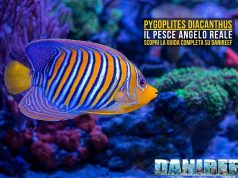

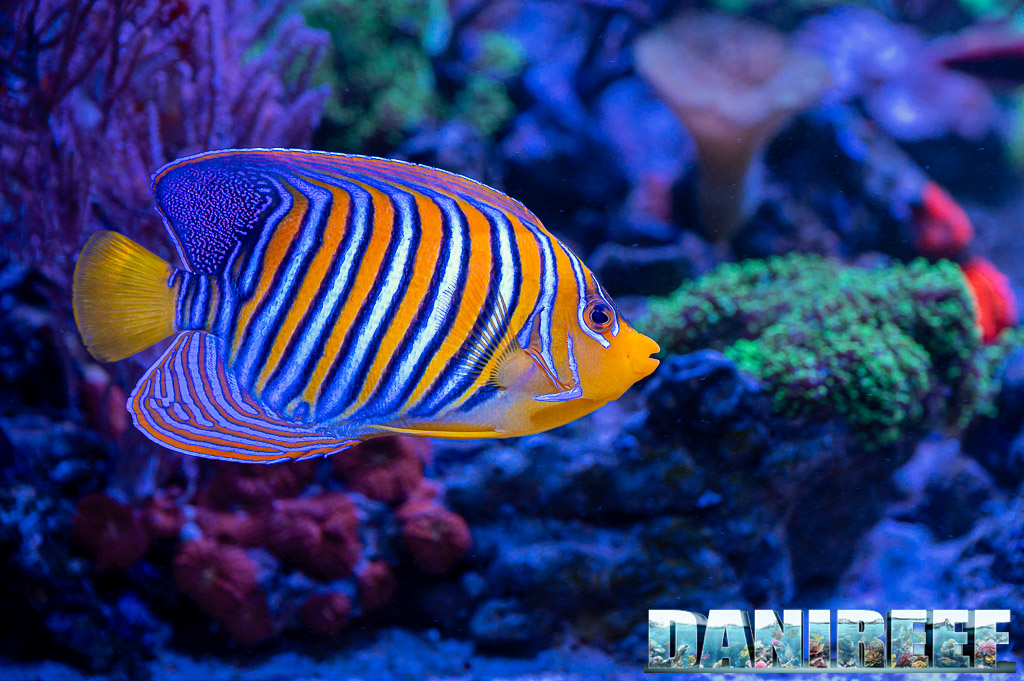
The Pygoplites diacanthus, known as the Regal Angelfish or royal angelfish, is without a doubt one of the most fascinating and iconic fish in the marine aquarium hobby. Its yellow, white, and blue vertical bands, together with its sapphire-colored facial mask, make it instantly recognizable and place it among the most sought-after species by aquarists around the world.
But the Pygoplites diacanthus is not just beautiful. It is also one of the most interesting fish from a biological and behavioral point of view. It is not an impossible fish, as is sometimes claimed online, but it certainly requires attention, experience, and a mature aquarium that is properly sized for it. In this in-depth guide we will look at how to keep it correctly and why, if managed well, it can become one of the most elegant inhabitants of our home reef.
Our guide to Pygoplites diacanthus
The Pygoplites diacanthus belongs to the Pomacanthidae family, the so-called marine angelfish. It is a very special species because it is the only member of the genus Pygoplites, a fact that highlights how evolutionarily distinct it is from other more common marine angelfish.
Unlike many other pomacanthids, which are often large and territorial, the Pygoplites has a relatively calm and reserved temperament. It likes to move among the rocks, explore crevices and caves in the reef, and feed calmly from the biologically active surfaces of the coral reef.
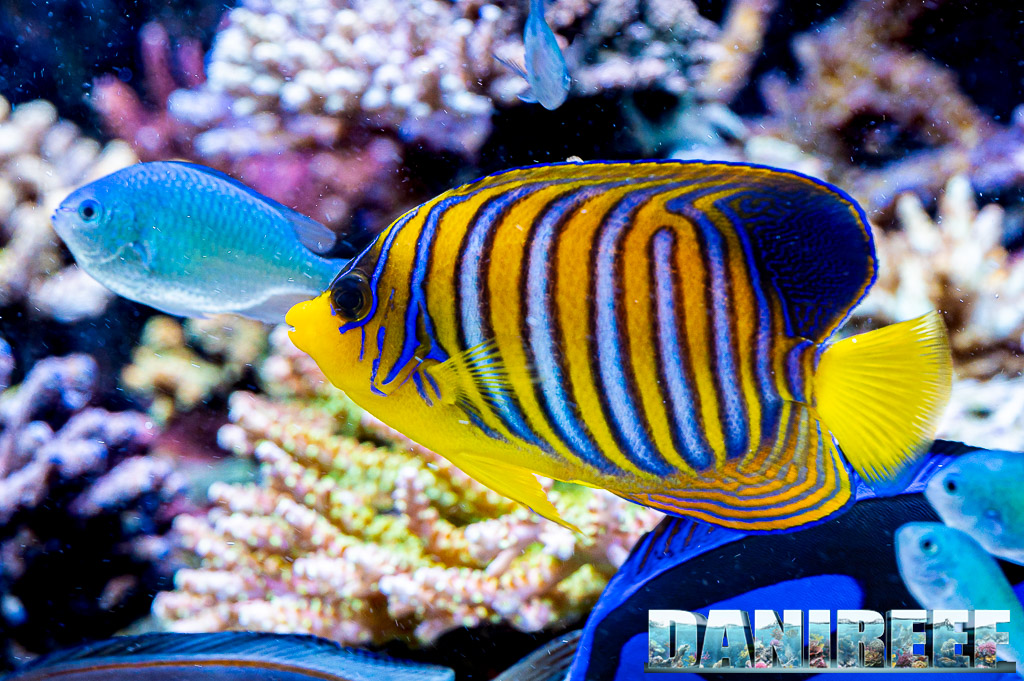
Physically, it is one of the most elegant fish on the reef. The body is tall and laterally compressed, with a livery made up of white and yellow-orange vertical bands edged in dark blue. The yellow head features a typical intense blue mask crossing the eye, while the fins can take on bluish or orange tones depending on the fish’s geographic origin.
According to FishBase, it can reach around 25 cm in length in the wild, although in aquariums most specimens usually remain between 15 and 20 cm.
Distribution
The Pygoplites diacanthus has a very wide distribution throughout the tropical Indo-Pacific. It is found in the Red Sea, the Indian Ocean, Indonesia, the Philippines, and all the way to Australia’s Great Barrier Reef.
Among aquarists there is a very interesting distinction between the different geographic populations. Specimens from the Red Sea generally show more intense coloration and, above all, a very obvious yellow chest area. Specimens from the Pacific, on the other hand, often show a grayish-blue tone in that same area.

Many aquarists believe that Red Sea specimens are also hardier and more likely to begin feeding in captivity, although this is not an absolute rule.
Behavior
The Pygoplites diacanthus is a relatively peaceful fish. In nature it often lives in pairs or small scattered groups along the reef, but in aquariums it is almost always kept as a single specimen. This is also due to the considerable tank size that would be needed to house two individuals.
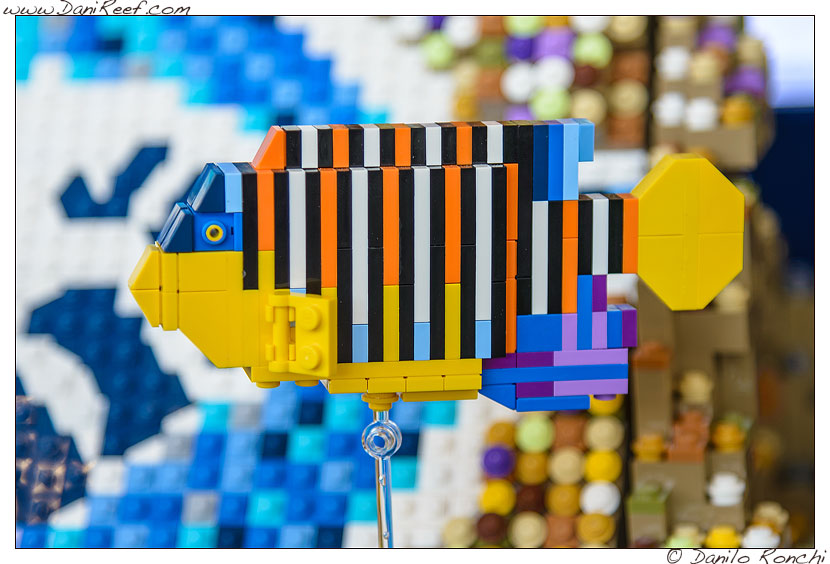
It is a curious yet cautious fish that tends to move among the rocks rather than swim for long periods in open water. In the first few days after introduction it may appear very shy and spend a great deal of time hiding. This is completely normal behavior and should not be a cause for concern.
Once acclimated, however, it becomes much more active and begins to patrol its territory with elegance. It is not unusual to see it carefully inspecting the rocks in search of small prey or sponges to feed on. We could say it shows the classic angelfish behavior, continuously and tirelessly moving in and out of the reef. With grace, elegance, and always looking for something to eat.

🐠 Curiosity: the Pygoplites feeds mainly on sponges
One of the most fascinating aspects of the Pygoplites diacanthus concerns its natural diet. In the wild this fish feeds largely on marine sponges, as well as tunicates and small benthic organisms.
This detail explains why many newly imported specimens may have difficulty accepting artificial foods. In aquariums, however, most individuals gradually adapt to frozen foods and high-quality pellets, provided the animal is introduced into a mature tank, properly managed and with other fish that can, through their behavior, show it how to find food.
Like other marine angelfish, the royal angelfish can also produce small dull or clicking sounds, a sort of thump, probably linked to communication or situations of stress and territorial defense. It is a little-known yet fascinating detail, one that reminds us just how much more complex these fish are than we often imagine.
Feeding
Feeding is probably the most delicate aspect of keeping the Pygoplites diacanthus. In the wild this fish feeds mainly on sponges, tunicates, and small benthic organisms, a type of diet that is difficult to fully replicate in captivity.
Fortunately, many specimens gradually adapt to frozen foods and pellets. Among the foods they appreciate most are:
- Frozen mysis;
- Enriched brine shrimp;
- Specific angelfish foods containing sponge;
- High-quality pellets.
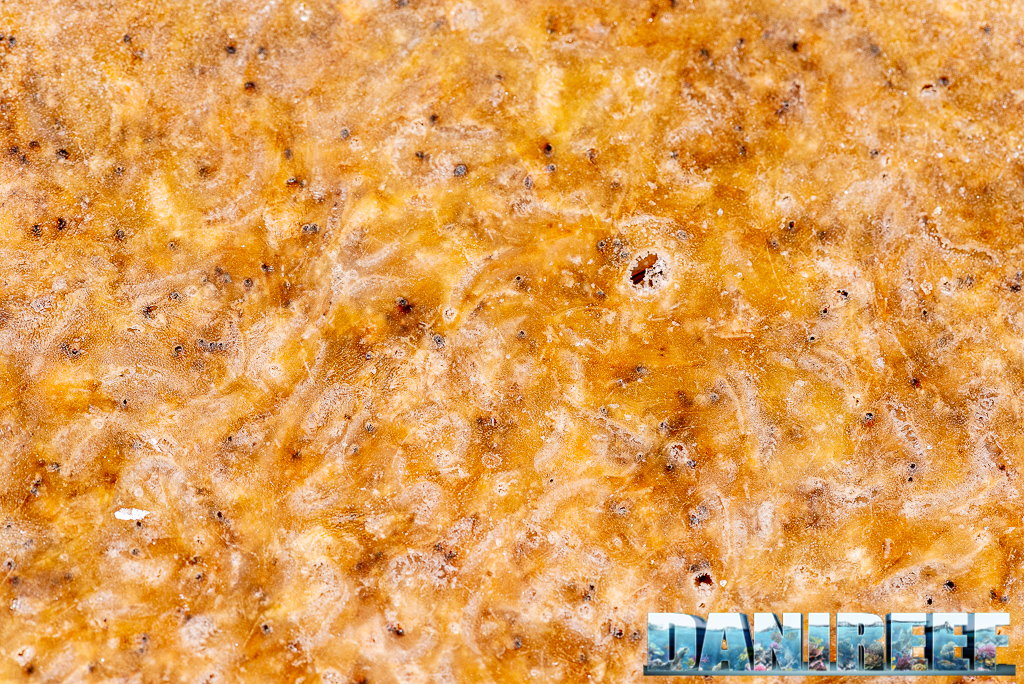
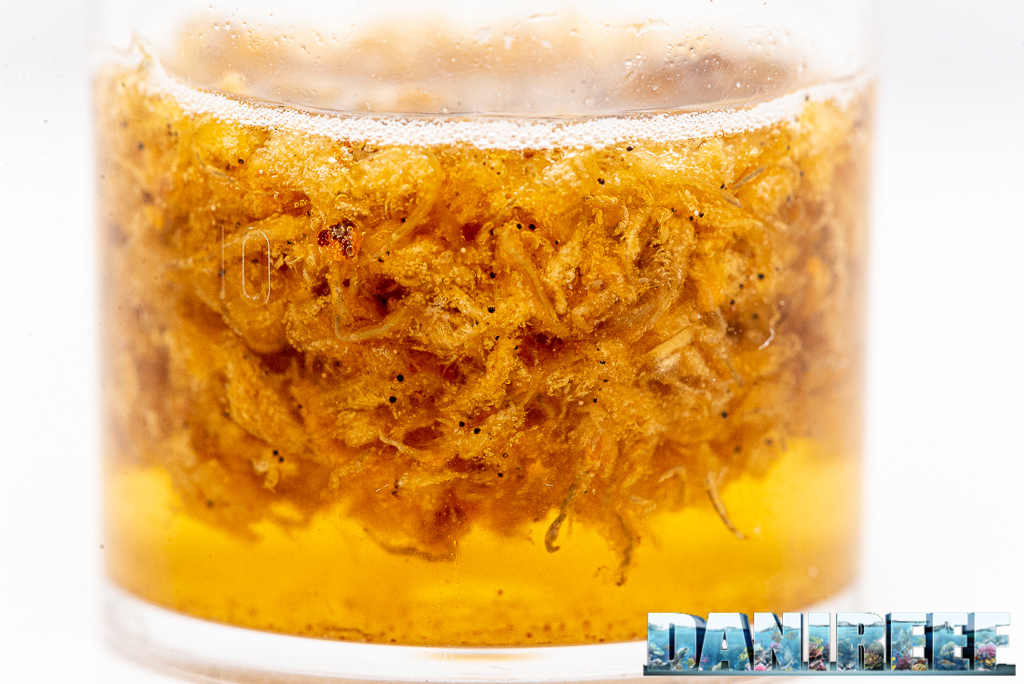

It is important to offer small but frequent meals and ensure a very varied diet. In a mature aquarium the fish will also be able to supplement its diet by grazing on microfauna and organisms present on the live rock. To learn more about this subject, I also recommend this very interesting article: Feeding fish.
A very useful trick with more stubborn specimens is to offer a fresh clam or mussel opened in half. Their smell and natural texture often stimulate the Pygoplites to start picking, making this one of the most effective methods to get feeding started during the first few days in captivity.
Recommended marine aquarium size
The Pygoplites diacanthus is not a particularly aggressive fish, but it still requires space and, above all, a complex rock structure that allows it to hide and feel safe.
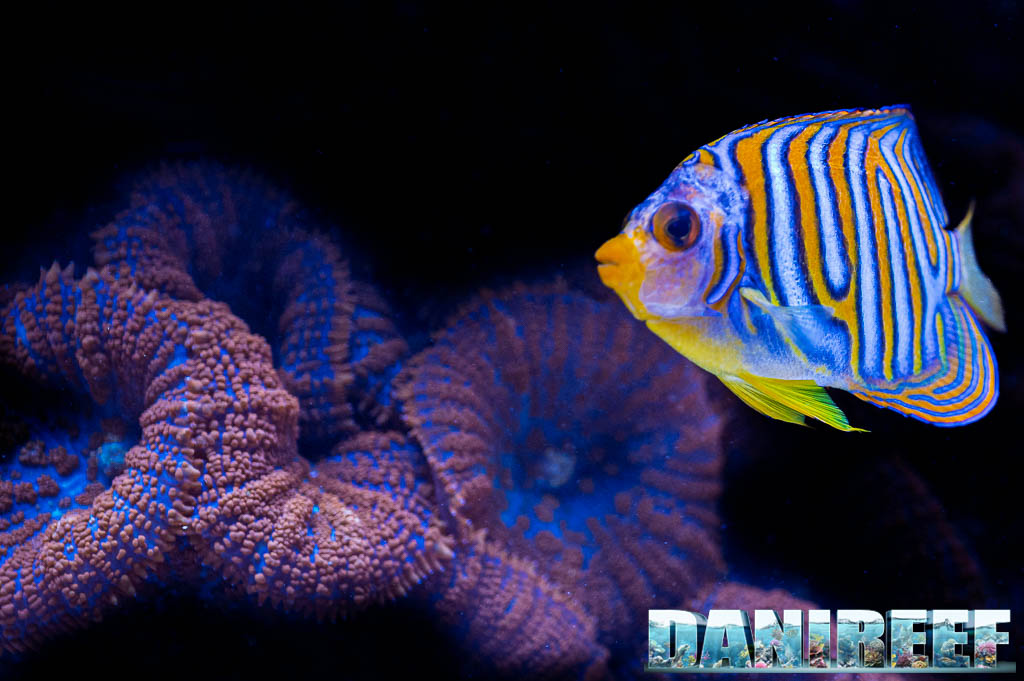
For a single specimen, an aquarium of at least 400–500 liters is recommended, ideally with significant length and plenty of mature live rock.
Reproduction in the wild
The reproduction of Pygoplites diacanthus in the wild is a fascinating and complex process, typical of many angelfish in the Pomacanthidae family. In nature these fish often form stable pairs or small harems made up of one dominant male and several females. During the breeding period, which in tropical areas may coincide with particular lunar phases or with sunset, the pair slowly rises from the coral reef into the open water column.
Spawning generally takes place at dusk. The two fish perform a brief courtship dance, rising upward together before simultaneously releasing eggs and sperm into the water column. Fertilization therefore takes place externally, and the tiny pelagic eggs are carried away by ocean currents.
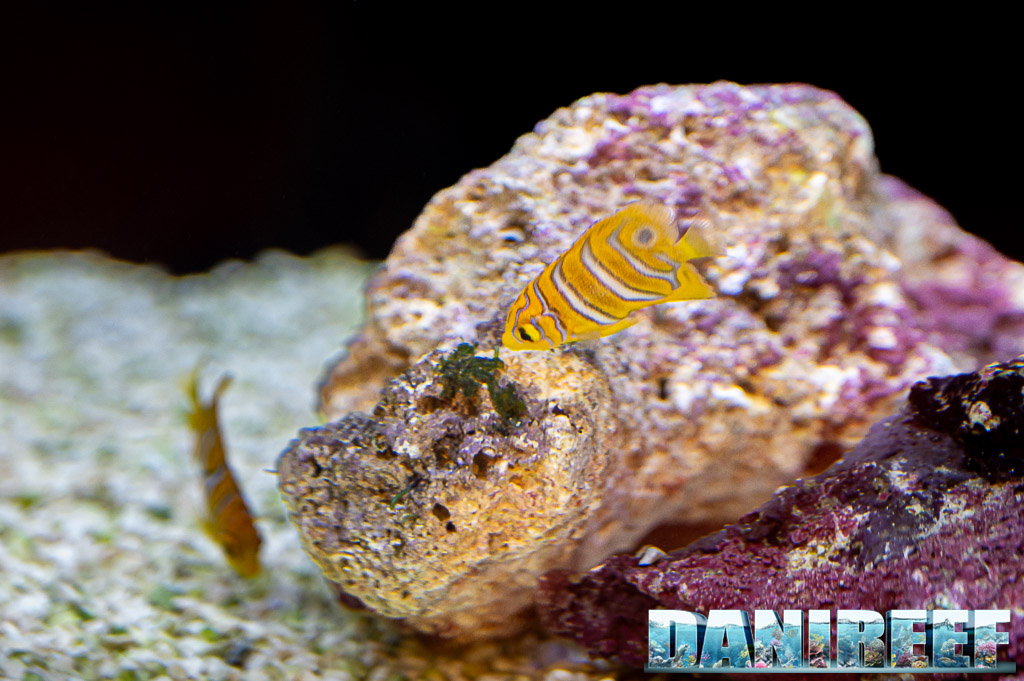
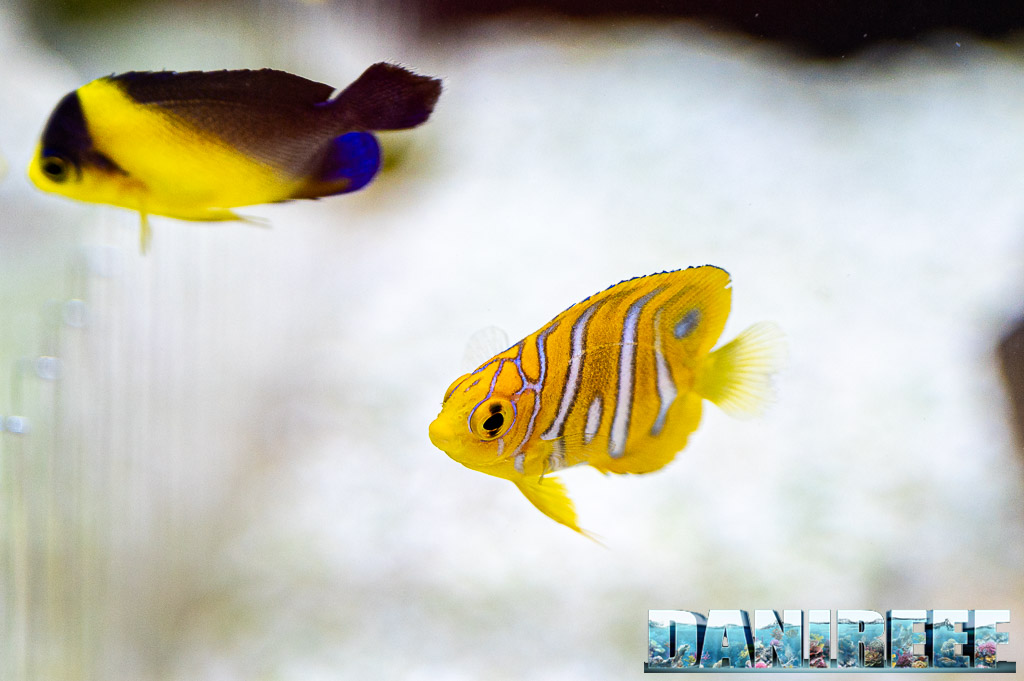
After hatching, the larvae go through a very particular pelagic stage called the “tholichthys” stage, characterized by the presence of thin bony plates that protect the larval head. This stage is typical of marine angelfish and is one of the main reasons why their captive breeding was extremely difficult for decades: the larvae have very specific feeding and environmental requirements and go through a very delicate development before finally settling onto the reef.
Once metamorphosis is complete, the juvenile Pygoplites settle among the rocks of the coral reef, where they begin the benthic lifestyle typical of adults. This life cycle, with its long pelagic larval phase, explains both the species’ wide geographic distribution and the historical difficulty of breeding it successfully in captivity.
📚 DaniReef Curiosity – The Regal Angelfish featured in UltraMarine Magazine
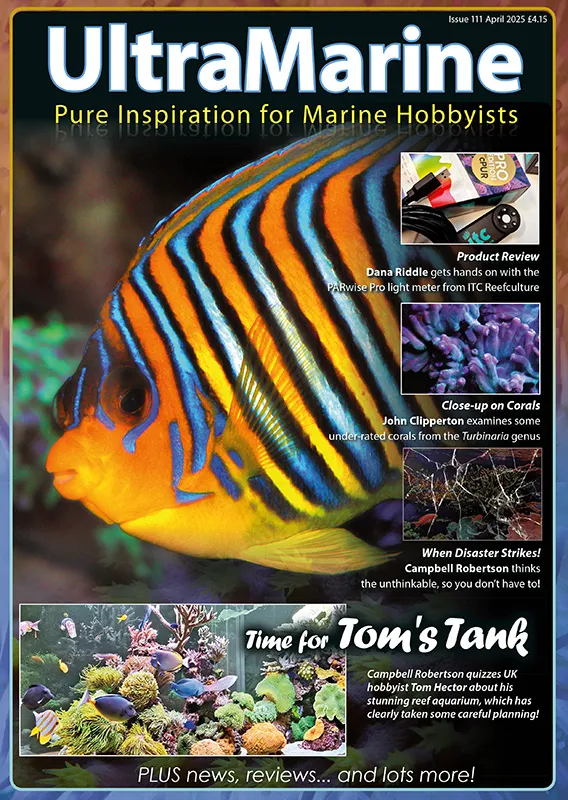
The Pygoplites diacanthus is considered by many to be one of the most fascinating fish in the entire reef world, so it is no surprise that it has also been featured in the international specialized press.
In issue 111 of UltraMarine Magazine, one of the most authoritative magazines dedicated to marine aquariums, the species was featured in the Reef Icons column. In that article, author Marijke Puts recounts a close encounter with the Regal Angelfish during a dive on a coral reef, describing its behavior and elegance in the wild.
👉 If you would like to learn more about this issue of the magazine, you can read our article here:
UltraMarine Magazine #111: light, corals, and adventures in the blue
A sign of just how much the Regal Angelfish has become a true reef icon over time, capable of fascinating both divers and aquarists.
Keeping
The secret to successfully keeping the Pygoplites diacanthus is introducing it into an already established aquarium, rich in live rock and with a peaceful fish community.
It is sensitive to stress during acclimation and may be susceptible to parasites such as Cryptocaryon or Oodinium. For this reason, it is always advisable to buy specimens that are already feeding decisively at the store.
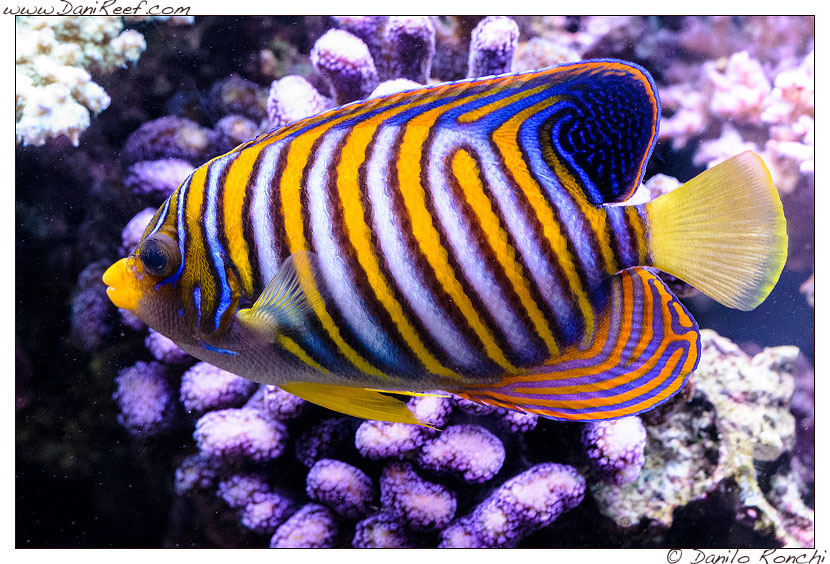
Once correctly acclimated, however, the Regal Angelfish can live in an aquarium for many years and, without any doubt, become one of the main stars of the tank.
The breakthrough of captive breeding
For years the Pygoplites diacanthus was considered one of those wonderful fish inevitably tied to wild collection, with all the difficulties this involves in terms of acclimation, feeding, and early mortality. For this reason, the news of its captive breeding in 2022 represented a real breakthrough for the entire industry.
As we reported in our dedicated article, the royal angelfish has also entered the list of marine species successfully bred in captivity, an extremely important achievement considering the biological complexity of pomacanthids and, in particular, of a specialized species such as Pygoplites diacanthus.
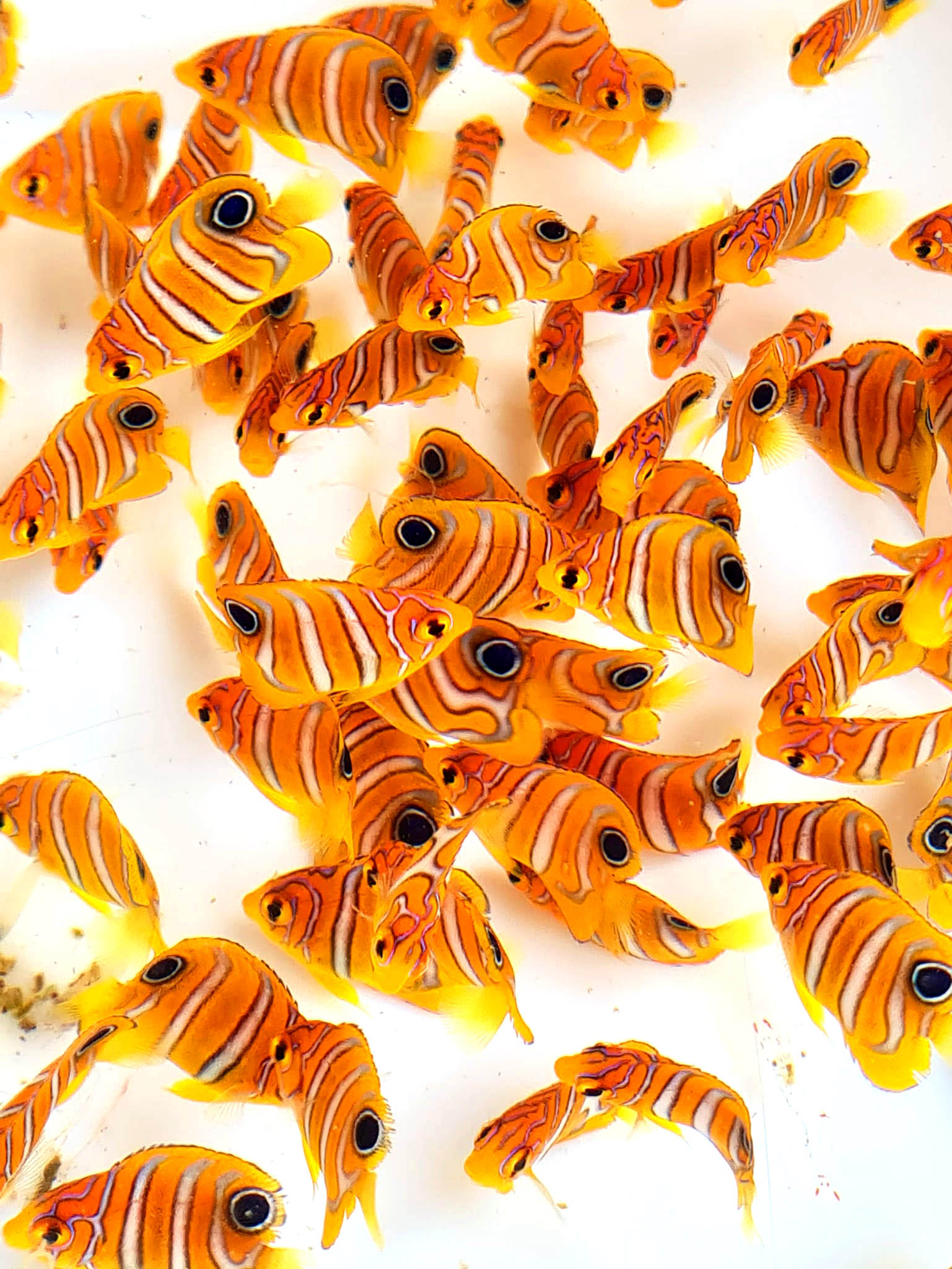
The availability of captive-bred specimens does not yet mean the problem has been completely solved or that the fish has suddenly become easy, but it does open a very interesting scenario. A specimen born and raised in captivity may in fact offer huge advantages: greater familiarity with the artificial environment, better willingness to accept non-natural foods, and in some cases less sensitivity to transport and introduction stress.
👉 If you would like to explore this historic step forward for the marine aquarium hobby, here is our full article: Abbonati per ricevere gli ultimi articoli inviati alla tua e-mail.
Scopri di più da DaniReef - Portale dedicato a Acquario Marino e Dolce