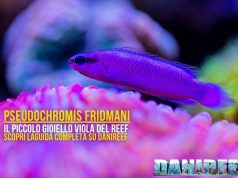

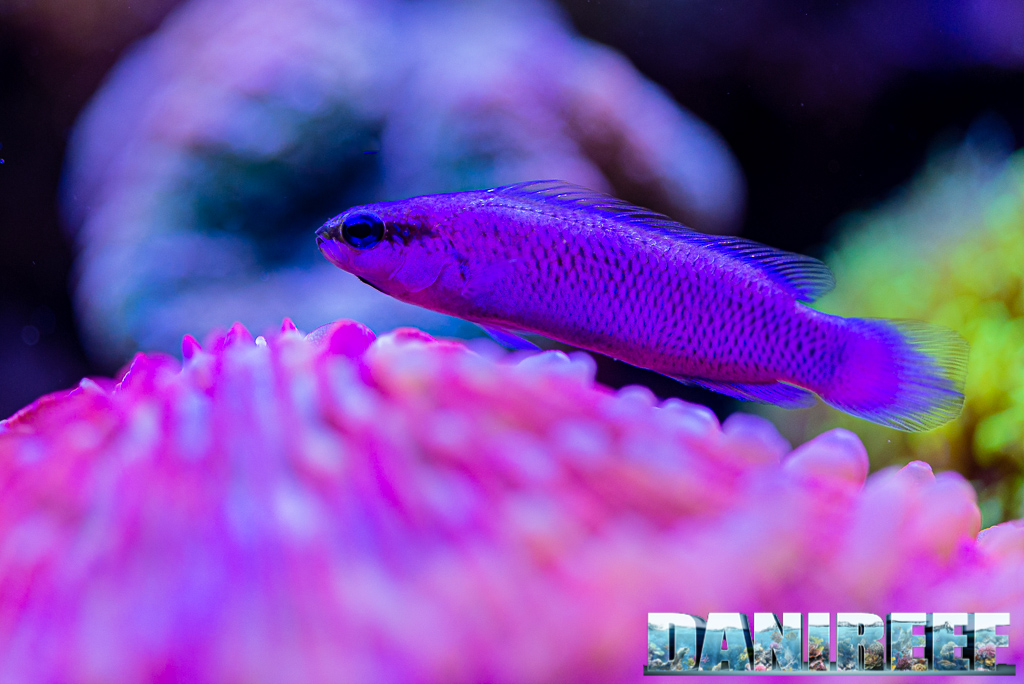
Small, energetic, and unmistakably colored: today we’re talking about the stunning Pseudochromis fridmani, also known as the Fridman’s dottyback or Orchid dottyback — one of the most fascinating and versatile fish for marine reef aquariums.

The Pseudochromis fridmani is one of the most beloved fish among reef aquarists thanks to its vivid purple coloration and lively yet balanced temperament. Endemic to the Red Sea, this small predator is also useful for controlling parasites and tiny crustaceans, making it ideal for reef tanks of nearly any size.
Pseudochromis fridmani
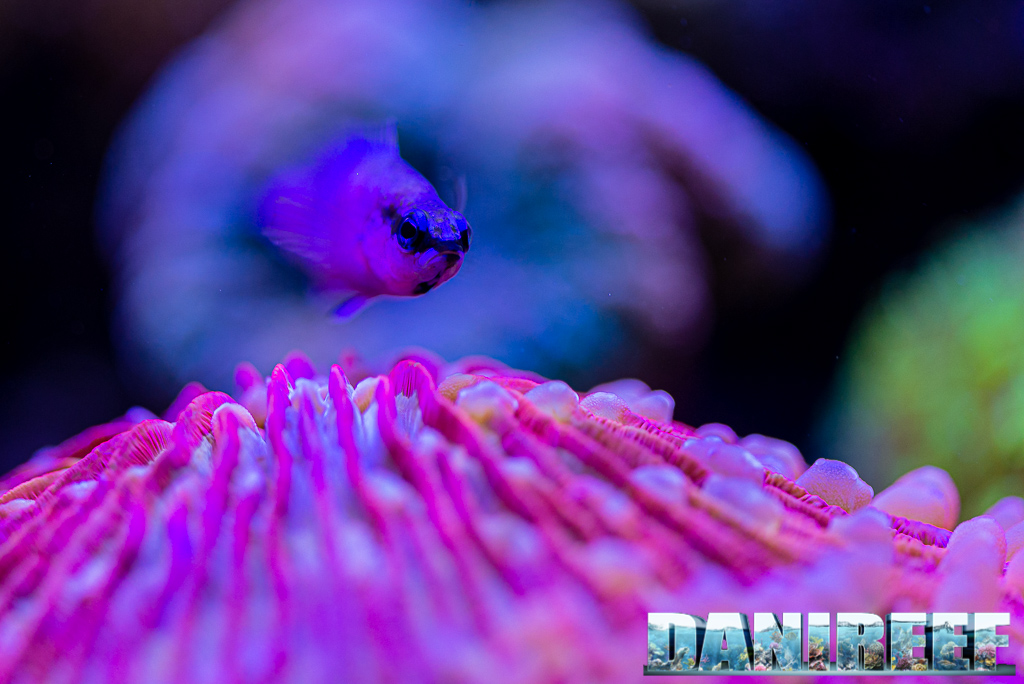
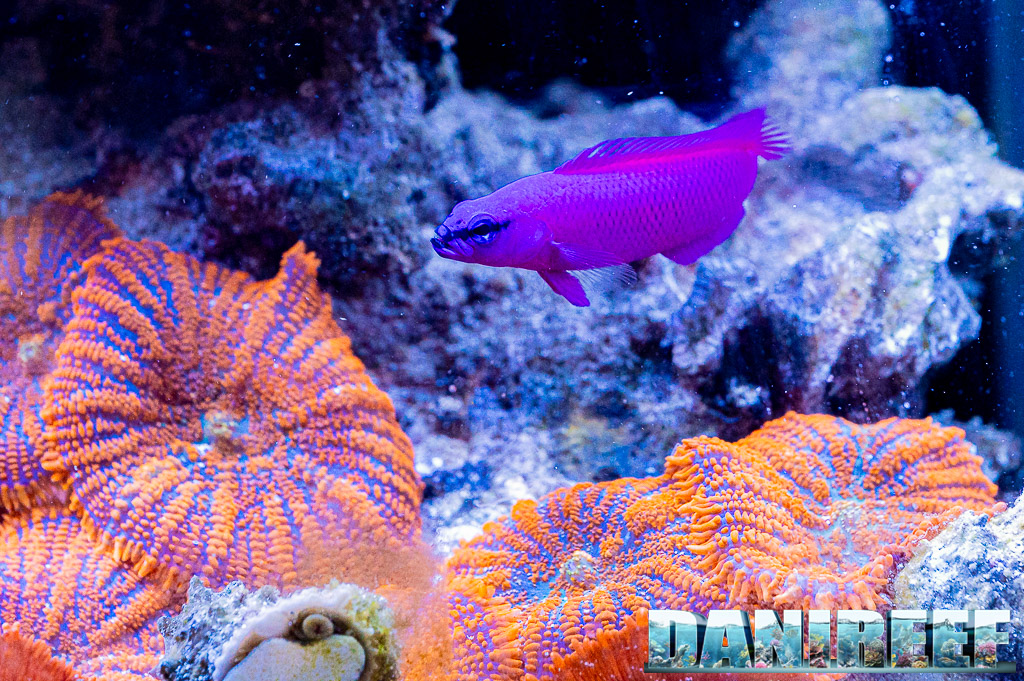
The Pseudochromis fridmani belongs to the Pseudochromidae family and was first described in 1968 by Klausewitz. In the wild, it can reach about 7–8 cm in length, with an elongated body and a slightly pointed snout — although FishBase reports a maximum of 6.3 cm. Its body is an intense electric violet, crossed by a thin black line running through the eye, making it instantly recognizable in any marine tank.
Habitat and distribution
Endemic to the Red Sea, the Pseudochromis fridmani inhabits shallow coral reefs and rocky caves between 2 and 60 meters deep. It moves among rocks hunting for small crustaceans, worms, and fish larvae. Although geographically limited, it is one of the few Red Sea species widely bred in captivity, making it a sustainable and ethical choice for home aquariums.
Feeding
In the wild, this species is an opportunistic carnivore that feeds on small crustaceans, copepods, amphipods, and worms. In captivity, the Pseudochromis fridmani readily adapts to frozen foods (mysis, artemia, chopped krill) and eventually accepts small pellets or granules. Offering 2–3 small varied meals a day helps maintain its color and vitality. As we often emphasize, it’s important that the diet includes a good amount of astaxanthin to enhance pigmentation.
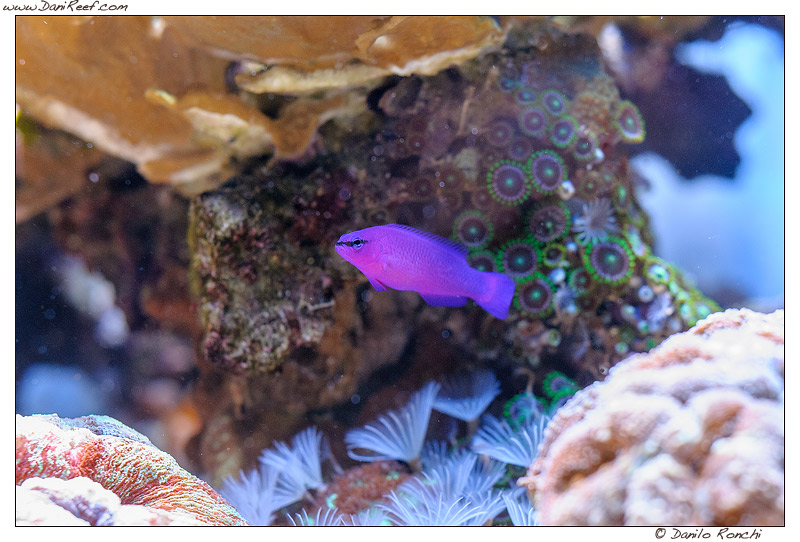
Although a predator, it rarely bothers other fish or invertebrates if the tank offers enough space and hiding spots. It’s also appreciated for helping control small populations of benthic worms or unwanted parasites.
Tank compatibility and care
Compared to other dottybacks, the fridmani is more peaceful and easy to manage even in mixed community tanks. It may show some territorial behavior toward fish of similar shape or coloration, but generally coexists well with gobies, clownfish, and small tangs. It’s recommended for aquariums of at least 70 liters, with plenty of live rock and caves for shelter.
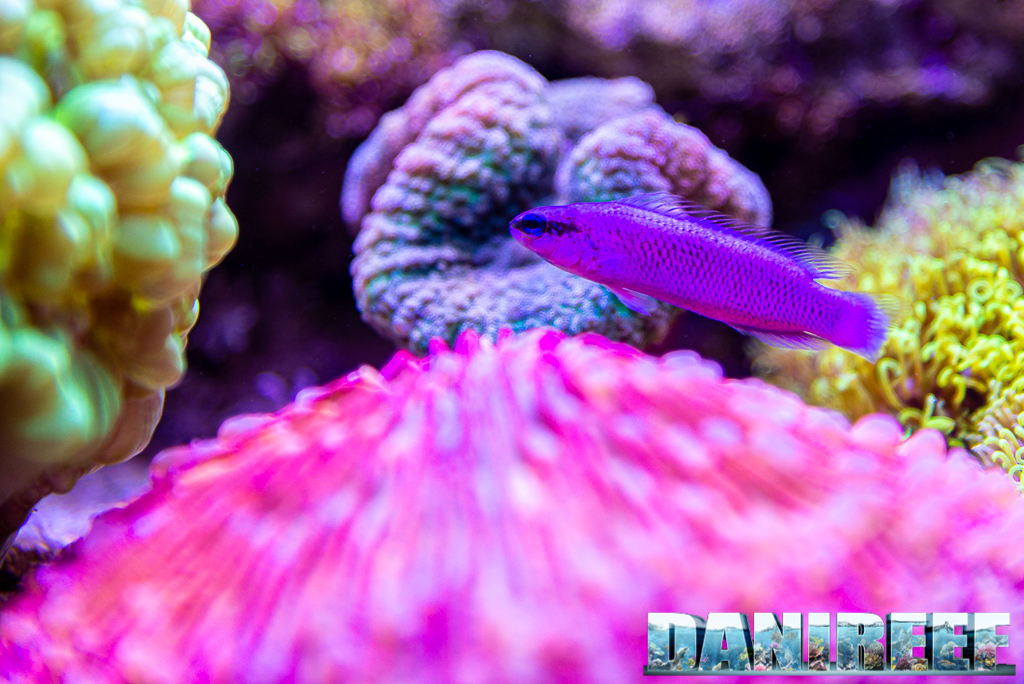
Being territorial, it’s best to introduce it last to the tank, once other fish have already established their territories. It can be kept singly or as a bonded pair in smaller setups, but housing multiple males together should be avoided. Defending its cave is completely normal behavior.
In large aquariums like the one below, it’s even possible to keep small groups.
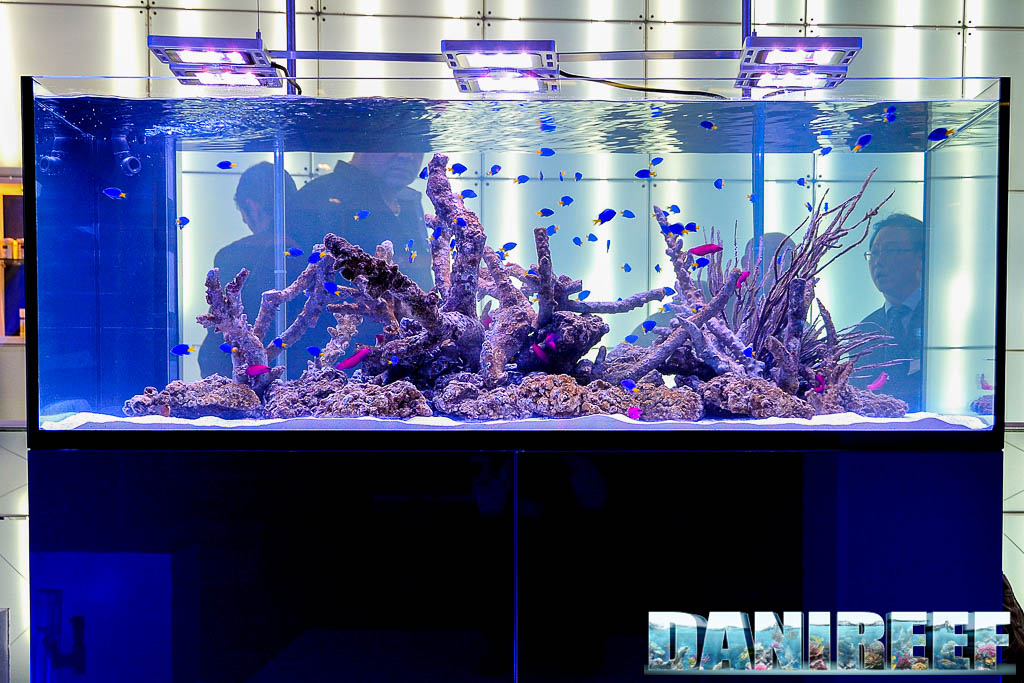
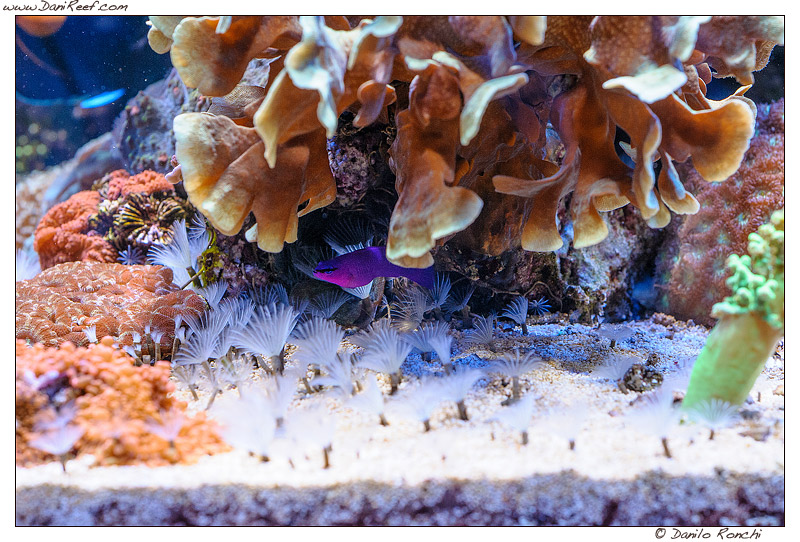
It’s not unusual for the fish to hide for long periods, especially when kept with more dominant species — only to reappear later, perfectly healthy and active.
It even happened to me: in a 200-liter tank, I couldn’t find mine for a month despite searching every rock, even at night with a flashlight — and then it suddenly reappeared, healthy as ever!
Breeding Pseudochromis fridmani
This is one of the few Pseudochromis species successfully bred in captivity. Breeding occurs in stable pairs: the male prepares a small nest inside a rock cavity and invites the female to spawn.
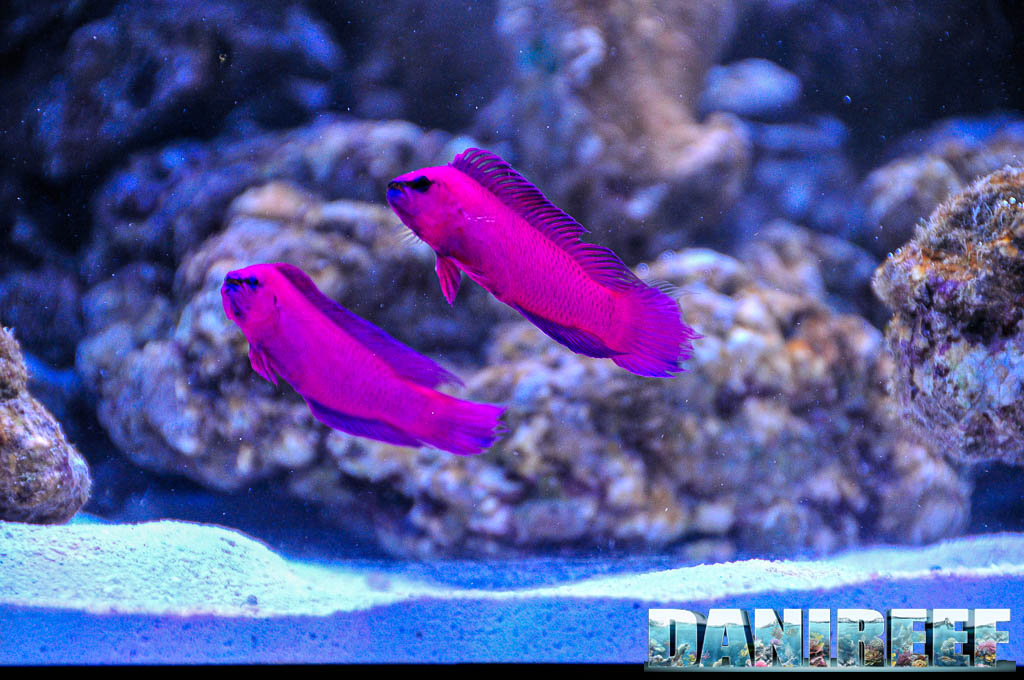
After fertilization, the male guards the eggs until hatching (3–5 days). The larvae are pelagic and require very fine live food (rotifers, newly hatched artemia) in the first stages.
Did you know?
The Pseudochromis fridmani was one of the first marine fish species to be consistently captive-bred. These captive-bred lines have made it an ethical and sustainable choice, significantly reducing pressure on wild populations from the Red Sea.
DaniReef’s advice: a hardy, colorful, and highly adaptable fish, perfect for small to medium reef tanks. An excellent choice for intermediate aquarists looking for an active, easy-to-feed species compatible with most marine fish.
Have you ever kept a Pseudochromis fridmani? Share your experience in the comments and follow us on Telegram, Instagram, Facebook, X/Twitter and YouTube to catch more articles and video reports from the reef aquarium world. You can also join the discussion on our forum.
Scopri di più da DaniReef - Portale dedicato a Acquario Marino e Dolce
Abbonati per ricevere gli ultimi articoli inviati alla tua e-mail.