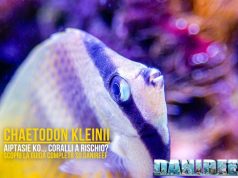

The Chaetodon kleinii may not have the iconic elegance of the Chelmon, but it wins you over with its warm hues and a decidedly more robust character. However, it remains an omnivorous and corallivorous butterflyfish that must be managed with care… and many choose it, as I did in the past, as the ultimate weapon against aiptasia. Is it really the definitive solution? Let’s see how deserved its fame is.
The Chaetodon kleinii is one of the most commonly used butterflyfish in marine aquariums. Unlike other, very delicate Chaetodontids, it is considered one of the most robust and adaptable, but this doesn’t mean it’s suitable for all reef tanks. It is, in fact, an omnivorous animal that in nature readily feeds on soft coral polyps (particularly Sarcophyton and Lobophyton), algae, and zooplankton. In aquariums, it is famous both as an aiptasia eater and as a potential “nibbler” of corals. And both reputations are more than deserved, so let’s try to understand when it can be a sensible choice and when it’s better to avoid it.
Chaetodon kleinii
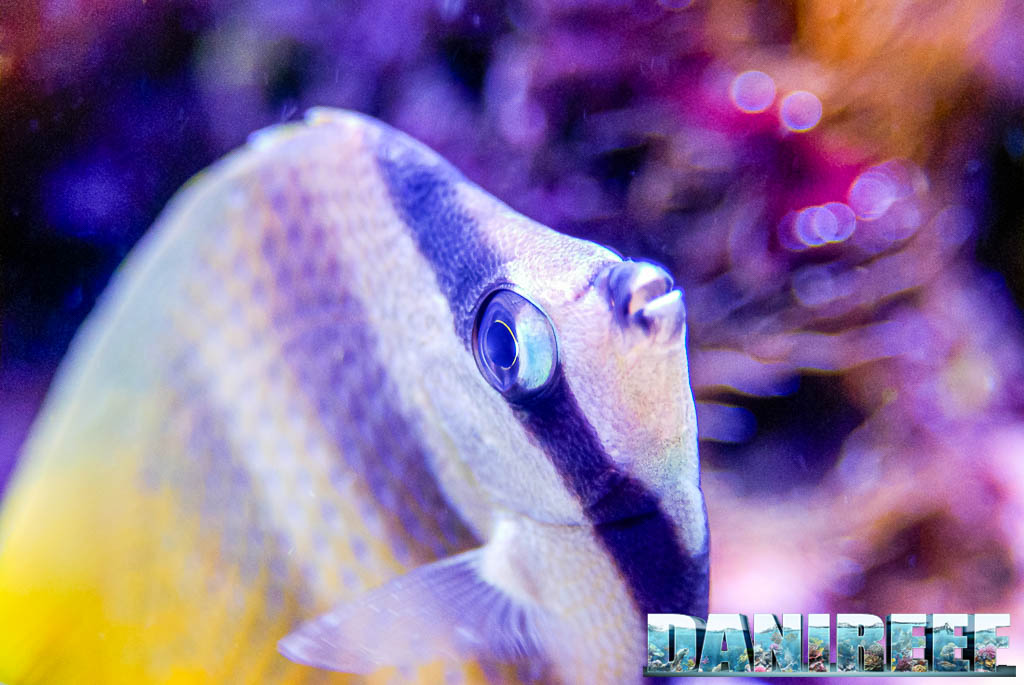
The Chaetodon kleinii, also known as Klein’s butterflyfish or blacklip butterflyfish, belongs to the Chaetodontidae family. Its body is oval-shaped, with a yellow-brown base coloration, one or two lighter vertical bands, and a characteristic darker area on the lip, from which the common name “blacklip” derives. Like many other butterflyfish, this species is part of a family that today includes over 120 species divided into several genera, often with highly specialized feeding habits. In the case of the kleinii, however, we are talking about an opportunistic omnivore, less demanding than many of its cousins, and precisely for this reason, it is one of the most common in the trade.
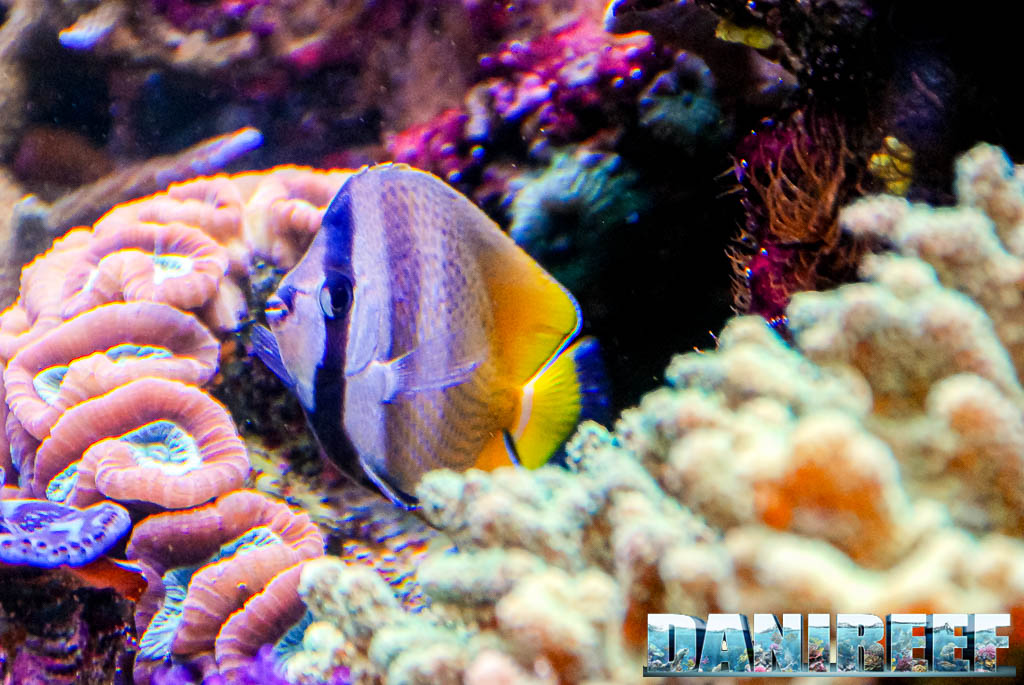
The Chaetodon kleinii is a very pleasant fish to observe: it swims with sinuous and calm movements, willingly occupies the central part of the water column, and, once acclimated, tends to be often in view. It is appreciated because, compared to other butterflyfish, it is more robust, less shy, and more adaptable to captive feeding. On the other hand, it is certainly not the “perfect fish”: it is a declared corallivore, with a predilection for soft corals and some LPS, and can become very annoying if the marine aquarium is not prepared to withstand its continuous grazing.
In nature, besides feeding on polyps of Sarcophyton and Litophyton, it integrates its diet with algae and zooplankton. This makes it a very active fish in grazing on live rock, but also potentially dangerous for many corals in an aquarium. In tanks rich in soft corals and LPS, it can cause significant damage, focusing on one or a few corals until they are seriously weakened. In very large tanks rich in corals, however, its impact can be more diluted and, in some cases, tolerable. In my old aquarium, from which the photos come, it never touched hard corals and Acropora, but for the rest, it became unsustainable.
What is the likelihood that the Chaetodon kleinii will eat aiptasia?
The Chaetodon kleinii is often cited as one of the best fish against aiptasia. In the vast majority of cases, once acclimated, it starts feeding on the small pest anemones and can contribute significantly to their disappearance, especially in large tanks with a lot of live rock. Not all individuals show the same voracity, but it is rather rare to encounter specimens that are totally uninterested. In many aquariums, it is introduced precisely for this purpose, and results are not long in coming.
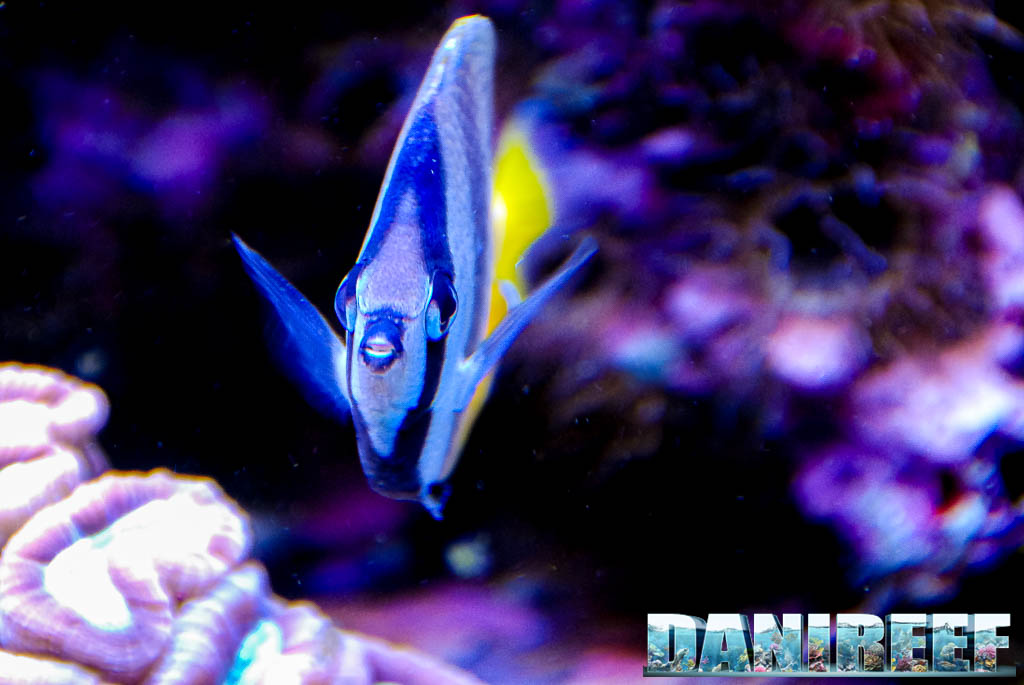
What is the likelihood that the Chaetodon kleinii will eat corals?
Here the answer is equally clear: sooner or later, it will. The Chaetodon kleinii is an opportunistic corallivore and in an aquarium, it tends to “taste” what it finds. Increasing the daily ration of food can be a deterrent, but unfortunately, it doesn’t work for long. The preferred targets are often soft corals (Sarcophyton, Sinularia, Lobophyton, Zoanthus) and various LPS. With SPS, the problem is generally lesser due to the smaller polyps, but it is not excluded that it may bother these as well, especially if it doesn’t have anything more preferred in the tank.
The first sign is seeing the coral polyps closed for no apparent reason, and the reason might be the kleinii doing its “tasting tour.”
In a large and heavily populated coral aquarium, the damage can be relatively contained because the fish tends to distribute its attention over many different points, and the corals have time to recover. In small or less mature tanks, on the contrary, it can become a real problem. It is also absolutely not recommended to pair it with Tridacna and other bivalves, which can be quickly stressed to death. However, it is absolutely easy and manageable in a fish-only aquarium, where its robustness and voracity in controlling aiptasia and majano anemones remain proverbial.
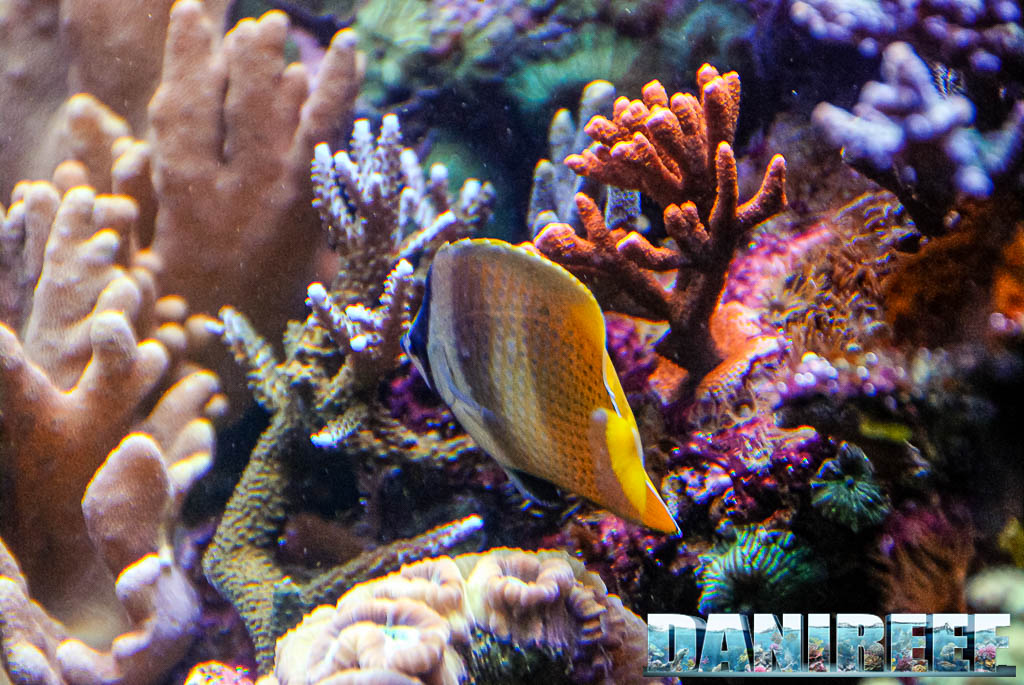
The Chaetodon kleinii is not a huge fish, but it can reach 15 cm in nature, so it still needs space, hiding spots, and a lot of live rock to explore all day long. It is not particularly aggressive towards other fish, but it can show rivalry with conspecifics or with species with very similar coloration. In a large, well-populated aquarium, it tends to behave calmly, but possible competition with more territorial fish should not be underestimated.
Distribution
The Chaetodon kleinii is widely distributed in the Indo-Pacific: from the Red Sea and East Africa to Hawaii and Samoa, north to southern Japan and south to Australia and New Caledonia. It is also present in parts of the eastern Pacific Ocean, for example, in the Galápagos Islands. It is found in deeper lagoons, channels, and outer reefs, typically between 2 and 60 meters deep. It can live both solitary and in stable pairs.
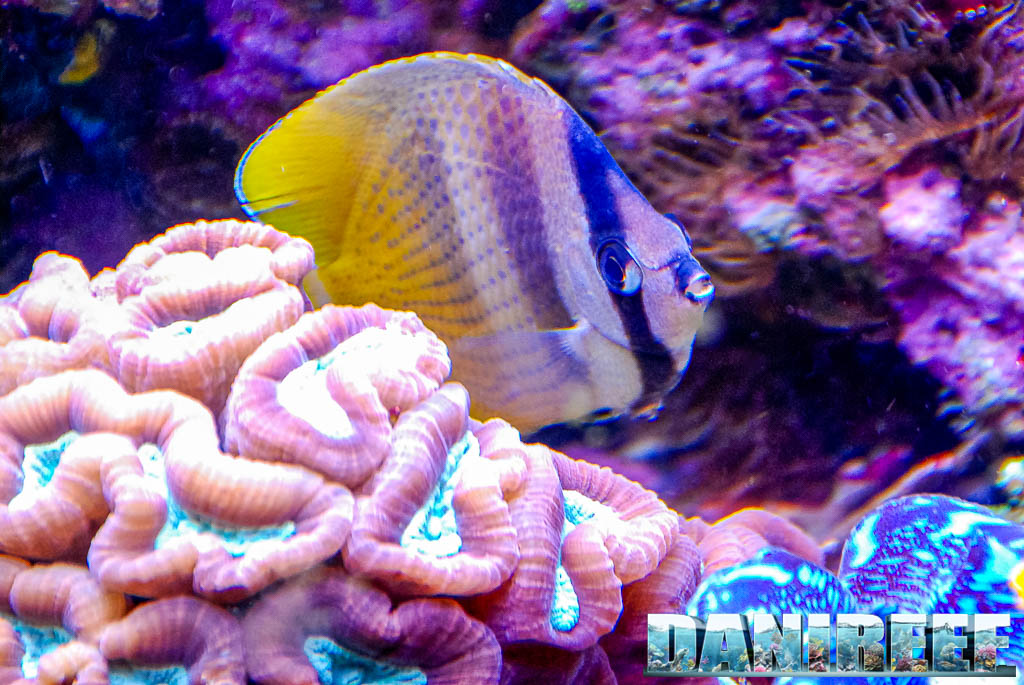
Behavior and Recommended Marine Aquarium Size
The Chaetodon kleinii reaches a maximum size in nature of about 15 cm, so it is not a “nano” fish for small tanks. To ensure sufficient space for swimming and continuous grazing, I recommend an aquarium of at least 300 liters. If the tank is very rich in corals—especially soft corals and LPS—it’s even better to aim for 400-500 liters, to dilute the impact of its nibbling. It is not an aggressive fish towards other species, but it can become quite quarrelsome with other Chaetodon or fish with similar coloration. It generally coexists well with tangs and other reef fish, as long as they are not excessively territorial.
Among conspecifics, it can show strong aggression, especially in small tanks. In nature, it often forms stable pairs, but replicating this situation in an aquarium is not at all simple: without the possibility of escape guaranteed by the large spaces of the reef, the risk of one specimen being chased to death is concrete. In home aquariums, it is therefore preferable to keep only one Chaetodon kleinii, unless you have truly enormous tanks and specimens already stably paired.
How to Have the Highest Probability of Successful Keeping
Compared to the famous Chelmon rostratus, the Chaetodon kleinii is decidedly more robust and easy to acclimate. This, however, does not mean it is a fish “for everyone.” In this case as well, it is essential to choose the specimen carefully: I would avoid lethargic subjects, with frayed fins or a sunken belly. It’s better to choose a kleinii that in the store already eats with conviction frozen food (mysis, artemia, shrimp meat) or high-quality dry food.
In the destination tank, especially in the beginning, it is good to offer a varied diet: mysis, artemia, chopped shrimp, mollusk flesh, possibly enriched with vitamins, alternated with quality dry foods. Many specimens also accept nori seaweed sheets, which can help satisfy the vegetable component of the diet. I would not recommend introducing the kleinii into young and too “clean” tanks: a mature reef, with microfauna and lots of rock, will offer it a much more suitable environment.
Smaller specimens generally tend to adapt better than very large ones. Under optimal conditions, it can live for several years in an aquarium, but its longevity depends greatly on the quality of management and compatibility with the environment we provide.
Did you know?
The Chaetodon kleinii presents different color morphologies depending on the geographical area: specimens from the Red Sea and the Indian Ocean, for example, can have slightly different patterns and color intensity compared to those from the central Pacific. In the past, these variants led people to think they were different species! In nature, it is often observed in pairs or small groups, and during the reproductive period, pairs defend a small portion of the reef together.
The advice from DaniReef: PERMITTED WITH GREAT CAUTION. Excellent ally against aiptasia in fish-only tanks or in very robust and mature reef tanks, decidedly not recommended in small aquariums or in tanks dedicated to delicate soft corals and LPS. Distinguishing features: tireless grazer… but can’t resist corals!
Have you ever kept a Chaetodon kleinii? Tell us about your experience in the comments below and on our social channels! Follow us on Telegram, Instagram, Facebook, X/Twitter and YouTube, so you don’t miss the other articles and video reports from the world of marine aquariums. And if you need help, with the Chaetodon kleinii or other aspects of the marine aquarium, we await you in our forum.
Scopri di più da DaniReef - Portale dedicato a Acquario Marino e Dolce
Abbonati per ricevere gli ultimi articoli inviati alla tua e-mail.