
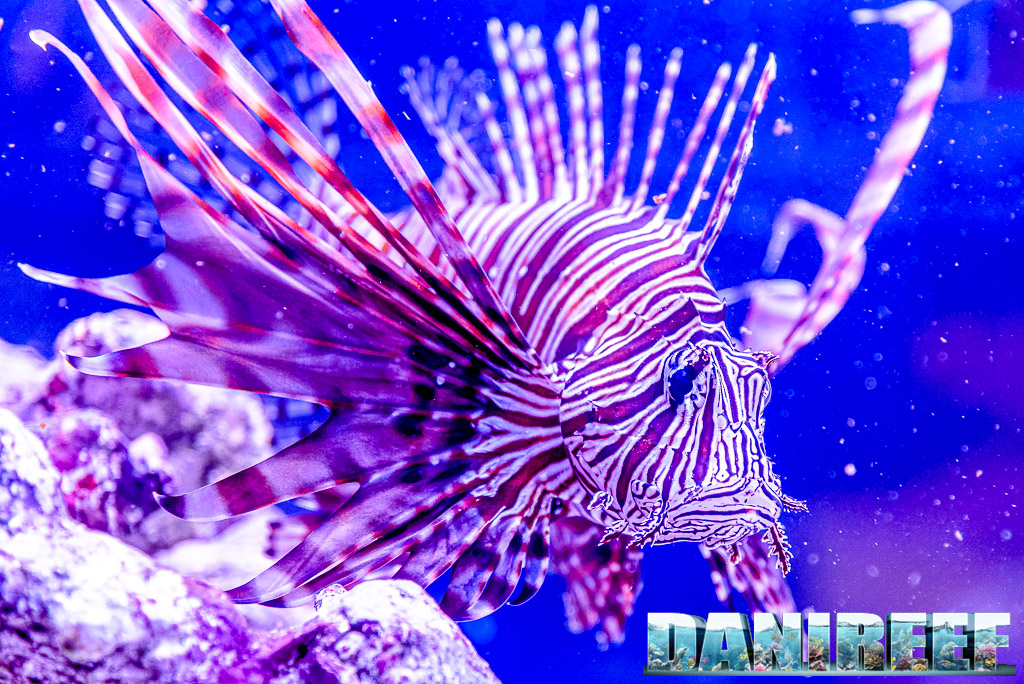
Pterois volitans is one of the most fascinating and iconic fish in marine aquariums. Its long, feather-like fins make it unmistakable, but they also hide a dangerous weapon: venomous spines that protect it from predators. Let’s take a closer look at its characteristics, requirements, and tips for keeping it in an aquarium.
Pterois volitans, also known as the common scorpionfish or red lionfish, belongs to the family Scorpaenidae. It is widespread in the coral reefs of the Indian and Pacific Oceans, but in recent decades it has sadly become notorious as an invasive species in the Caribbean and even in the Mediterranean, where it spread due to accidental releases into the sea.
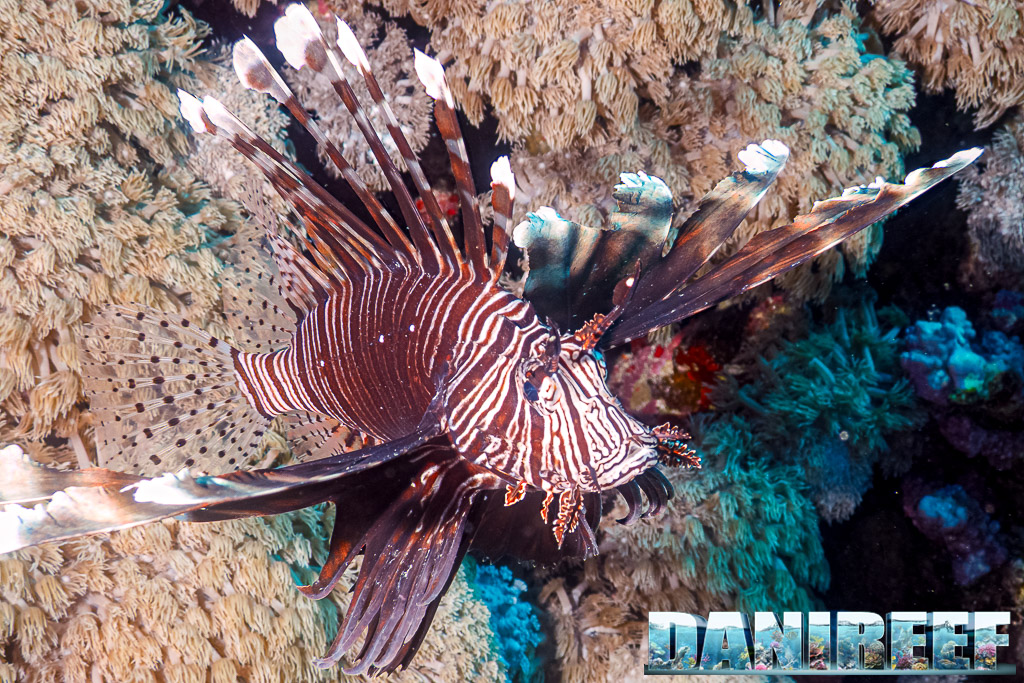
Pterois volitans
Its appearance is unmistakable: an elongated body, red and white striped livery, and large dorsal, pectoral, and anal fins resembling a lion’s mane—hence the name. These rays are actually venomous spines connected to glands that inject a powerful defensive venom. For the aquarist, they are not deadly, but the sting is extremely painful and should be avoided at all costs.
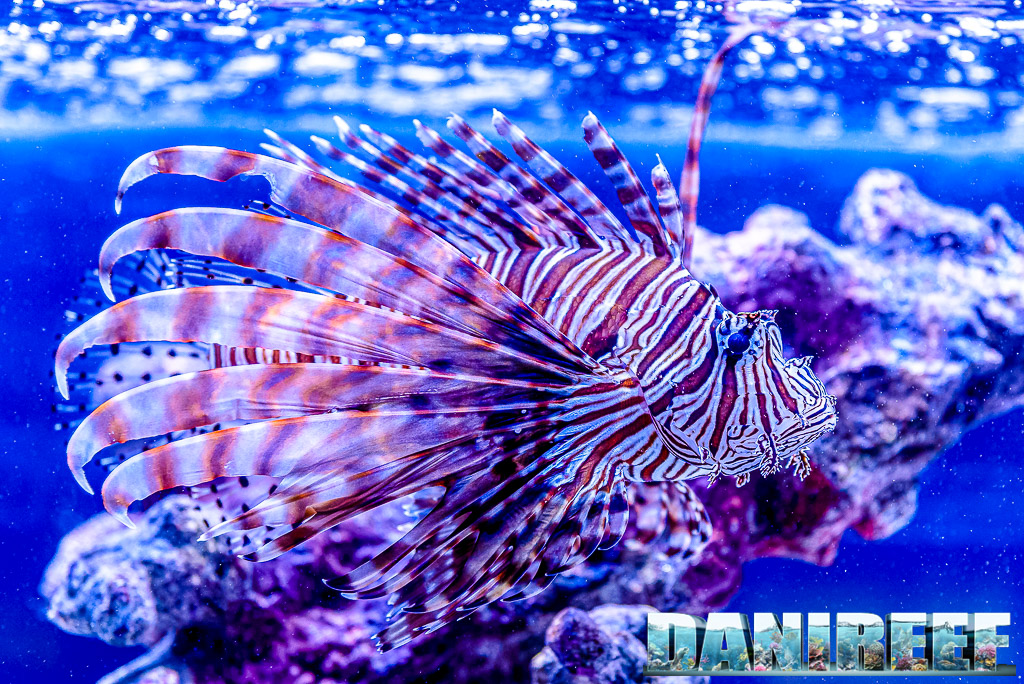
In the wild, it inhabits shallow waters up to 50 meters deep, between coral reefs and sandy lagoons. It is a nocturnal predator that hunts small fish and crustaceans, using its fins as a “net” to trap prey. But being venomous, it is rarely attacked by predators, making it an extremely efficient and untouchable hunter.
Behavior and temperament
Despite its aggressive appearance, Pterois volitans is a rather peaceful fish with its kind and with non-prey species. However, any fish or shrimp that fits into its mouth is considered food. For this reason, it is not suitable for community tanks with small fish or ornamental invertebrates. It should be kept in a dedicated aquarium. Other fish that could live with it must be much larger, which is why it is not suitable for small tanks. Or rather, it should not be!
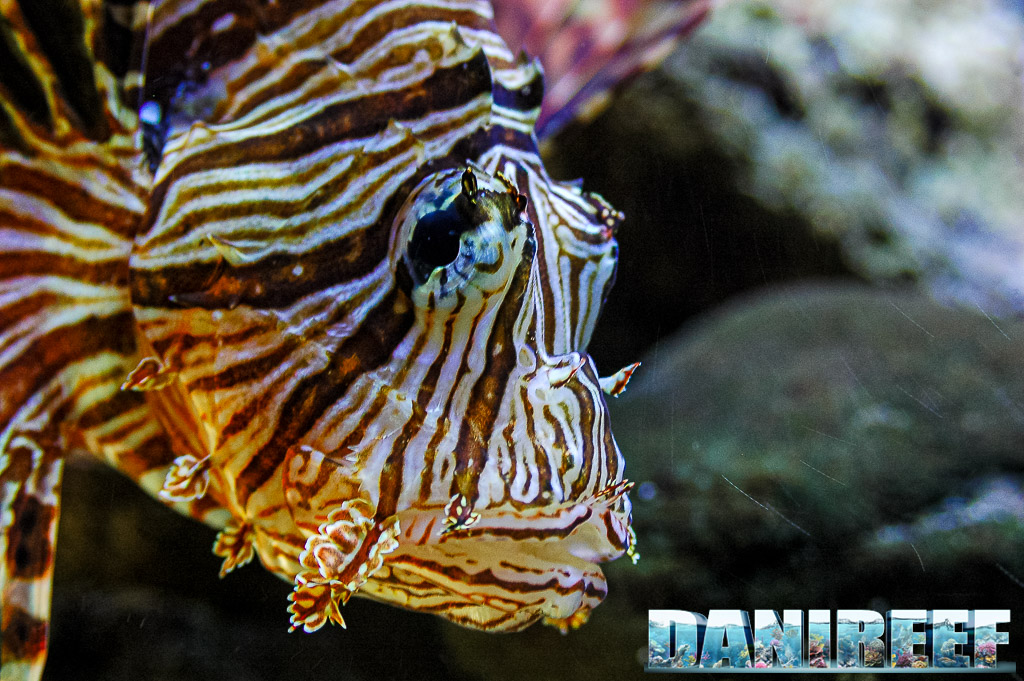
Pterois volitans is not territorial, so it is never aggressive, but it is an opportunistic predator.
Diet and feeding
Pterois volitans is a carnivorous predator. In the wild, it feeds on small fish and crustaceans. In the aquarium, it is important to accustom it to frozen food (such as shrimp, mussels, and thawed small fish) to avoid relying on live prey, which are not sustainable in the long run—both economically and ethically. At least in my view.
- Frozen shrimp and krill;
- Thawed small fish (such as silversides);
- Mollusk meat such as mussels and clams;
- Vitamin and supplement enrichment to maintain health.
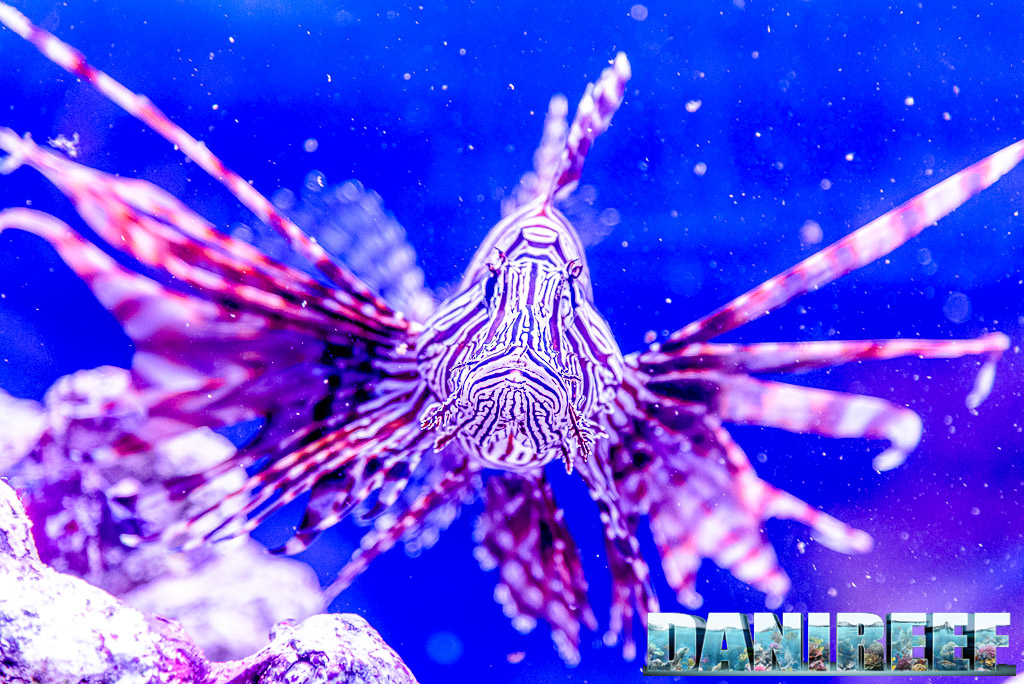
Be careful: it tends to gain weight easily if overfed, so it is better to provide frequent but small meals. This is key to keeping it healthy and long-lived, as it is not a strong swimmer and often rests on the substrate.
Size and space required
Pterois volitans can exceed 38 cm in the wild (FishBase), with a record of 45 cm and 1.4 kg. In aquariums it remains slightly smaller, but still requires large tanks: at least 500 liters, preferably 700–800 liters, to allow natural swimming and to house compatible tankmates.

Compatibility
Compatible only with larger, non-prey fish. It is not aggressive toward corals, so it can also be kept in a marine reef, but it is not suitable for those who want to keep shrimps, crabs, or ornamental small fish. It can coexist with angelfish, tangs, and other predators of similar size.
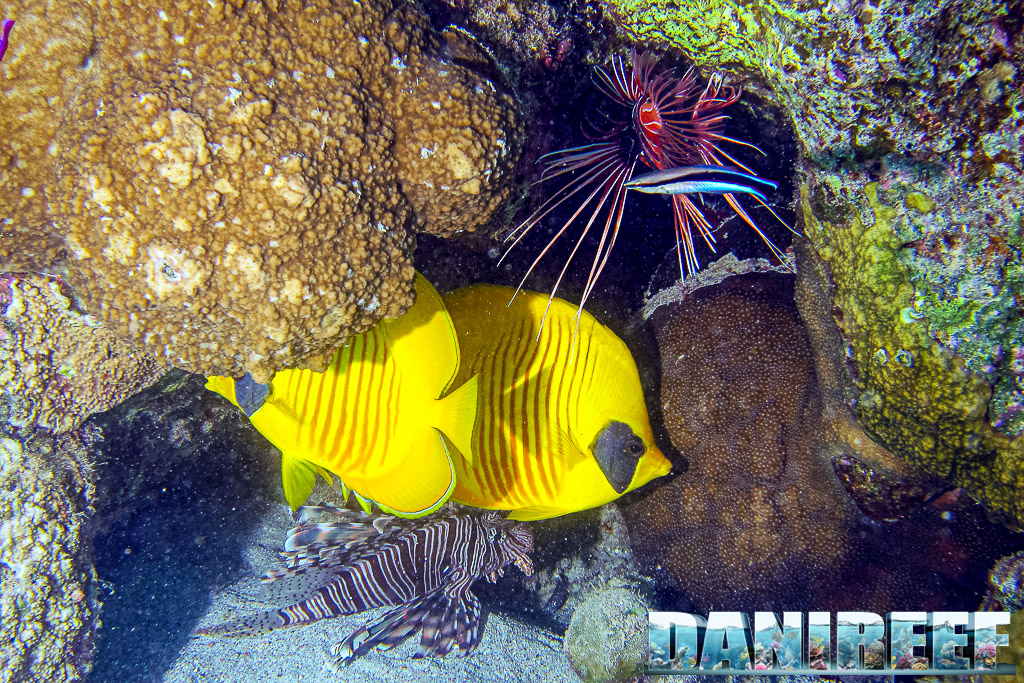
For example, it can be kept with species like Pomacanthus imperator or large Acanthurids, but it is better to avoid clownfish, small damselfish, and especially shrimps.
Distribution
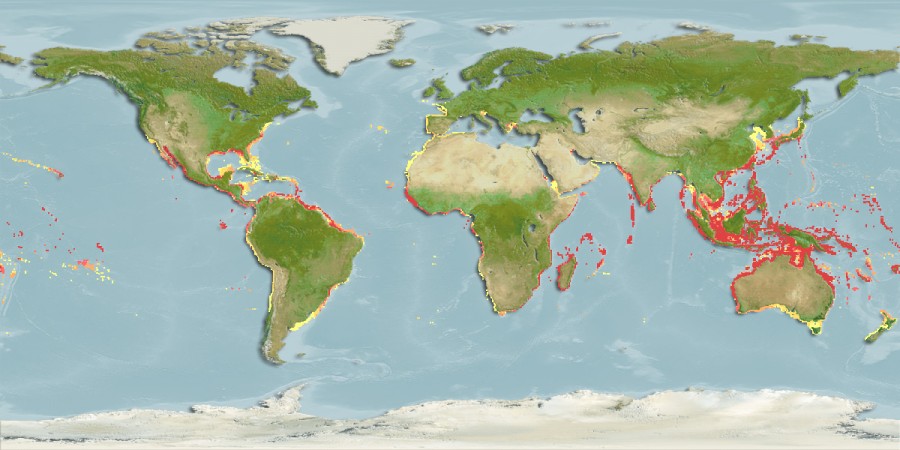
Pterois volitans is native to the Indo-Pacific, from the coasts of East Africa to the Hawaiian Islands. Since the 2000s it has become invasive in the Caribbean, the Western Atlantic, and even the Mediterranean, where it seriously threatens local ecosystems due to the absence of natural predators.
We have already written two in-depth articles on the issues in our seas, which we invite you to read:
- The lionfish reaches the Strait of Sicily. Maximum alert for the alien species
- The lionfish, Pterois miles, will become established in the Mediterranean
Difficulty in aquariums
This is not a fish for beginners. It requires large tanks, a targeted diet, and careful handling due to its very painful and dangerous sting. It is suitable only for experienced aquarists who can respect its needs and predatory nature. Under the right conditions, it will reward you with elegance, charm, and an unmatched stage presence. Perhaps one of the most beautiful fish to observe, both in aquariums and while diving.

In itself, however, Pterois volitans is an extremely hardy and easy fish. The main issues are related to its insatiable predatory nature and the danger posed by its venomous spines, but in an aquarium it can live peacefully for up to ten years.
Did you know?
Pterois volitans is among the most invasive marine species in the world: in the Caribbean it has spread unchecked, severely impacting local ecosystems. And now it is arriving in the Mediterranean.
DaniReef’s tip: one of the most beautiful and spectacular reef fish, but recommended only for experienced aquarists with adequate space. Handle with care, but capable of offering an unmatched show. Unfortunately, you will have to give up the idea of a classic reef, since few hobbyists would keep only this fish or other similarly sized predators.
Have you ever kept a Pterois volitans? Tell us in the comments or on our forum. Follow us on Telegram, Instagram, Facebook, X/Twitter, and YouTube so you don’t miss our articles and video reports!
Scopri di più da DaniReef - Portale dedicato a Acquario Marino e Dolce
Abbonati per ricevere gli ultimi articoli inviati alla tua e-mail.