


Archive for the 'APPROFONDIMENTI - DEEPENING' Category

Test

Luglio 13th, 2008 | Category: Test Kits


Ho appena rifatto i della , dopo oltre un mese e dopo aver cambiato passando dal precedente NS1000 ad un Elos NS2000

Elos Ns2000

La non gira benissimo eppure i valori sono praticamente perfetti… il redox è un po’ basso in effetti, ma cose strane non ce ne sono… sarà una fase…

I che ho usati erano nuovi ed aperti per l’occasione, in quanto quelli che usavo prima erano arrivati a quasi un anno di vita e non mi sono fidato a continuare ad usarli, credo che dopo 6 mesi che sono aperti, sarebbe meglio cambiarli… ed io avevo anche ecceduto in quel senso.

Data: 12 luglio Test
Fosfati - PO4 0.00+ mg/l
Nitrati - NO3 5 mg/l
Carbonati - Kh 10 dKh
Calcio - Ca 440 ppm
Magnesio - Mg 1.700 ppm
Sonde /
Temperatura - T 27,1°C
Ph 8,15
Redox 293
Sonda
Densità - % 31,12 /ooo

Today I measured values of my … it passed a month from the last time, and I’ve changed the meanwhile, from Elos NS1000 to NS2000, as you can see the photo above.

All the kits are brand new, because what I used until now are almost one year old, and I think that they are used enough!

My has some problem, but value are almost perfect… only redox value is too low…

12 of july Elos kits
Phospates - PO4 0.00+ mg/l
Nitrate - NO3 5 mg/l
Carbonate - Kh 10 dKh
Calcium - Ca 440 ppm
Magnesium - Mg 1.700 ppm
Aquatronica / probes
Temperature - T 27,1°C
Ph 8,15
Redox 293
Aquatronica Density Probe
Density - % 31,12/ooo

Popularity: 6% [?]

Altri messaggi di contenuto simile - Related posts

No comments

Zeus by OceanLife

Luglio 01st, 2008 | Category: L'UPS in acquario

for english version please click here

Zeus by Ocean Life

Sono finalmente passato allo Zeus di OceanLife. Chi mi legge sa quanto reputo importante la mia vasca, e la gestione della nei momenti di black out penso sia un dovere verso i nostri ospiti, coralli o pesci che siano.

Fino ad ora, come potete leggere qua: L’uso di un UPS in acquario ho usato un gruppo di continuità con onda pseudosinusoidale della , con 800VA e due batterie in serie con una capacità di 14AH.

Continua a leggere

In the last days I’ve setting up the new Zeus from OceanLife. I think you know me by reading my pages, so you know how much I’m interesting to healty and wealthy of my system, towards fishes and corals.

Until now I’ve used a back-up from as you can read here L’uso di un UPS in acquario only in italian because it’s an old article.

So yesterday the with 14AH capacity of battery and today 40AH on Zeus, but the difference are more and more.

Read more

Popularity: 9% [?]

Altri messaggi di contenuto simile - Related posts

7 comments

Eheim Compact Plus 2000

Giugno 21st, 2008 | Category: Pompe di Risalita

Durante il mio viaggio a Norimberga (qua e qua) mi sono portato a casa alcune cosette… la prima di cui parlo è una nuova pompa di risalita…

Sostanzialmente è la terza pompa di risalita che provo nella mia .

La prima che provai, la 1250 era quella ancora funzionante nella mia , mentre la OceanRunner OR2500 l’ho utilizzata solo per qualche mese.

Perché cambiare la vecchia pompa di risalita?

Leggi il resto

Eheim Compact Plus 2000

During the trip to Interzoo at Nurnberg (here and here) I have brought back with me some useful things… the firts I mention is my new to return water from the sump…

It’s my third for this task.

The first I had was also the last one, the mighty 1250, when the other , OceanRunner OR2500 was utilized only for a couple of months.

Why changing?

Read more

Popularity: 14% [?]

Altri messaggi di contenuto simile - Related posts

2 comments

Ancora sui neon T5 - Changing T5 again

Maggio 09th, 2008 | Category: APPROFONDIMENTI - DEEPENING, LA MIA VASCA - MY TANK

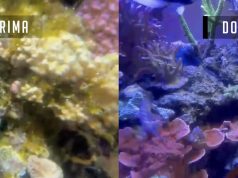
Dopo tanto tempo si torna all’antico… tolto l’actinic plus usato per qualche mese a favore del blu plus, perché non mi dava quel qualcosa in più su cui speravo, e quindi mi trovavo la vasca un po’ spenta, e poi ho finalmente tolto anche il pro color. In effetti i rossi ed in special modo la pocillopora rosa ne traevano un gran beneficio, ma la sensazione era quella di poca luce totale. Cambiato il pro color con l’aquablu spezial mi ritrovo con una sensazione di molta più luce in .

Per vedere le differenze, passate con il mouse sull’immagine

Finally I came back to my previous configuration. Two months ago I changed actinic plus with blu plus because I thought the actinic plus wasn’t so better of blu plus. And some days ago I changed pro color with new aquablu spezial. Yes, at a first look, I have less “red” on , but more and more light.

To see the difference roll your mouse over image

Popularity: 33% [?]

Altri messaggi di contenuto simile - Related posts

2 comments

La giusta temperatura in acquario - the right temperature in aquarium

Febbraio 29th, 2008 | Category: La temperatura - The temperature

Ultimamente mi stavo chiedendo quale fosse la miglior in … con tutte le considerazioni che questo comporta.

Io sono solito, diciamo così, tenere la fra i 25,5 gradi ed i 27,5 gradi, aiutandomi con la gestione tramite e/o .

Leggendo il bellissimo libro di Bornemann “ Corals”, trovo però che la media della in natura sia di 28°C. E che viaggia da un minimo di 21°C ad un massimo invalicabile di 30°C.
Così ho cominciato a farmi qualche domanda.

Innanzi tutto aumentando la in otteniamo di diminuire il contenuto di Ossigeno disciolto, e questo è male, inoltre aumentiamo il metabolismo degli animali, ottenendo (in teoria) animali più attivi e colori più sgargianti.
Inoltre tenendo una , diciamo medio-alta, abbiamo meno problemi estivi, nel senso che i nostri animali sopporteranno molto maggiormente le temperature estive più alte. Io ho due ventole tangenziali che mi aiutano a tenere più bassa la tamperatura, ma ovviamente una cosa è tenere l’ a 27,5°C ed un’altra è tenerlo a 28,5°C.
Inoltre la crescita dei coralli aumenta a T elevate.

Certo avere una T alta vuole anche dire avere qualche problema di ambientamento nel momento in cui dobbiamo inserire animali che siano abituati a T ben più basse, rischiando di avere un recesso di tessuti come descrive sempre Bornemann nel suo libro

Analizziamo invece come si comporta il nostro con T più basse, attorno ai 26°C costanti.
In questo caso aumenta la concentrazione di ossigeno disciolto, si rischiano, forse, meno bruciature degli animali e si limita l’evaporazione invernale, ma si aumenta quella estiva. Siamo comunque lontano dalle medie rilevate in natura (senza considerare che la T si sta cmq alzando in questi ultimi anni…), anche se T basse vogliono anche significare una minor crescita algale.

Quindi quale potrebbe essere la T ideale da mantenere in ? Quanti gradi di differenza fra giorno e notte?
Io ho intenzione di portare, con calma, la T del mio ad oscillare fra i 26°C ed i 28°C, aumentando quindi di 0,5°C.

Certo con un computer collegato all’acquario ci si potrebbe spingere oltre… cercando di far ottenere all’acquario il massimo della con la metà del fotoperiodo in modo da simulare il mezzogiorno, ed ancora collegare le HQi allo stesso e spegnere le HQi nel momento in cui si misuri in una T di 29°C dovuta ad un qualsiasi malfunzionamento dei dispositivi di raffreddamento. Analogo discorso lo si può fare con le sebbene queste riscaldino meno delle HQi.

A questo proposito sarei curioso di provare il della , dato che in memoria ha tutta una serie di biotopi e che quindi dovrebbe aiutarci nella ricerca della perfetta.

E comunque alla fine però i dubbi rimangono… Bornemann suggerisce un intervallo di 27/29°C…

E voi?

Lately I’m asking myself which was the better temperature in … with all the considerations that involves. I am usual to hold the temperature between the 25,5 degrees and the 27,5 degrees, helped through and/or .

Reading the beautiful book of Bornemann “ Corals”, I discover the average of temperatures in nature is of 28°C. From a minimum of 21°C to a invalicabile maximum of 30°C. Therefore I have begun to ask some questions to me.

In the first place if we increase temperature in we diminish the total oxygen content, and this is bad, moreover we increase the metabolism of animals, obtaining (in theory) more active animals and more bright colors.

Moreover if we hold an almost high temperature (28°?), we’ll have little problems on summer, because our animals are used to sense high temperatures, and they’ll suffer less for increasing temperature. When I had HQi on my I had two tangential impellers that helped me to hold low tamperature, but obviously is different to hold to 27,5°C or to 28,5°C. Anyway increasing temperature will result in more corals growth.

In same way, if we maintain high temperature we’ll have great trouble when we insert other animals, coming from low temp , and we’ll risk to have a tissue recess as it describes always Bornemann in his book.

And what if we analyze with lower temp, i.e. 25,5° (my actual temperature :-) )?

In this case it increases the total oxygen dissolved, winter evaporation is limited, but summer one is increased. We are however far away from averages found in nature (without to consider that the temp is raising in recent years…), and if temp is maintained low we may easily control the algae growth.

Therefore which it could be ideal temp to maintain in ? How many degrees of difference between day and night?

I have intention to carry, with calm, temp of my to oscillate between 26°C and the 28°C, increasing therefore of 0,5°C.

Sure with a connected to the we could push beyond this idea…

We could try to achieve maximum of day temp with half of our illuminating day to simulate noon, and still to connect our light to the same and to light off some HQi if the temp will be off safe temp, like 29°, due to a whichever malfunctioning of the cooling devices. Analogous speech can be made with the although these heat less of the HQi.

To this purpose I would be curious to try the II of the , since it has in memory a series of biotopi and that therefore it would have to help us in the search of the perfect temperature.

And however at the end we have doubts. Bornemann suggests an interval of 27/29°C…

And you?

Popularity: 29% [?]

Altri messaggi di contenuto simile - Related posts

No comments

Pagina Successiva »