
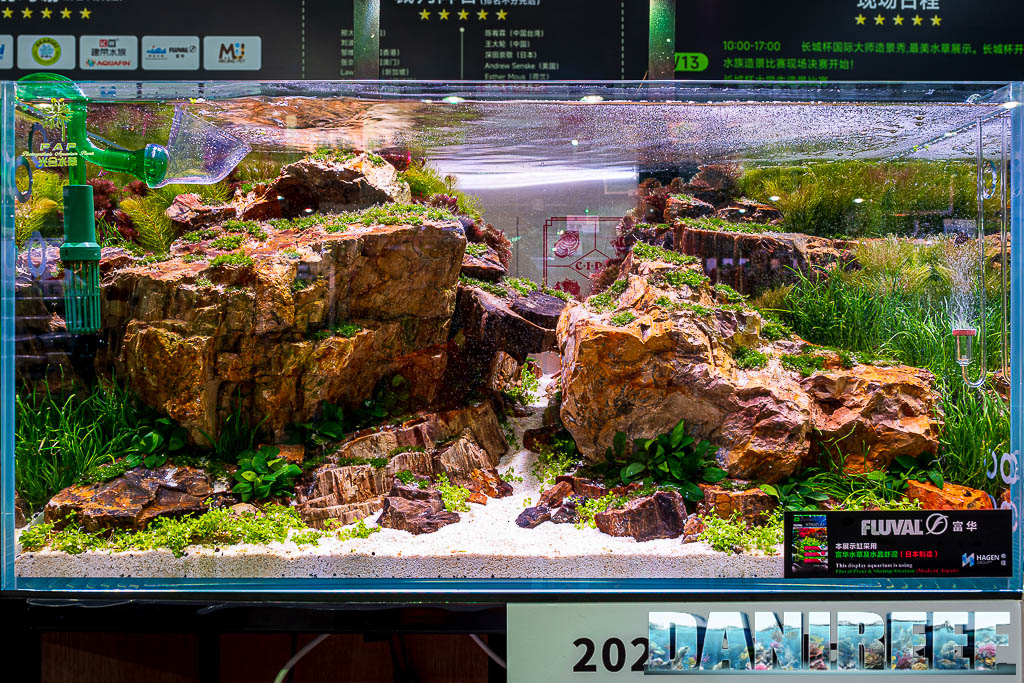
At CIPS 2025 in Guangzhou, we had the opportunity to closely photograph several aquascapes created by leading international names in Aquascaping, featured during live demonstrations, the Master Show, and the exhibition areas linked to CIAC 2025.
CIAC 2025: what it is and what we are looking at in these tanks
CIAC 2025 (CIPS International Aquascaping Contest) is the international aquascaping competition linked to the China International Pet Show: a format that combines competition, live shows, and technical demonstrations, becoming at CIPS a major showcase for the world’s top aquascapers.
The tanks you see in this article are not simple “display aquariums”: they are compositions designed to tell a landscape story, built according to contest and show logic. In practice, they are nature aquariums created using a mix of hardscape (rocks and wood), selected plants, and advanced technical management (lighting, CO₂, fertilization, and maintenance), aiming for strong visual impact while maintaining biological balance and plants in perfect condition.
During CIPS, the CIAC world operates on multiple levels: on one side, the competitive aspect (rankings and results), and on the other, the tanks created by invited masters for the Master Show and demonstration areas, designed to present styles, trends, and directions of modern aquascaping to both the public and industry professionals.
In this article, we take you inside their compositions with a DaniReef-style reading: visual impact, hardscape choices, depth, space management, and aesthetic language. This is not a “manual”, but a reasoned analysis of what we observed live.
The complete video report from CIPS 2025
If you missed our journey to Guangzhou, the video below features the complete report from CIPS 2025: Aquascaping, Goldfish, Betta, Monster Fish, and all the innovations seen at the show.
The 5 Masters of Aquascaping at CIPS 2025: tank analysis
Let’s now move on to the tanks we photographed, which for us represent the best of the Aquascaping section at CIPS 2025. Different styles, different materials, and above all highly recognizable compositional languages.
1) Takayuki Fukada – Japanese precision and total layout control
The first thing that stands out in this tank is the sense of natural order: every element seems to have “fallen into place by chance”, yet everything is the result of extremely controlled choices. The hardscape acts as a backbone guiding the eye, while the vegetation is managed to create clean transitions between dense areas and more open spaces.
The result recalls the classical Japanese school: harmony, stability, and immediate readability, with depth achieved more through layout geometry than through excessive plant mass.
Worth noting: the balance between foreground detail and background mass, creating convincing depth even in a frontally photographed contest tank.
2) Zhang Jianfeng – scenic impact and landscape-driven construction
This composition strongly emphasizes dramatic landscape impact. It feels like a real “scene”: a place you could imagine even outside the aquarium. The hardscape dominates the structure, defining a clear visual path, while plants function more as texture and volume rather than the main focus.
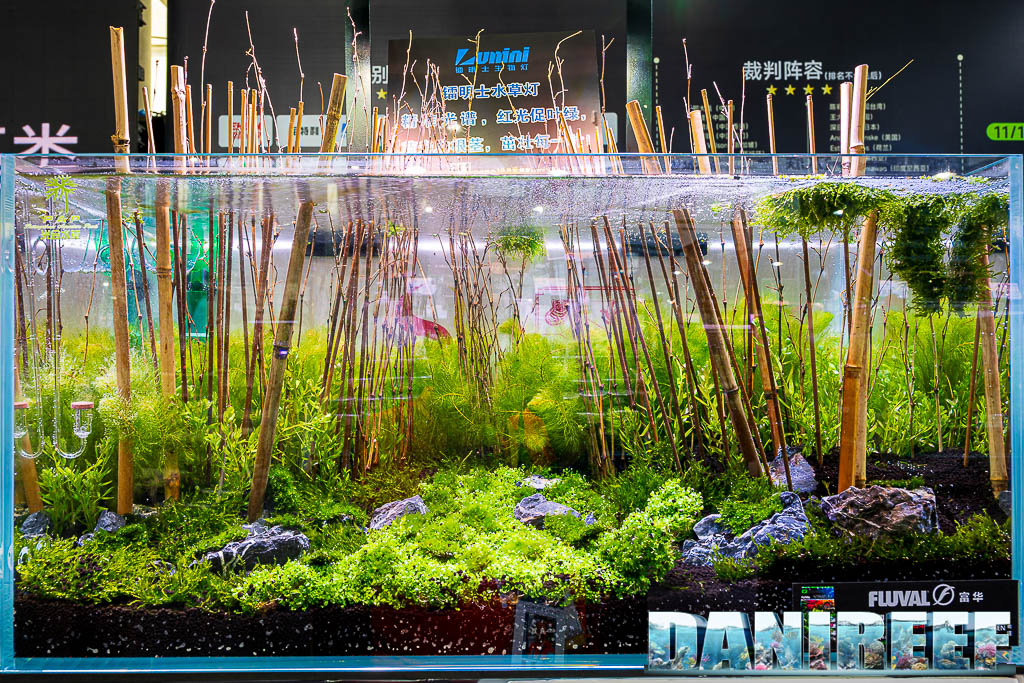
This type of aquascape works exceptionally well live because it delivers a strong visual impact even from a distance: as you walk through the stands, it is one of those tanks that instantly stops you.
Style: scenic, cinematic, with a clear hierarchy between the main hardscape and supporting vegetation.
3) Zou Weixin – rock, tension, and dynamics (a moving layout)
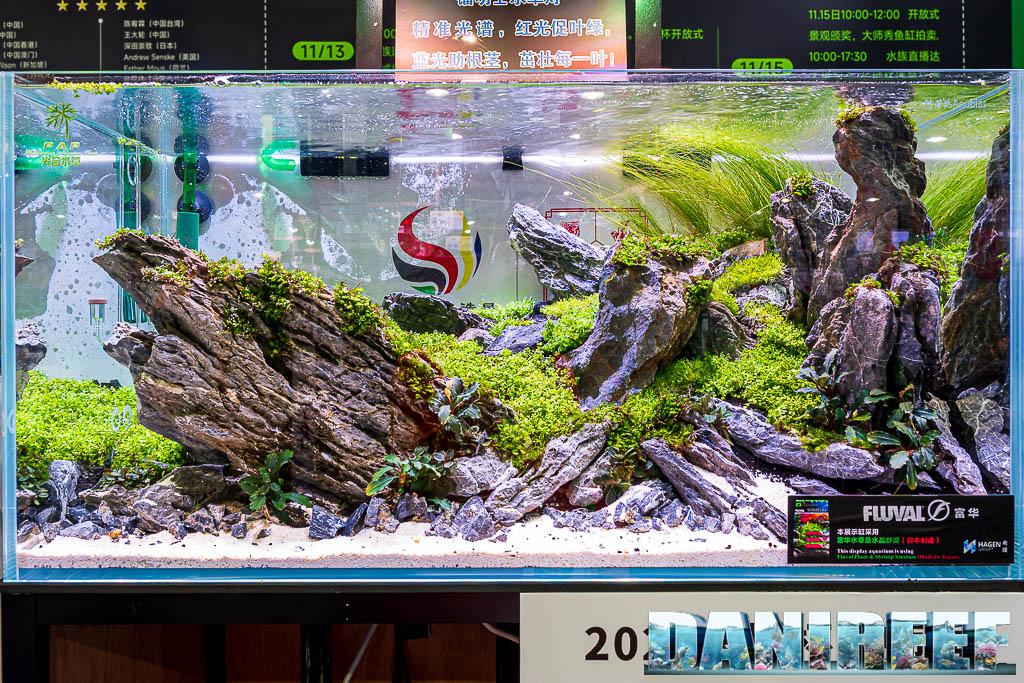
This tank is built around a sense of tension: the rock lines are not passive, but appear to push and compress the space. There is a dynamic quality reminiscent of a “moving” landscape, almost as if the layout were telling a story of erosion, collapse, or geological movement.
In works like this, the challenge is not only building the hardscape, but doing so without making it look artificial. Here, the balance is excellent: strong volumes are softened by vegetation inserted into crevices, adding realism.
Worth noting: the use of negative space to allow the rock masses to breathe and enhance depth perception.
4) Cho Jaesun – clean structure and contest-level readability
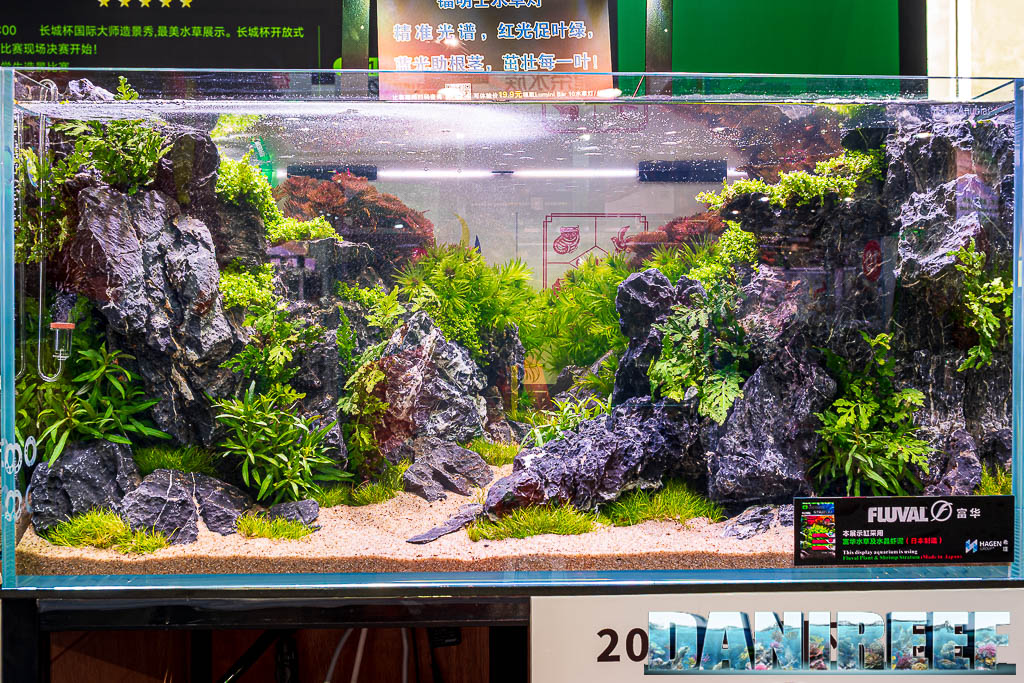
The style here is extremely readable: a layout that communicates immediately, yet also rewards prolonged observation. The composition is clear, with a design that guides the eye and vegetation management that reinforces perspective and spatial layering.
This kind of tank performs exceptionally well in contests because it photographs beautifully: clean lines, recognizable focal points, and overall balance. It feels like a fully intentional aquascape, where every centimeter is designed for optimal frontal presentation.
Focus: clean, controlled composition that speaks the language of international contests.
5) Siak Wee Yeo – atmosphere, depth, and modern wabi-sabi
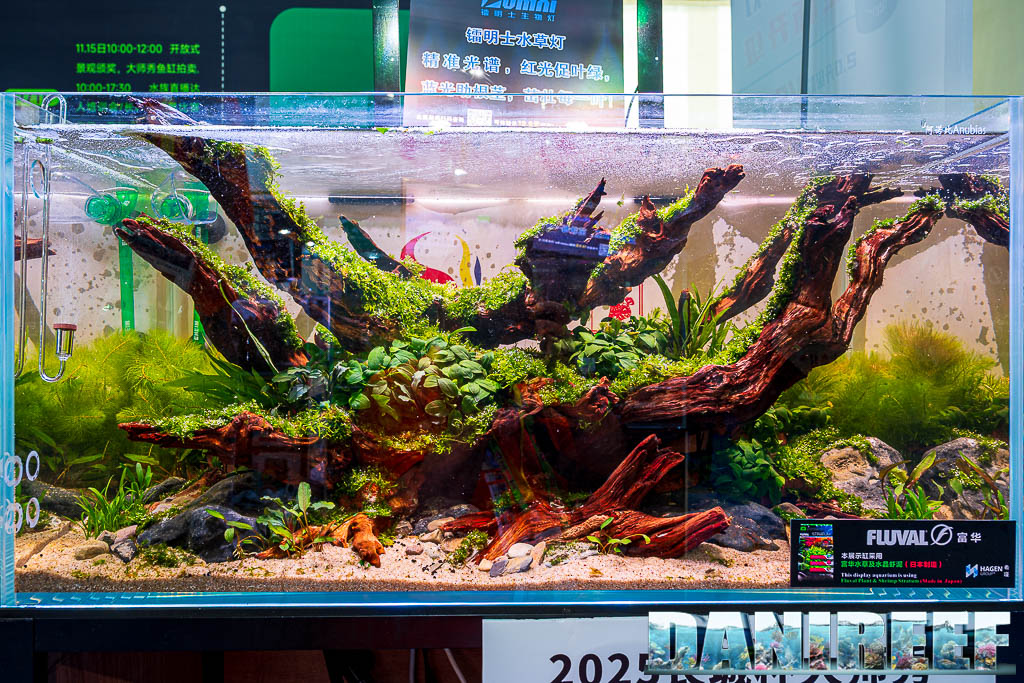
This is a tank that does not rely on immediate impact, but on atmosphere. Its strength lies in emotional depth: it feels like a lived-in place, with details that do not shout, but quietly build a believable and almost narrative whole.
In many ways, this style recalls the concept of wabi-sabi: imperfect, natural beauty, not polished in the classical sense. It is not disorder, but organic order, with elements that appear shaped by time and nature.
Worth noting: the balance between darker and lighter areas, creating multiple reading layers and significantly enhancing the sense of scale.
Why these aquascapes work: 3 key takeaways
Observing aquascapes of this level live is valuable even for those who practice aquascaping at home. Even without exhibition halls or unlimited budgets, some lessons remain universal:
- Visual hierarchy: every tank has a clear focal point and a guided visual path.
- Real depth: achieved through layered hardscape and plants, not just “more greenery”.
- Coherence: every choice (rocks, wood, plants) speaks the same aesthetic language.
And in a contest like CIAC, where judging strongly rewards plant health and technical management, one thing becomes clear: beauty cannot stand without a stable, well-managed aquarium behind it.
Conclusions
CIPS 2025 confirmed one thing for us: Aquascaping in Asia is not just a hobby, it is culture, technique, and competition. Seeing the work of these masters live during the 6th CIPS International Aquascaping Contest (CIAC 2025) was a true privilege.
In the coming days, we will continue publishing dedicated CIPS 2025 content, with focused insights and complete photo galleries.
Now it’s your turn: which of these five styles moved you the most? Are you team rock and scenic power, or team natural atmosphere and wabi-sabi? Let us know in the comments!
👇 Want to discuss layouts, plants, techniques, and contest inspirations? Join the conversation on our forum: click here.
 This article has also been featured on reefs.com, one of the leading international reefkeeping portals.
Scopri di più da DaniReef - Portale dedicato a Acquario Marino e Dolce
Abbonati per ricevere gli ultimi articoli inviati alla tua e-mail.