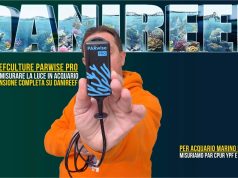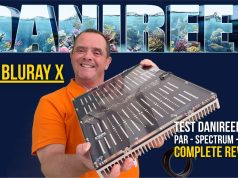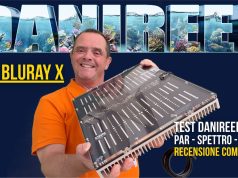

Hydor unveiled the new AQLUX LED bars for freshwater aquariums at last year’s Interzoo, and we finally have the brand-new AQLUX 700 Fresh in our hands to test in the DaniReef LAB, where we’ll also use for the first time the new ITC ParWise PRO with YPF.
LED bars are the most convenient and effective system to manage lighting in an aquarium. They’re reasonably affordable—these in particular—and you can add more over time as your needs change: one unit for fish and easy plants, two for more demanding species, and three for high-complexity, heavily planted tanks. Compared to a traditional fixture you usually lose advanced multi-channel programming, but in my opinion being able to switch individual bars on/off makes this a non-issue. In any case, the new AQLUX bars are fully featured, as we’ll see.
Technical specs – Hydor AQLUX 700 Fresh LED bar
- Dimensions: 72 × 8 × h 9.5 cm;
- Power draw: 36 watts;
- Max luminous flux: 3,000 lumens;
- MSRP: €99.90.

Our Hydor AQLUX 700 Fresh LED bar video
In the video we show the bars, our unboxing, and we comment live on the test results.
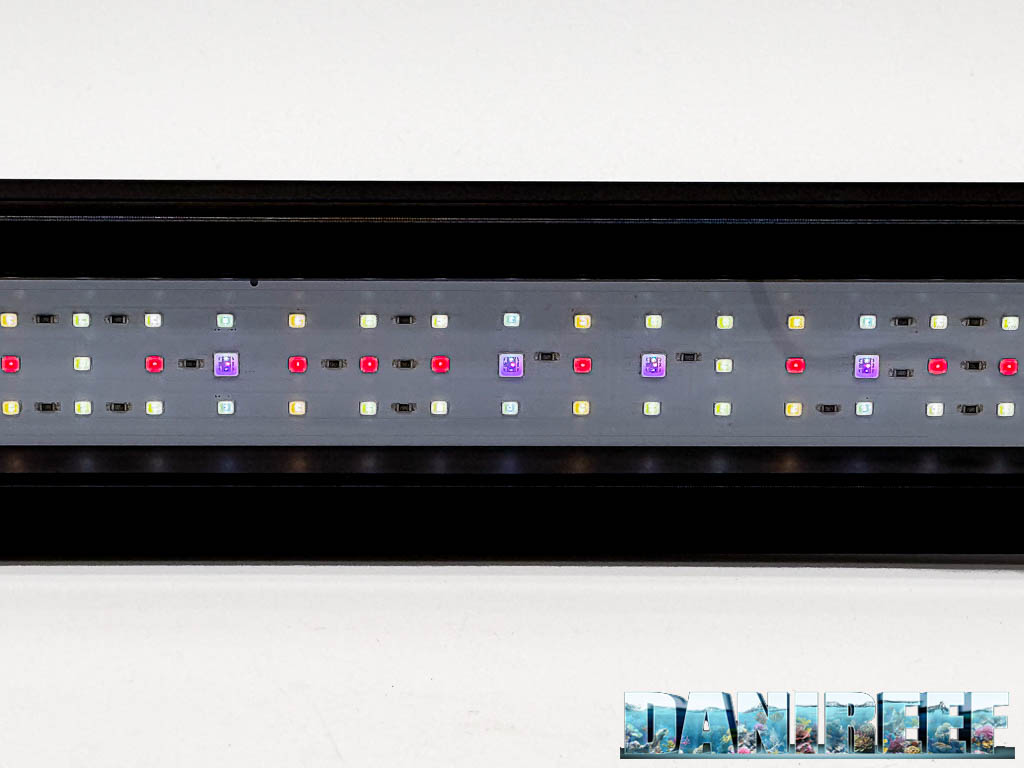
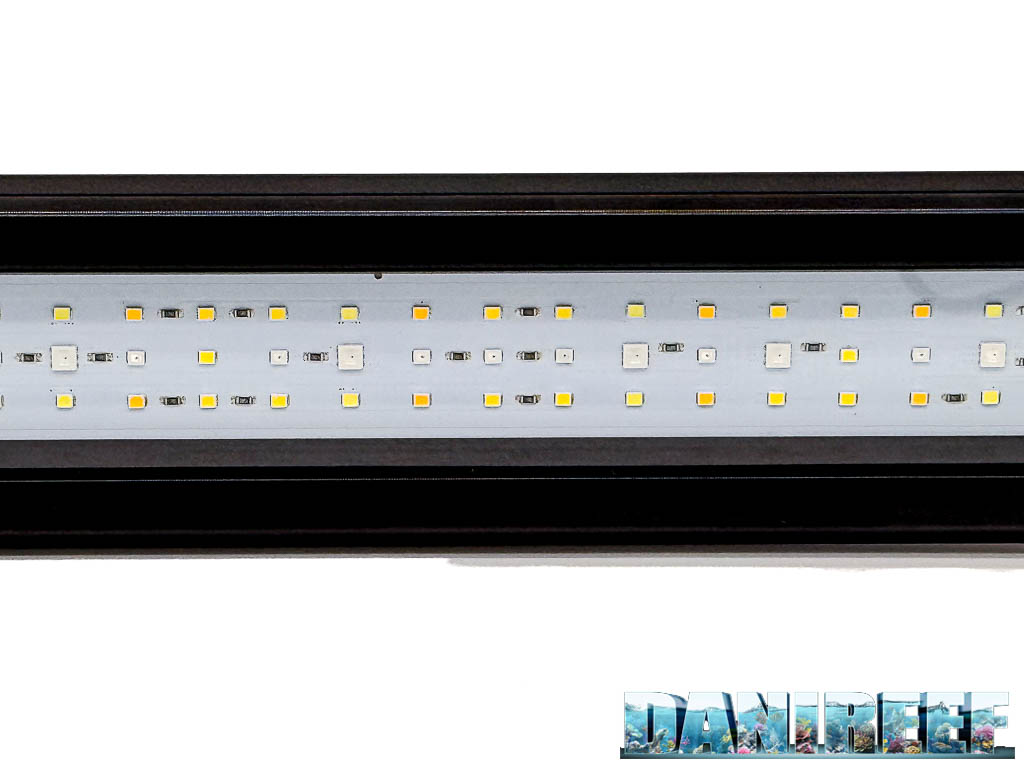
LEDs used in the AQLUX 700 Fresh bar
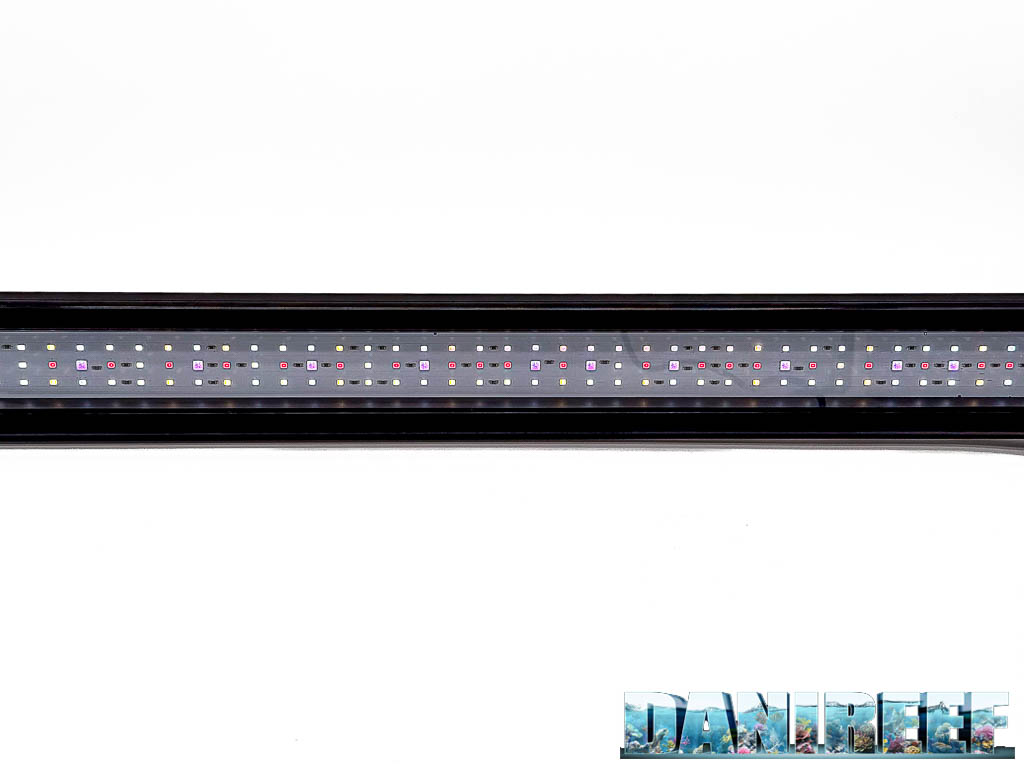
- 10,000 K white LEDs: 24 × 0.5 W;
- 6,000 K white LEDs: 48 × 0.5 W;
- 4,000 K white LEDs: 24 × 0.5 W;
- RGB white LEDs: 14 × 0.5 W;
- Red 660 nm LEDs: 25 × 0.2 W.
Total LEDs: 135. With a rated consumption of 36 W, the LEDs are driven at well below half their nominal power to preserve lifespan. It’s also interesting that the 660 nm reds are very close to the near-infrared range. As you can see from the LED count, the layout is quite complex—and that’s one of the secrets of the Hydor AQLUX 700 Fresh.
The new Hydor AQLUX 700 Fresh LED bars feature a spectrum with a significant blue component, as shown by the supplier’s datasheet. Nevertheless, the perceived output is a fairly white light. They’re suitable for any freshwater aquarium, alone or in pairs, depending on the result you want to achieve.
Adjusting the Hydor AQLUX 700 Fresh bars
In my opinion, Hydor made a very smart choice by equipping these LED bars with a simple inline controller that still lets you do essentially everything you need. Using its four buttons you can set almost every aspect of the bar.
Once the bar is powered, the lamp’s timer starts. The first 30 minutes are a full ramp-up: from the night setting to the maximum brightness you’ve set. With the TIMER button you can choose a 6, 9, or 12-hour photoperiod. With MODE you switch between day and night modes. Finally, with DIM you select daytime or nighttime intensity across six brightness steps.
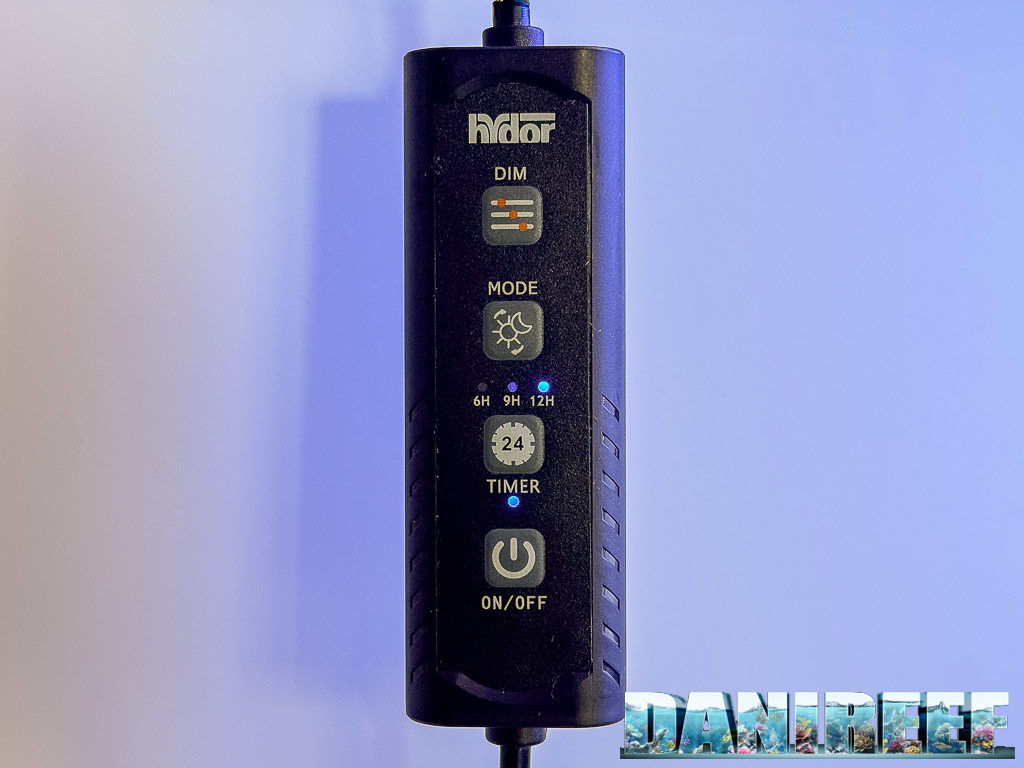
Note that the minimum night brightness—while scenic—is, in my view, a bit too strong and may over-light the tank. You can, however, disable it completely.
If you want to go beyond these presets—setting precise on/off times independent of when power is applied, or creating different ramping during day and night—you can add an external controller, for which the lamp is already prepared.

The Hydor AQLUX bars have two holes at the ends, as shown, where you can attach terminals that end with clips to rest the bars on the aquarium glass. These terminals let you use the Hydor AQLUX 700 Fresh LED bar we’re testing on aquariums between 70 and 100 cm in length.
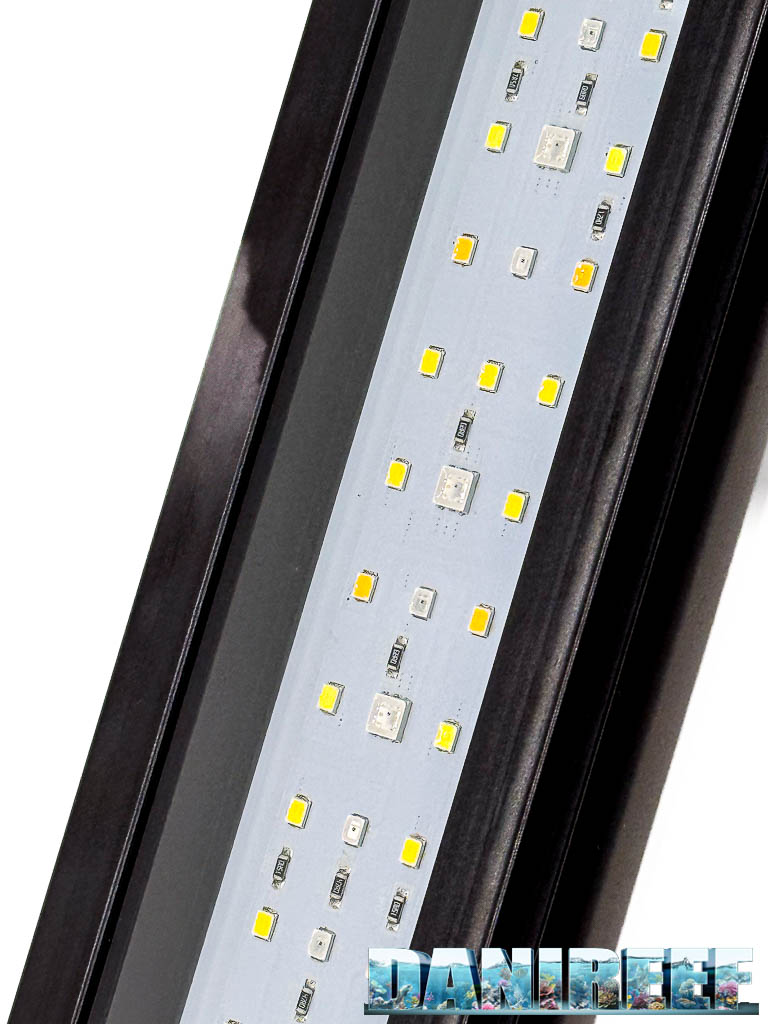
All AQLUX LED bars are rated IP67. This means they’re dust-tight and protected against water ingress during temporary immersion (up to 1 m for 30 minutes). That makes them perfect above an aquarium: an accidental dip won’t be an issue, and splashes can be wiped off easily without worry—just use a damp cloth.
Which plants suit this light?
Here are a few early results. With a peak of 277 µmol m⁻² s⁻¹ at 17 cm and 116 µmol m⁻² s⁻¹ at 37 cm, a single AQLUX 700 Fresh comfortably covers community tanks and “medium” scapes. For demanding high-light layouts or very deep tanks, consider at least two bars.
- Low–Medium light (Anubias, Microsorum, Cryptocoryne): fine with 1 bar, even on the substrate.
- Medium–High (Hygrophila, demanding Echinodorus, red stems): 1 well-placed bar or 2 bars for an active carpet.
- High light / demanding carpets (Hemianthus, Monte Carlo, high-light Rotala): 2 bars recommended, or high dimming levels on shallow tanks.
The full table with plant-by-plant PAR needs is available on page 2.
- Real output: peak 277 µmol m⁻² s⁻¹ at 17 cm; very uniform coverage.
- Recommended use: 1 bar for easy–medium tanks; 2 bars for demanding planted tanks.
- Pros: aggressive pricing, IP67, simple yet useful controller.
- Cons: a single bar may be limiting for “high-light” plants at the bottom.
👉 Want the full dataset and to learn how the DaniReef LAB method works? You’ll find everything on page two.
Scopri di più da DaniReef - Portale dedicato a Acquario Marino e Dolce
Abbonati per ricevere gli ultimi articoli inviati alla tua e-mail.