
The DaniReef LAB working method for PAR measurement
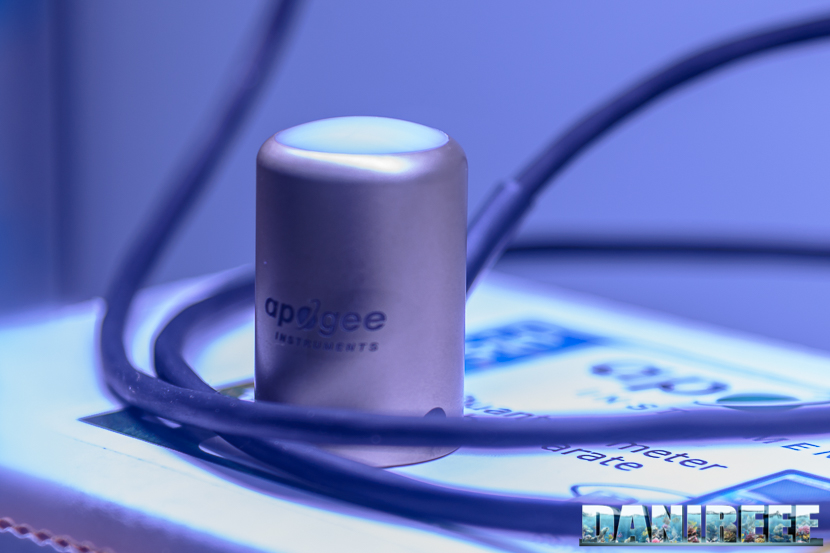
During the long nights spent on our forum (here) we have always wondered how we could reason in order to compare the PAR values of different light fixtures. Today, to do this, we use the Apogee Quantum Meter MQ-510 and the PARwise PRO from ITC Reefculture.

The Quantum Meter MQ-510 measures PAR, expressed in PPFD, that is, photosynthetic photon flux density in μmol m⁻² s⁻¹. This instrument is calibrated to work underwater, so when used in air, the measured value must be divided by 1.32, which is the immersion factor. Since there is no water during the tests we will see, we must perform this conversion. The values you will see are always the corrected ones.

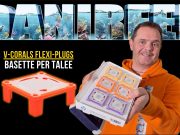
We therefore decided to build a 70×70 cm base, where we marked 17 reference points where the Quantum Meter MQ-510 sensor can be placed. To position the light fixture, we created supports at 20, 40, and 60 cm, so that the readings are always taken at the same distance from the sensor. This allows us to create spatial curves that can be compared with those of other light fixtures, always at the same given distances. Note that this distance is measured between the base of the sensor and the base of the light fixture. In reality, the distance must be reduced by 3.5 cm, which is the height of the measurement cylinder, and increased by 0.5 cm, which is the size of the spacers that keep the fixture raised.
In total, the three measurements will therefore be carried out at 17, 37 and 57 cm distance, in air, and the correction factor will be applied.
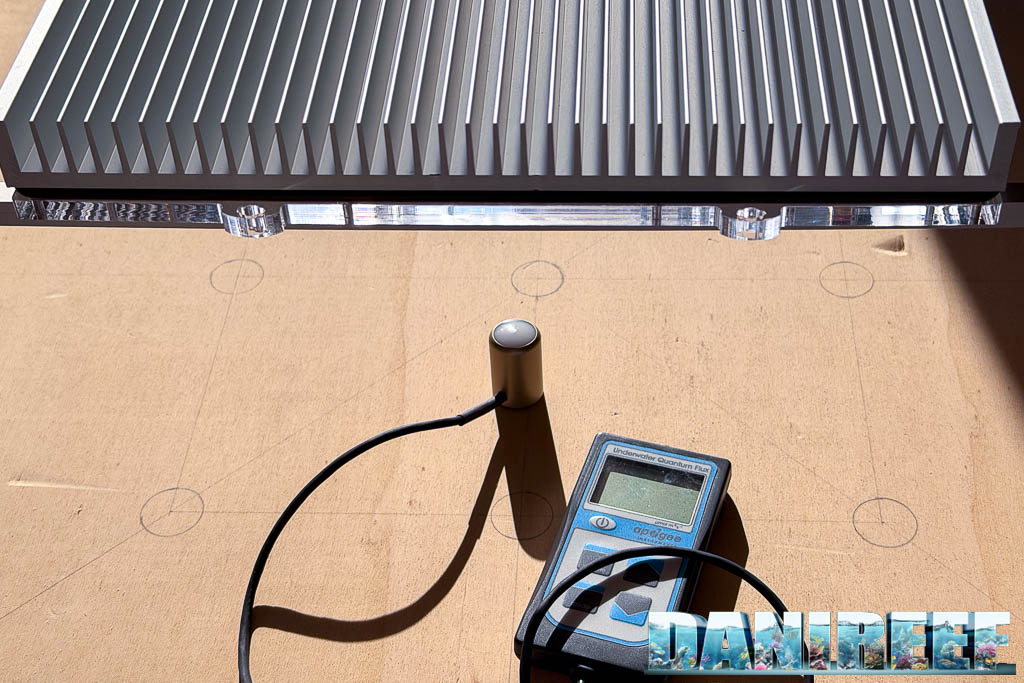
Above you can see our measurement board, with the spacers used to keep the light fixture raised by 17 cm between the board and the fixture itself, so that the value is always consistent for any light we test, making comparisons easier.
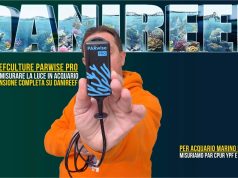
To this system we have also added the new PARwise PRO from ITC, which makes it possible to read PAR, generate a spectral analysis, and especially to analyze the cPur. The cPUR – “Coral Photosynthetically Usable Radiation” – is a light measurement specifically designed for corals. According to ITC, the PAR value alone does not tell us whether the light we are measuring is actually useful for coral growth. It is possible to have a high PAR level that is entirely concentrated in the wrong part of the spectrum.
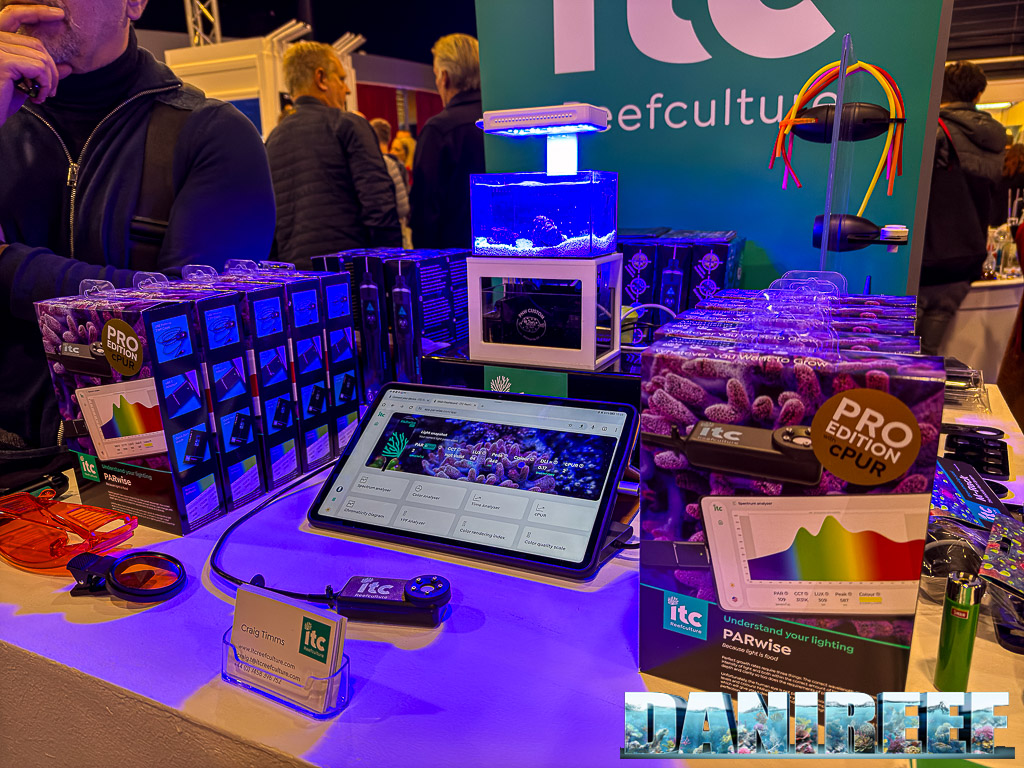
The cPUR measurement includes only the wavelengths and light intensity that corals can actually use, excluding those that are not efficiently exploited in photosynthetic processes or fluorescent proteins. Obviously, it refers to an average value.
Together with this, with the latest software release of the PARwise PRO, it is possible to measure many other interesting parameters, from the light spectrum to the pigments present. All of these data will be shown later in our analysis.
PAR measurement at 17, 37 and 57 cm distance
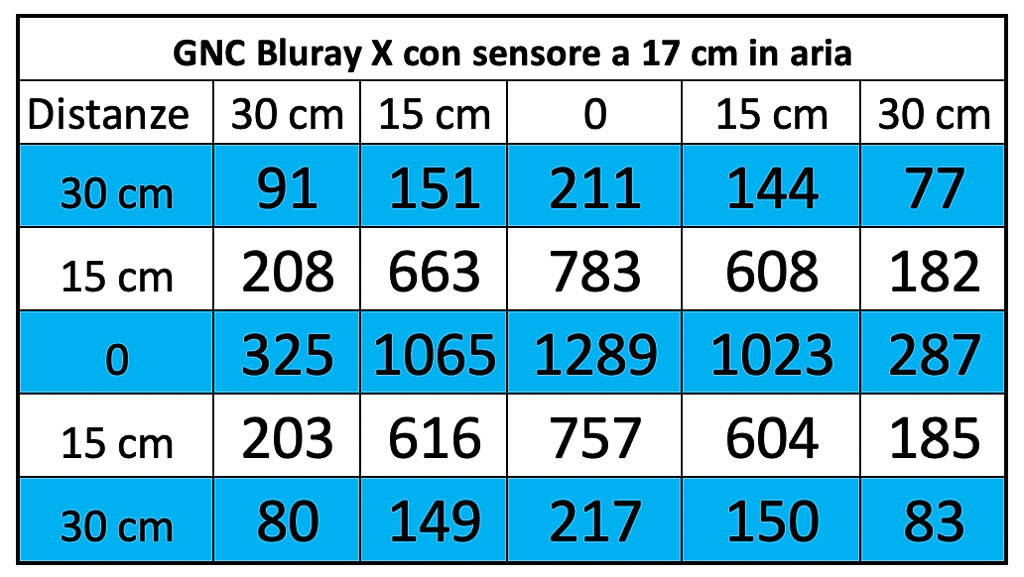
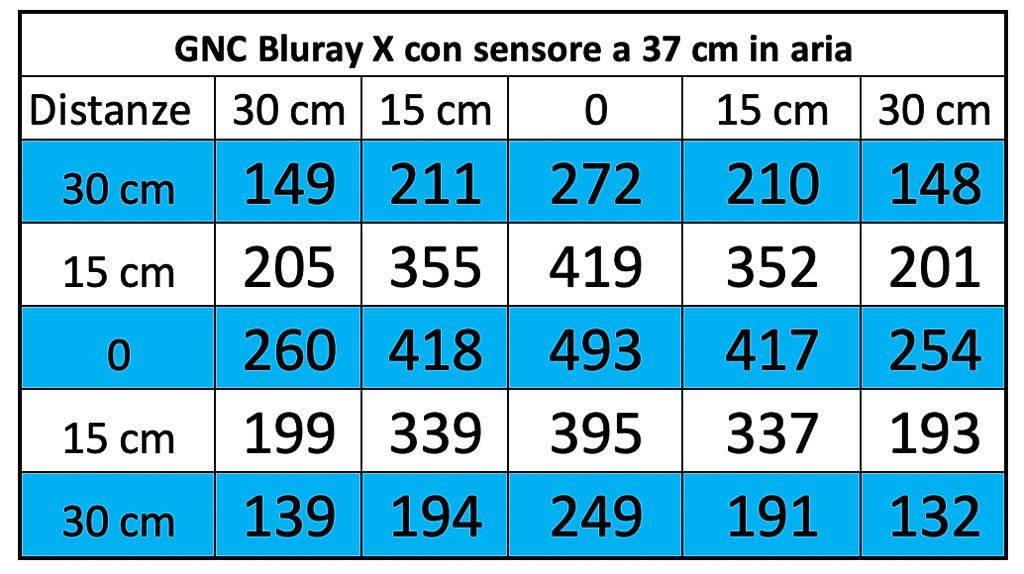
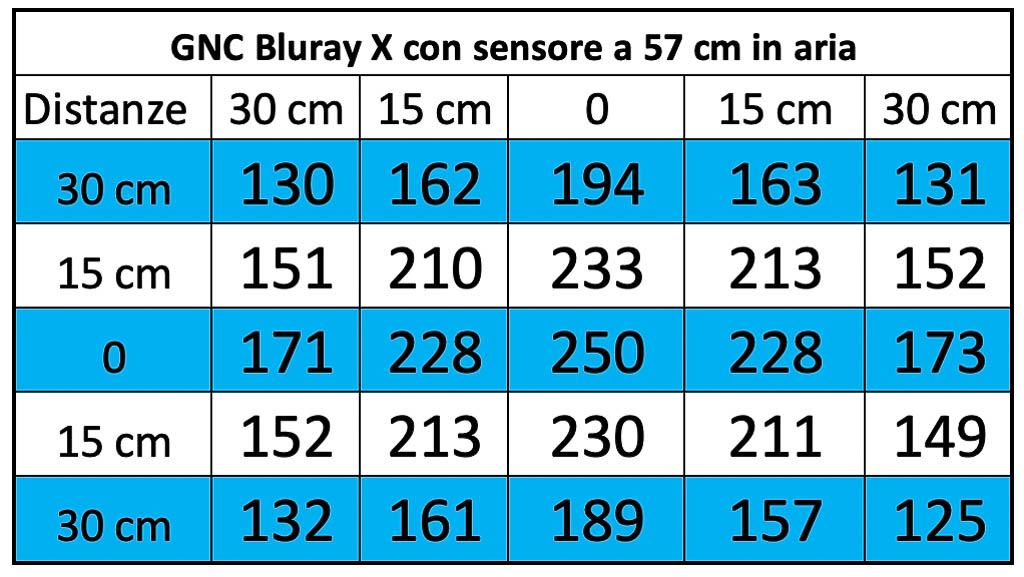
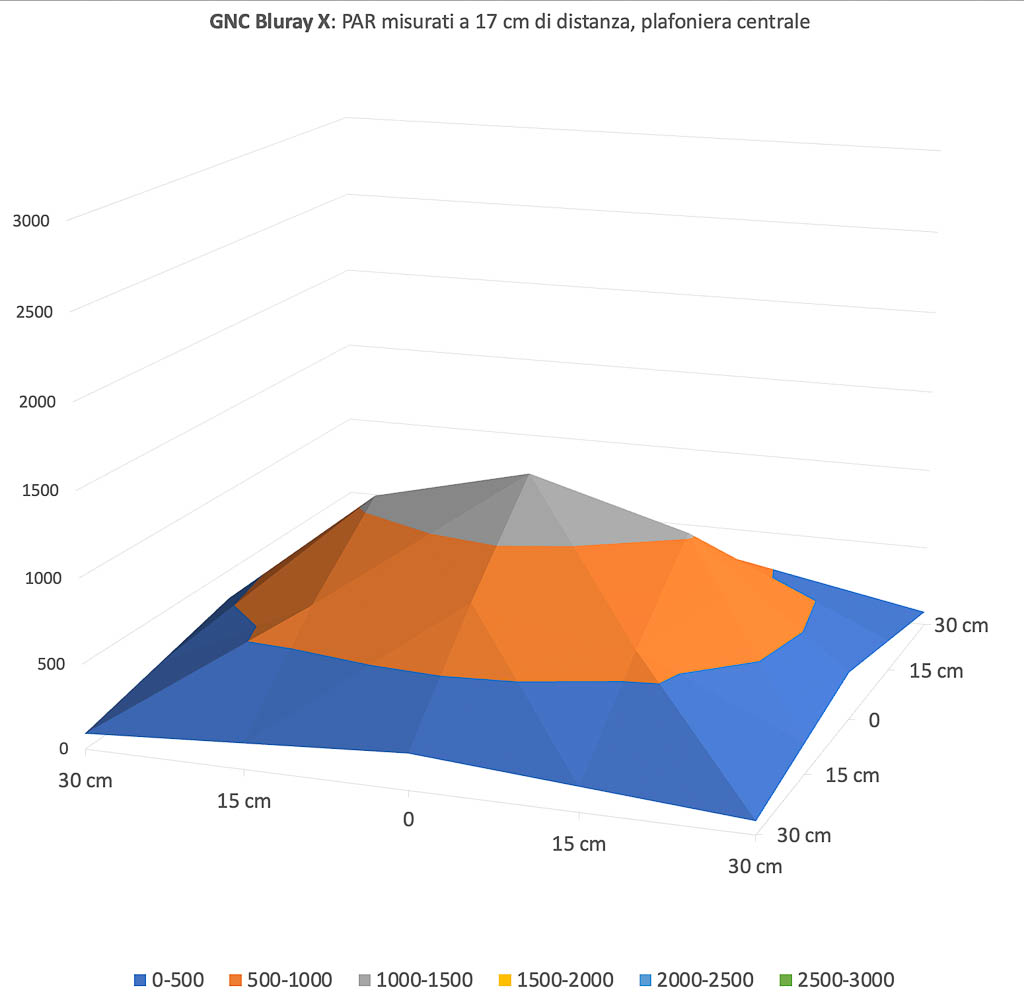
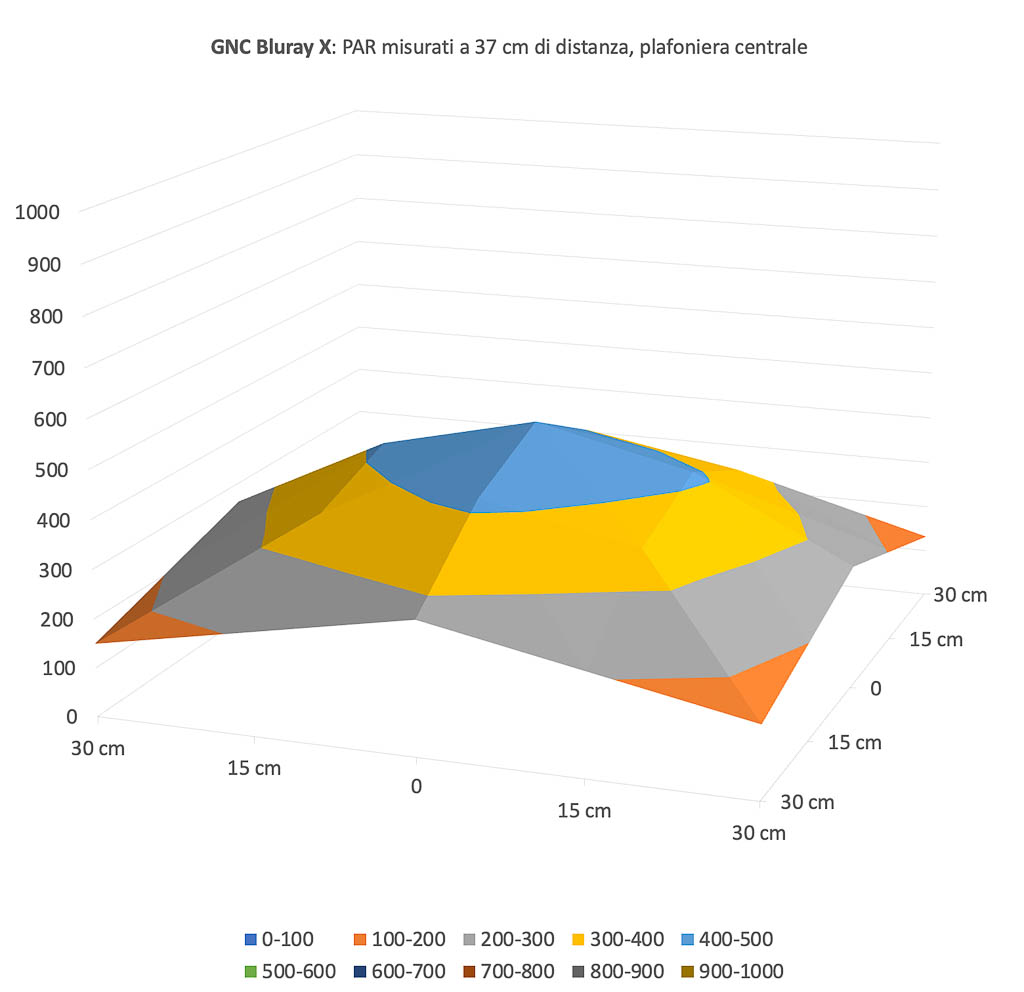
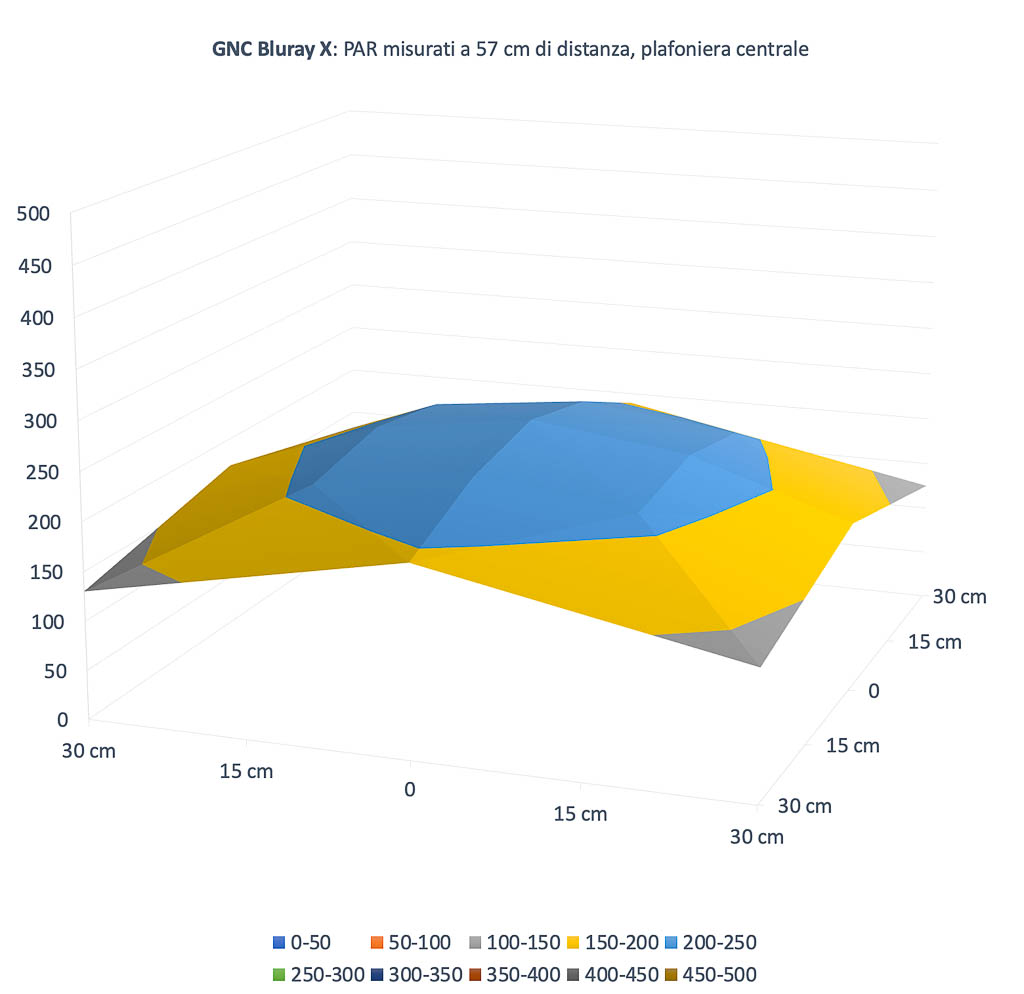
The images above show the analytical PAR data measured at the indicated distances, as if the entire distance were underwater. Immediately below each table is the corresponding coverage graph, with the same scale as all other marine light fixtures we have tested and will test in the future. All marine lighting fixtures reviewed can be found at this link.
At 17 cm
The GNC BluRay X immediately confirms its belonging to the premium range: a light fixture that combines intensity, uniformity, and beam control in a truly remarkable way.
At 17 cm away, the PAR profile shows a very high central peak and a very full “panettone”-style distribution, with almost 1,300 μmol m⁻² s⁻¹ at the center and values still consistent at 15 cm away. It is the ideal configuration for those seeking maximum penetration and power, perfect for SPS or demanding growth areas.
At 37 cm
At 37 cm, the curve opens up and evens out: the central value settles around 490 μmol m⁻² s⁻¹, with edges still above 200 μmol. The effective coverage grows noticeably, and the lateral decay remains contained — a sign of excellent optical design. In this configuration the light fixture offers an ideal balance between intensity and homogeneity, adapting perfectly to mixed tanks and complex layouts.
At 57 cm
At 57 cm, the curve becomes broad and smooth: the central values remain on the order of 250 μmol m⁻² s⁻¹, with edges not dropping below 130 μmol. It is an almost perfectly flat distribution, indicating that the BluRay X can illuminate deep or large tanks evenly as well, providing a diffuse yet always energetic light.
PAR at the center and Total Energy
In the graphs above we see how the values of PAR measured at the center change as the distance increases, and above all how the overall amount of light emitted by the light fixture changes, namely the total energy expressed in μmol m⁻² s⁻¹.
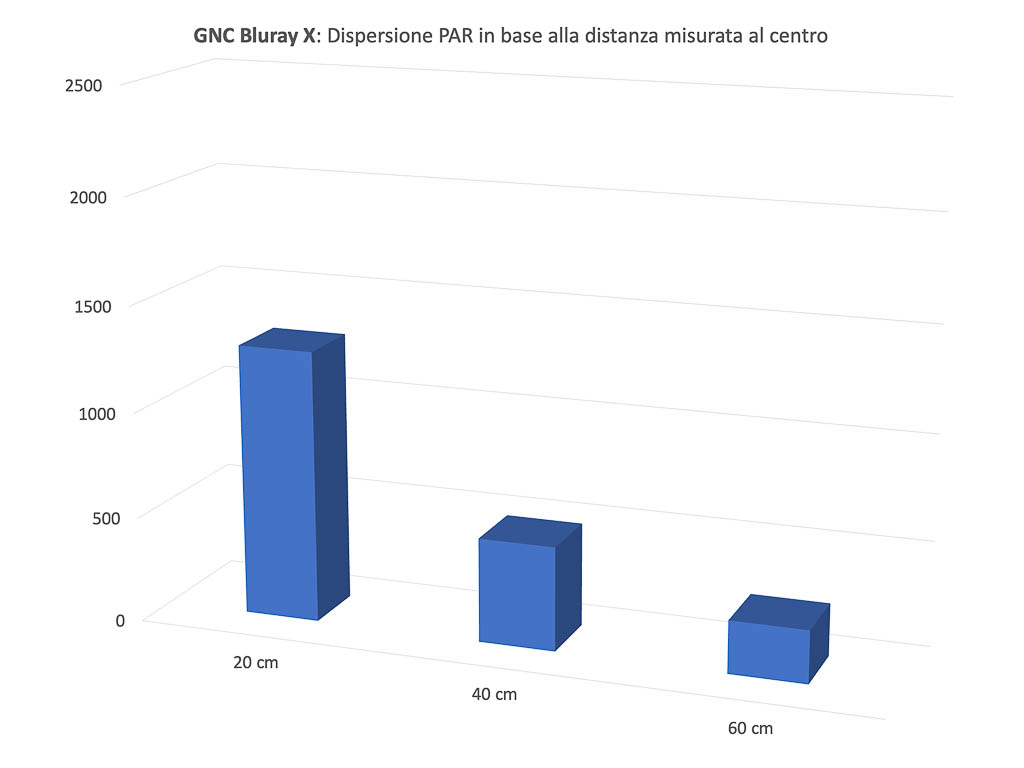
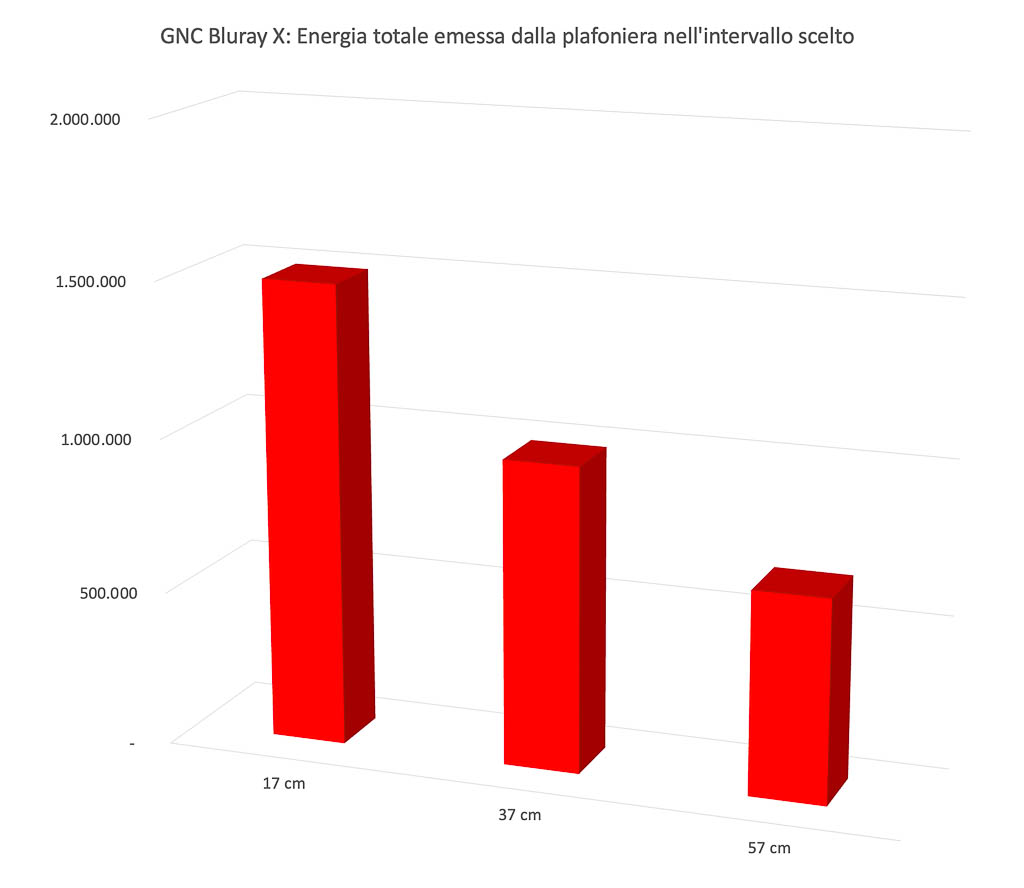
As expected, the central PAR decrease significantly when going from 17 to 37 cm, then drop further at 57 cm. This is the typical behavior of light fixtures without narrow optics, where the light spreads gradually, widening the coverage.
More interesting, however, is observing the holding of total energy, which shows a proportional but not drastic reduction: a sign that the GNC BluRay X maintains high efficiency even at a distance, distributing the light evenly over a large surface.
- 1.491.768 μmol m⁻² s⁻¹ → total energy at 17 cm
- 987.024 μmol m⁻² s⁻¹ → total energy at 37 cm (about 66% remains in play)
- 656.726 μmol m⁻² s⁻¹ → total energy at 57 cm (about 44% remains)
A top-level result, which shows how the BluRay X is able to guarantee broad and consistent light diffusion, even with the physiological reduction of central intensity.
The coverage remains uniform and full, making this light fixture ideal for medium-large tanks and for SPS or mixed layouts where a combination of power and light homogeneity is required.
PAR by channel
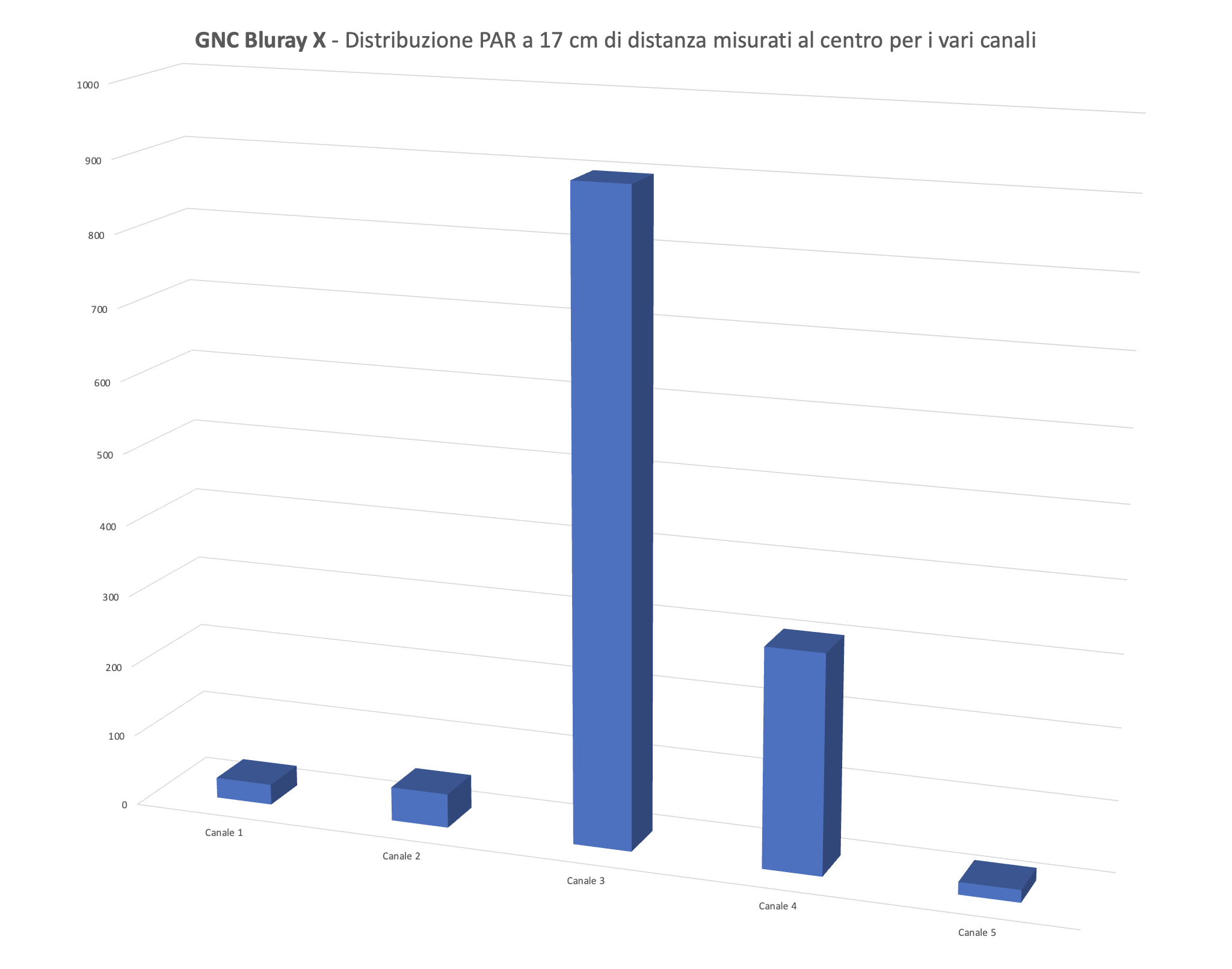
Analyzing the individual channels of the GNC BluRay X measured at 17 cm away, we immediately notice behavior consistent with the spectral setup typical of GNC light fixtures, designed to maximize photosynthetic performance in the marine environment.
The Royal Blue channel clearly dominates the scene, reaching a peak of almost 900 μmol m⁻² s⁻¹ at the center: it is the heart of the spectrum, responsible for the maximum emission useful to zooxanthellate corals and for the color depth that characterizes the GNC visual signature.
The white channel follows with values around 300 μmol m⁻² s⁻¹, providing a balanced contribution of full light and a proper visual rendering of coral color. The UV at 420 nm and UV at 405 nm respectively provide a more contained but fundamental contribution — between 30 and 50 μmol m⁻² s⁻¹ — to stimulate fluorescences and secondary photosynthetic processes.
Finally, the red channel closes things out, intentionally marginal (≈ 20 μmol m⁻² s⁻¹), mainly useful to balance the overall spectrum and increase the visual perception of warm tones.
Overall, the BluRay X shows very high-level spectral management, where each channel contributes in a measured and functional way: power where needed, color consistency, and scientific precision. For the first time we must point out that we are in the presence of a light fixture whose sum of the PAR of all channels, 1298, is practically coincident with the PAR reading with all channels at maximum, 1289, a sign of an absolutely perfect electrical design of the light fixture. Congratulations to GNC.
Light spectrum and cPur, i.e., the efficiency of PAR
Thanks to the use of the PARwise PRO by ITC Reefculture, we were able to measure not only light intensity, but also the emitted spectrum and the actual photosynthetic performance (cPUR).
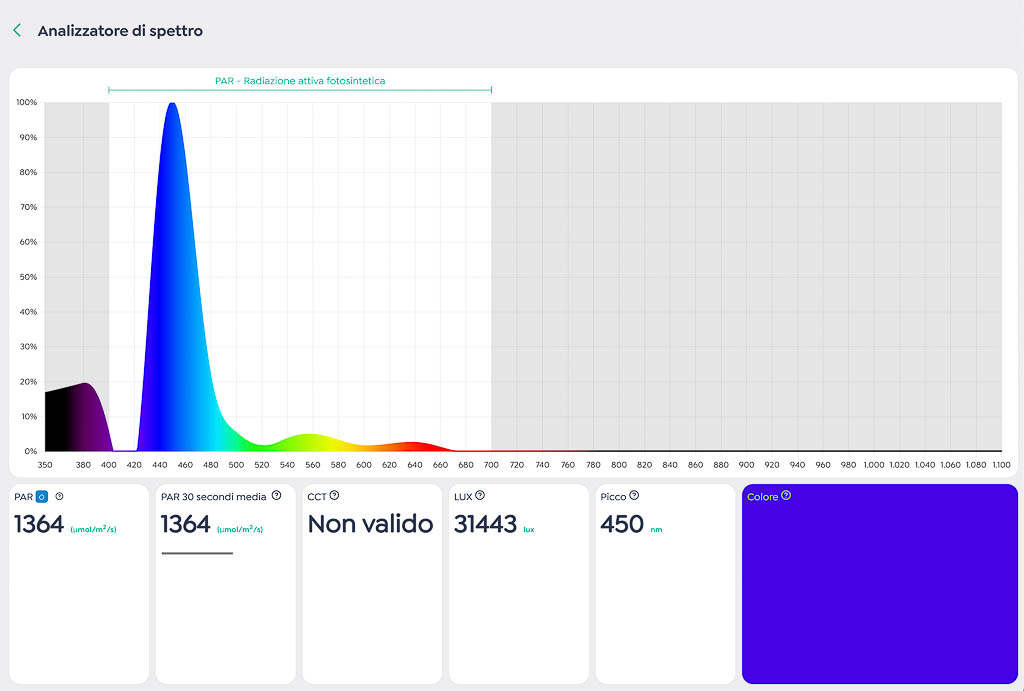
The graph above shows a spectrum strongly concentrated in the blue region, with a well-defined peak around 450 nm, corresponding to the maximum photosynthetic absorption of zooxanthellae. The reading of 1364 μmol m⁻² s⁻¹ PAR and 31,443 lux at about 17 cm away demonstrates remarkable power and almost perfect spectral consistency.
The contribution of wavelengths between 420 and 470 nm is predominant, while the white channel and the warmer components (yellow and red) remain very attenuated: a design choice aimed at maximizing photosynthetic performance by reducing the dispersion of energy in bands less useful to corals.
This approach, typical of the GNC philosophy, guarantees a pure, balanced light with very high photosynthetic efficiency, ideal for the growth and coloration of hard corals.
Ultimately, the measured spectrum confirms the professional and scientific vocation of the BluRay X: a light fixture capable of combining power, color precision, and biological performance, positioning itself among the most advanced and refined LED systems available today for marine aquariums.
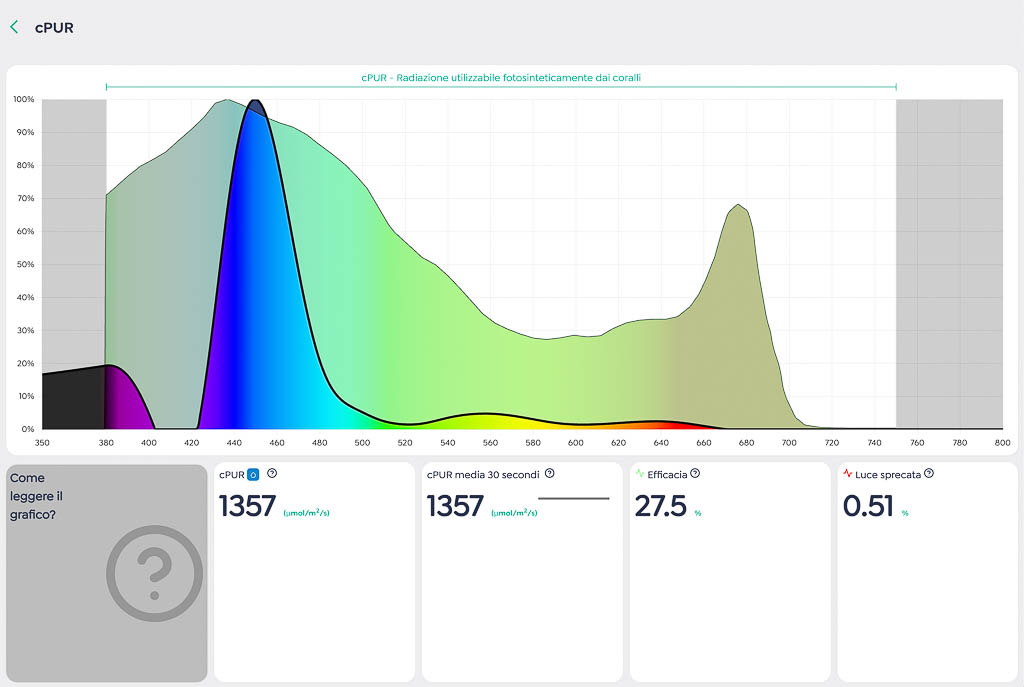
In the graph above we see the cPUR curve (Coral Photosynthetically Usable Radiation) represented, that is, the fraction of light actually usable by corals for photosynthesis. In green the theoretical reference curve is shown, while superimposed appears the actual spectrum of the GNC BluRay X, measured via PARwise PRO by ITC Reefculture.
The light fixture follows the ideal curve with excellent faithfulness, with a sharp peak around 450 nm, perfectly in line with the maximum absorption of zooxanthellae, and a balanced distribution between the blue and violet bands (400–480 nm), which constitute the primary engine of photosynthesis in SPS reefs. There are also secondary contributions in the red (620–660 nm), calibrated to increase color rendering and visual perception without compromising overall photosynthetic efficiency.
The measured value of 1357 µmol m⁻² s⁻¹ cPUR, with wasted light of just 0.51% and an overall effectiveness of 27.5%, demonstrates the spectral precision and luminous purity of the GNC BluRay X.
These data confirm the professional vocation of the light fixture: maximum photosynthetic yield, minimal dispersion, and perfectly balanced tones for the growth and coloration of the most demanding corals. In summary, the spectral behavior of the GNC BluRay X places this light fixture at the top of its category: an LED source capable of combining scientific efficiency and visual beauty, maintaining a constant and coherent emission even at the wavelengths most delicate for reef life.
Photosynthetic pigments
To fully understand the effectiveness of a light fixture in the marine field, it is essential to analyze the correspondence between the emitted light spectrum and the photosynthetic pigments actually used by zooxanthellae. In the graph below we can observe how the GNC BluRay X precisely covers the main absorption bands of Chlorophyll A, Peridinin, and accessory pigments such as Fucoxanthin and Carotenoids, which extend the useful range of photosynthetic radiation.
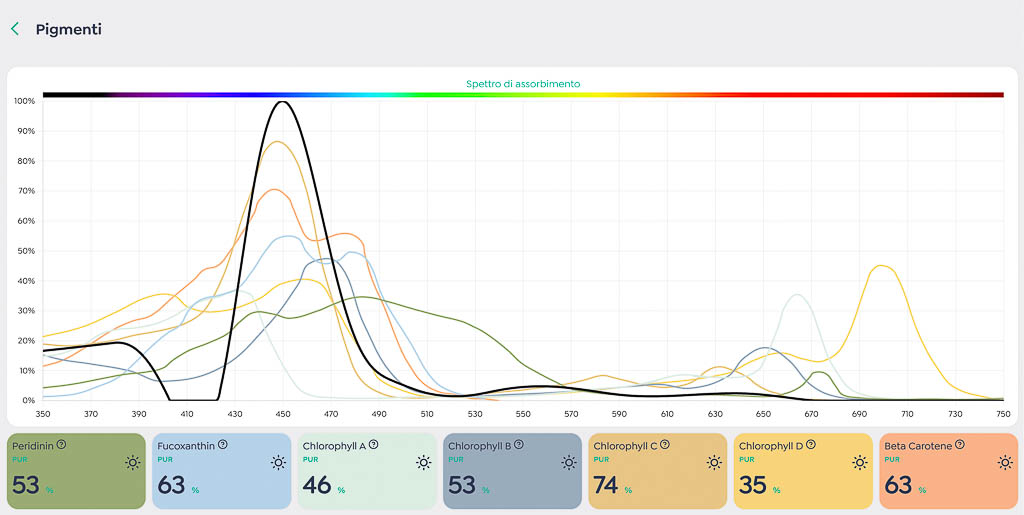
In particular, there is a dominant peak in the blue region (about 440–460 nm), perfectly centered on the range of maximum efficiency of Chlorophyll A and Peridinin, the two key pigments for the photosynthesis of symbiotic corals. There is also a more moderate contribution in the red (620–660 nm), useful for improving visual rendering and supporting the synthesis of accessory pigments without interfering with overall photosynthetic effectiveness. The violet components (400–430 nm) and cyan-green (480–520 nm) are well represented and contribute to the activation of Fucoxanthin, broadening the biological response and improving the ability of corals to adapt to different depths and light intensities.
Overall, the spectral distribution of the BluRay X shows an excellent balance between photosynthetic efficiency and color rendering, with full coverage of all the main absorption bands of zooxanthellae pigments. This makes it an extremely effective light fixture for reefs with high light demand, capable of ensuring growth, coloration, and optimal health for the most demanding SPS and LPS corals.
How to assess these numbers in the aquarium?
A question that deserves attention. Initially one might think that the values measured in air correspond to the real ones in the tank, but our experimental tests tell a different story. After filling an aquarium and immersing the probe, we found that — if at 20 cm the differences are minimal — when immersed the values increase significantly, even becoming double compared to the measurements in air.
This happens because glass and the water column modify the light distribution, reflecting and diffusing part of the beam more evenly. Since the effect varies based on the geometry, materials, and depth of the tank, we chose to keep the measurement in air as a reference: it is the most consistent and replicable method to objectively compare different light fixtures in our DaniReef LAB.
The heat generated by the housing
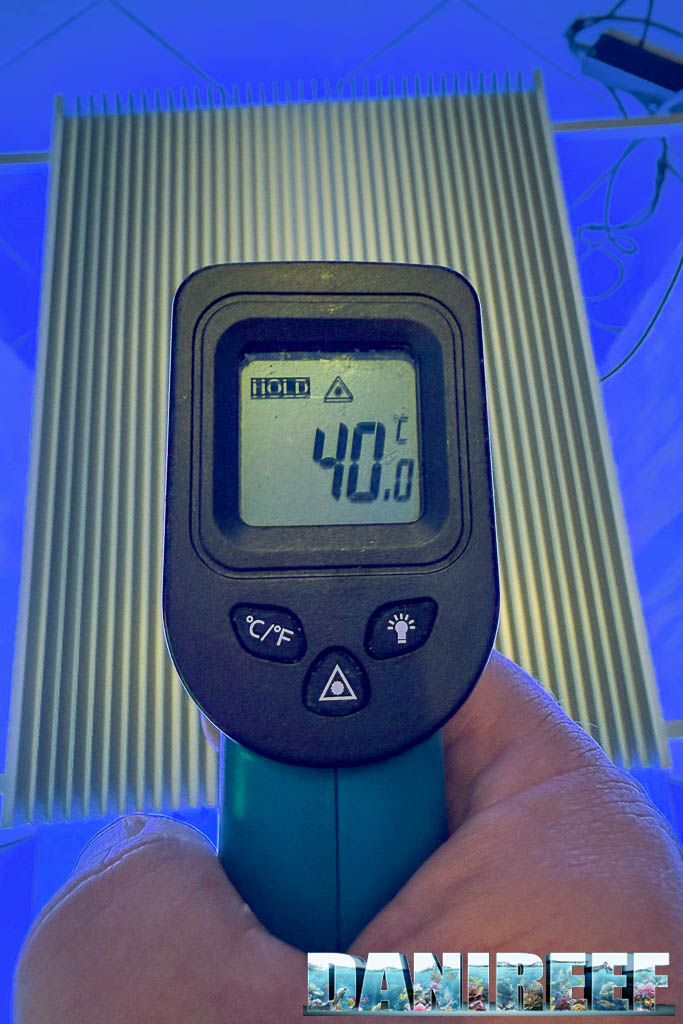
To evaluate the build quality and thermal management of the light fixture, we also measured the surface temperature of the housing after a prolonged period of operation with all channels turned on at maximum power. In the case of the GNC BluRay X, without fans and completely passively cooled, we recorded a maximum value of 40 °C. The room temperature was 22 °C.
This is an excellent result, which testifies to the high efficiency of the thermal dissipation system integrated into the aluminum body.
The temperature remains largely contained, without any risk for daily use and with thermal behavior that indicates an excellent balance between light power and the ability to dissipate heat. A figure that confirms not only the design quality of GNC, but also the absolute silence of the system, achieved without resorting to any active ventilation.
The power consumption of the GNC BluRay X
The detection of instantaneous consumption was carried out with the instrument RCE PM600, capable of precisely measuring even the power factor (Cosφ), so as to obtain a real and not only theoretical figure on the electrical behavior of the light fixture.
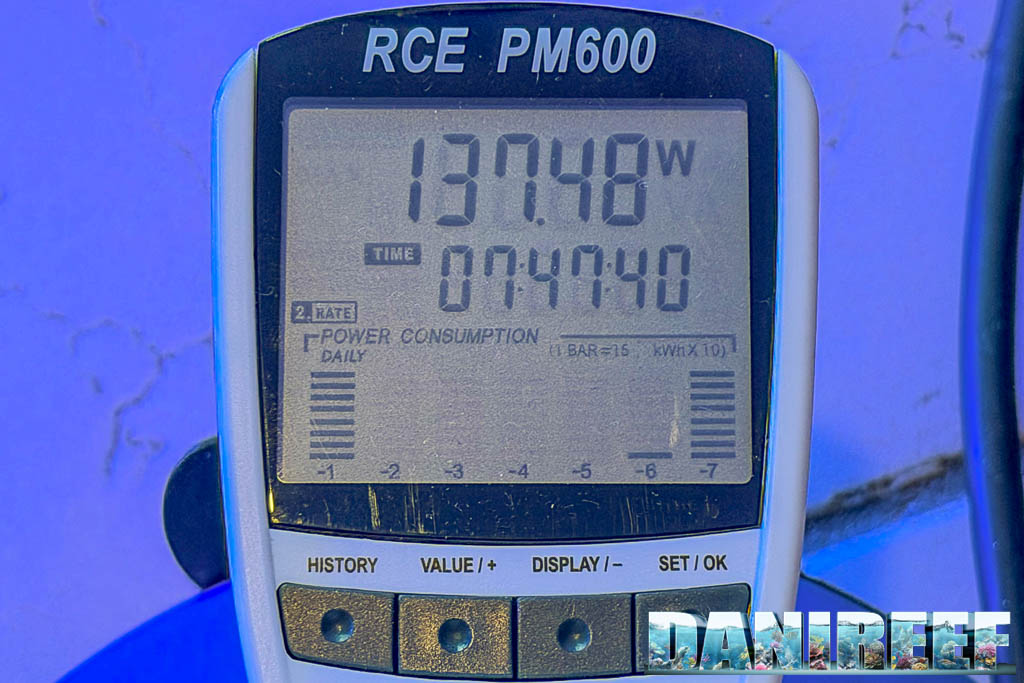
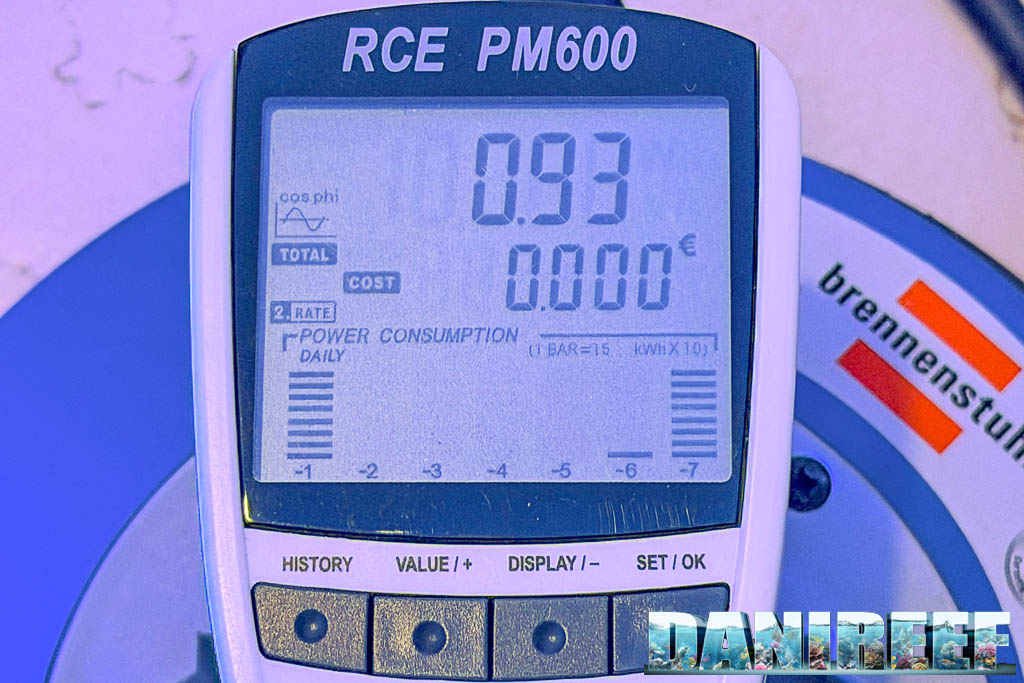
In the case of the GNC BluRay X, we recorded a real consumption of about 137 watts, with a power factor equal to 0.93. These are values perfectly consistent with the declared power and indicative of high energy efficiency, a sign of well-designed electronics and stable draw.
Considering the absence of fans and completely passive cooling, the light fixture shows an excellent balance between photometric performance and consumption, with luminous efficiency that places it among the top-of-the-line models in the professional marine landscape. Such electrical behavior guarantees operational stability, safety, and consistency over time — fundamental characteristics for those seeking a high-performance light for SPS corals and demanding reefs.
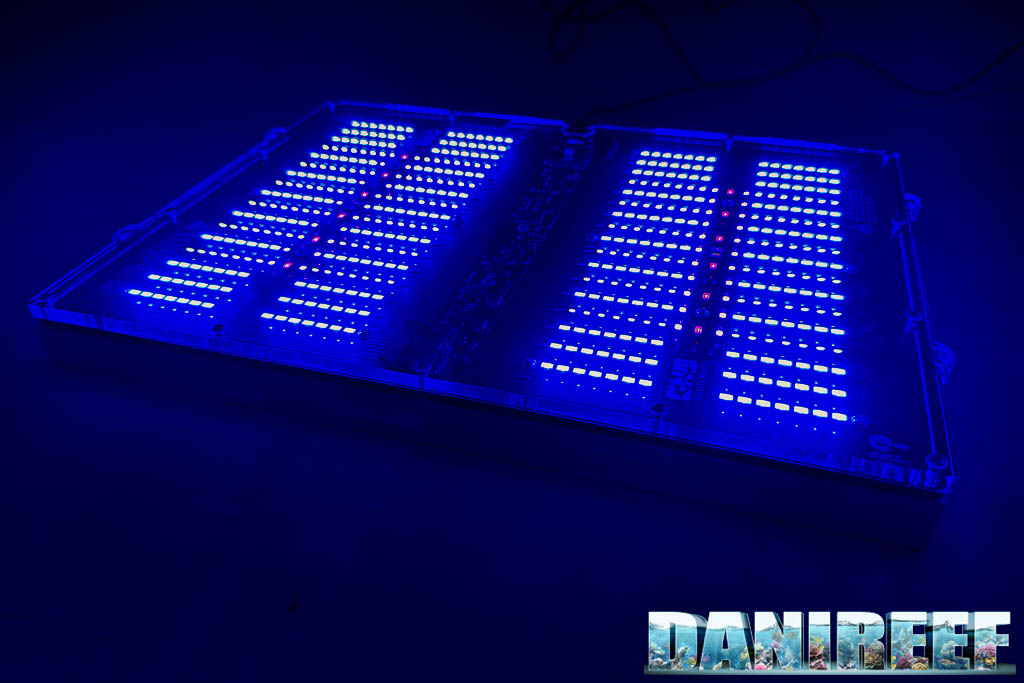
The GNC BluRay X has a retail price of 1,299 euros. The real consumption we measured is around 137 watts, perfectly in line with the power declared by the manufacturer.
Relating the cost to the actual draw, you get a value of about 9.48 euros per watt, a high figure if considered in an absolute sense, but justified by the build level, the quality of the materials, the total silence (thanks to the absence of fans) and above all by the top-tier photometric performance detected in our DaniReef LAB. The measured power factor (cosφ) is 0.93, an excellent value that attests to the full efficiency of the electronic circuit, with minimal losses and extremely clean energy management.
This is typical behavior of high-end light fixtures, capable of combining electrical stability, luminous efficiency, and reliability over time.
Which corals for this light fixture?
After seeing the measured PAR values and comparing them with the light attenuation curve in the sea, we can state that the GNC BluRay X ranks among the highest-performing light fixtures available today for marine aquaristics.
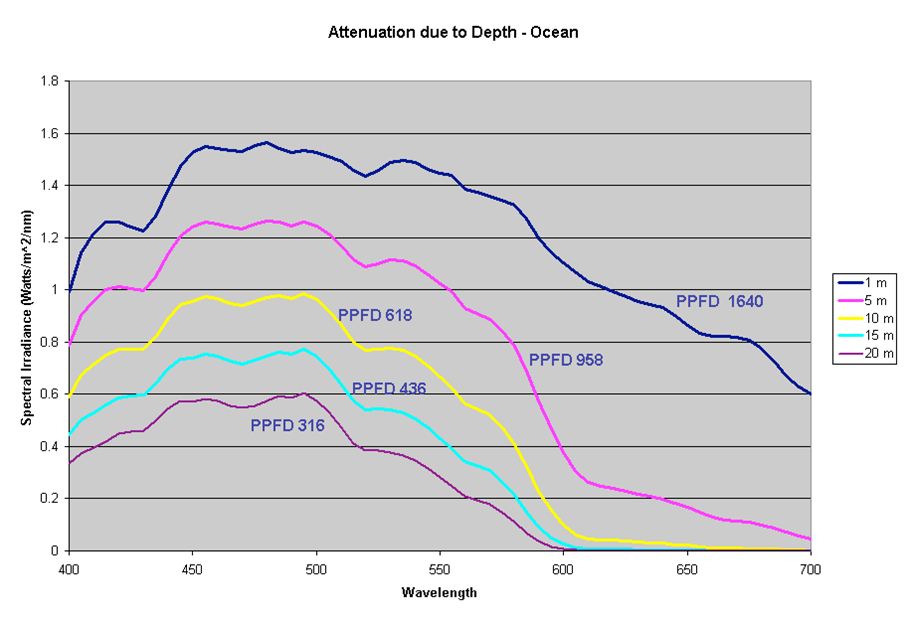
At 17 cm we are practically in the “top light” zone: PAR values are very high and indicate the maximum potential of the light fixture. In this configuration we can feed the most demanding species, such as first-tier SPS (acroporas, “spike” montiporas, pocilloporas in full growth), without any problem; indeed, at times it may be necessary to control the photoinhibition of more delicate corals. At 37 cm, instead, the light distributes better, the intensity decreases but the coverage widens, making this point ideal for mixed layouts in which shaded areas and less demanding corals (LPS, zoanthus, euphyllia) coexist with SPS in central positions.
The GNC BluRay X offers a wide operating window: corals that need a lot of light can be placed in the upper part of the aquarium, then decreasing, but knowing that with 250 PAR in the lower part of the aquarium it is still possible to keep practically every coral alive.
In a 120 cm tank we suggest 2 light fixtures, and 3 in a 180 cm one: this helps to maintain intensity and uniformity even in the most distant areas. You can obviously go down if the goal is not SPS, but LPS, which have lower lighting requirements.
Conclusions
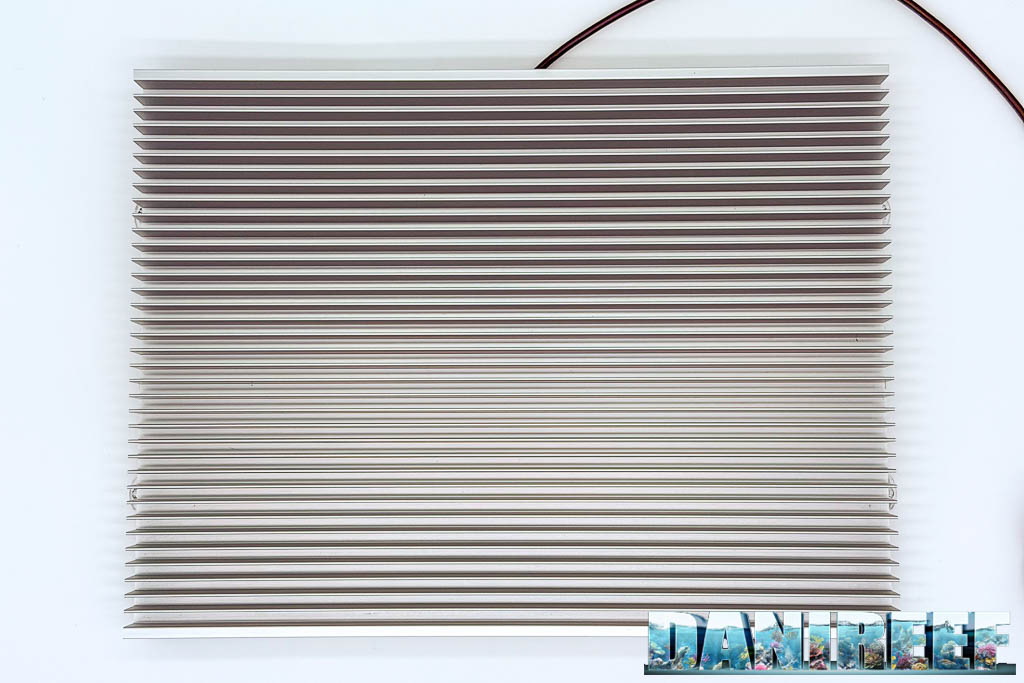
The GNC BluRay X is a light fixture built in an impeccable manner, with very high-level materials and excellent thermal management, made possible without fans and therefore in total silence.
The light efficiency is an absolute benchmark, and the measured PAR and cPUR values confirm an ideal performance for very demanding reef aquariums, with broad and uniform coverage over the entire surface.
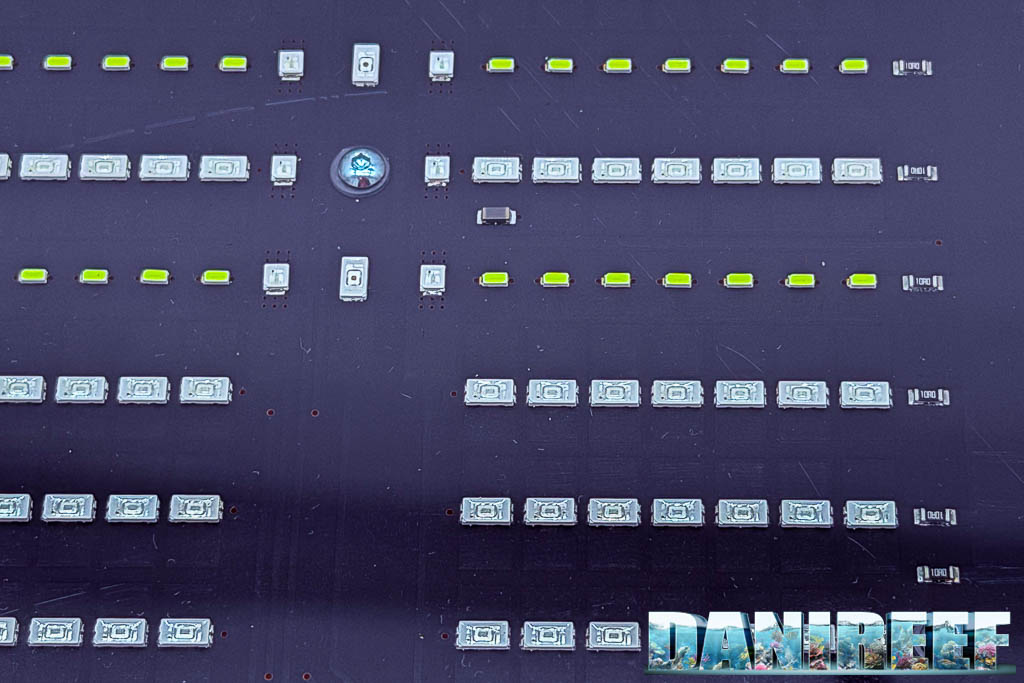
At 17 cm away, the light fixture expresses its maximum potential, with very high values perfect for SPS with high light demand; at 37 cm, instead, the light spreads more evenly, becoming ideal for mixed layouts or tanks with LPS and soft corals. The balanced spectral curve, with peaks in the blue and violet, returns natural and saturated colors, while at the same time optimizing the photosynthesis of zooxanthellae.
This is a premium-class light fixture, designed for those seeking benchmark performance and a minimalist yet extremely refined design. The significant price is, in our opinion, fully justified by the efficiency, the uniformity of the light, and the total absence of noise in operation — a mix difficult to match, associated with intelligent and very versatile programming.
In summary
- Ideal for SPS reefs and demanding tanks even of large size;
- High PAR and uniform distribution;
- Balanced spectrum for photosynthesis and color rendering;
- No fans, therefore absolute silence;
- Solid construction and elegant design;
- Simple and versatile programming.
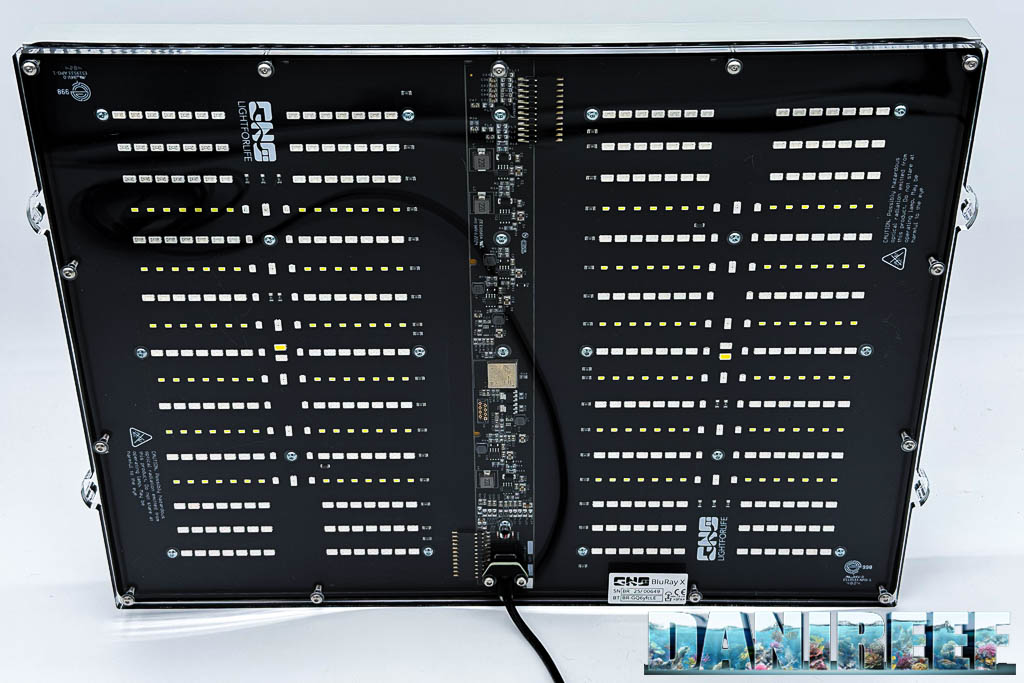
Have you already tried the GNC BluRay X in your aquarium? Tell us about your experience in the comments or on our DaniReef Forum. Don’t miss the next articles, reviews, and reports: follow us on Facebook, Instagram, YouTube, TikTok, Telegram, X/Twitter and LinkedIn.
Transparency disclaimer: This article is based on instrumental tests carried out in the DaniReef LAB (PAR/PPFD, coverage maps, consumption and cosφ). The GNC BluRay X sample was provided by GNC for testing; no fees were paid and GNC did not view or approve the text before publication. The conclusions reflect exclusively the data collected and the author’s experience. Some links present may be affiliate links: if you purchase through them, DaniReef may receive a small commission, without any price changes for the user.
Scopri di più da DaniReef - Portale dedicato a Acquario Marino e Dolce
Abbonati per ricevere gli ultimi articoli inviati alla tua e-mail.